

Category: RF Connectors & Signal Paths
Practical rf connectors & signal paths guides with product links, examples and specification checks.
-
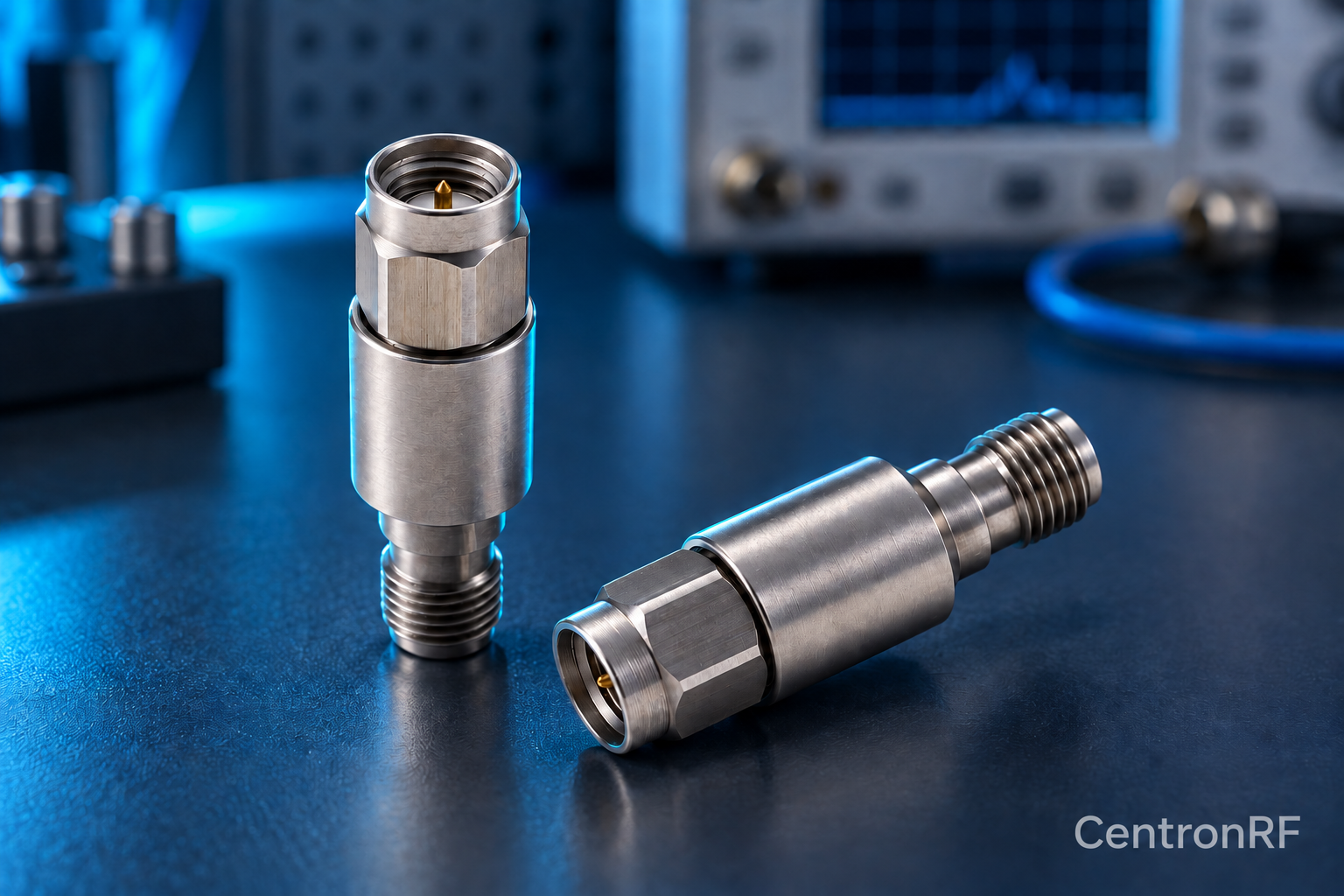
RF Connector Power Handling: More Than Connector Size
Power handling depends on frequency, voltage, current, mismatch and thermal conditions…
-
SMA and N-Type RF Connectors: How to Choose
Choose a connector family from equipment compatibility, frequency requirements and mechanical…
-
Why an Open RF Port Reflects Signals
An ideal open termination reflects the incident wave rather than absorbing…
-
RF Connector Gender: What to Check
Check the manufacturer’s interface definition and mating geometry, including center contacts…
-
Protective Caps for RF Connectors
Protective caps help keep stored connector interfaces clean and reduce accidental…
-
50-Ohm and 75-Ohm Connectors: Mechanical Fit Is Not Enough
Connectors and cables must match the intended system impedance. Some interfaces…
-
How to Label an RF Test Cable Assembly
Label the assembly with an identifier and retain its interfaces, impedance,…
-
How RF Adapters Affect a Measurement Path
Adapters add a transition with its own loss, reflection and frequency…
-
Troubleshooting a Poor RF Connection
Check compatibility, mechanical condition, cable strain and calibration before changing the…
-
Why RF Cable Length Affects Phase
An RF cable delays the signal, so electrical phase depends on…