


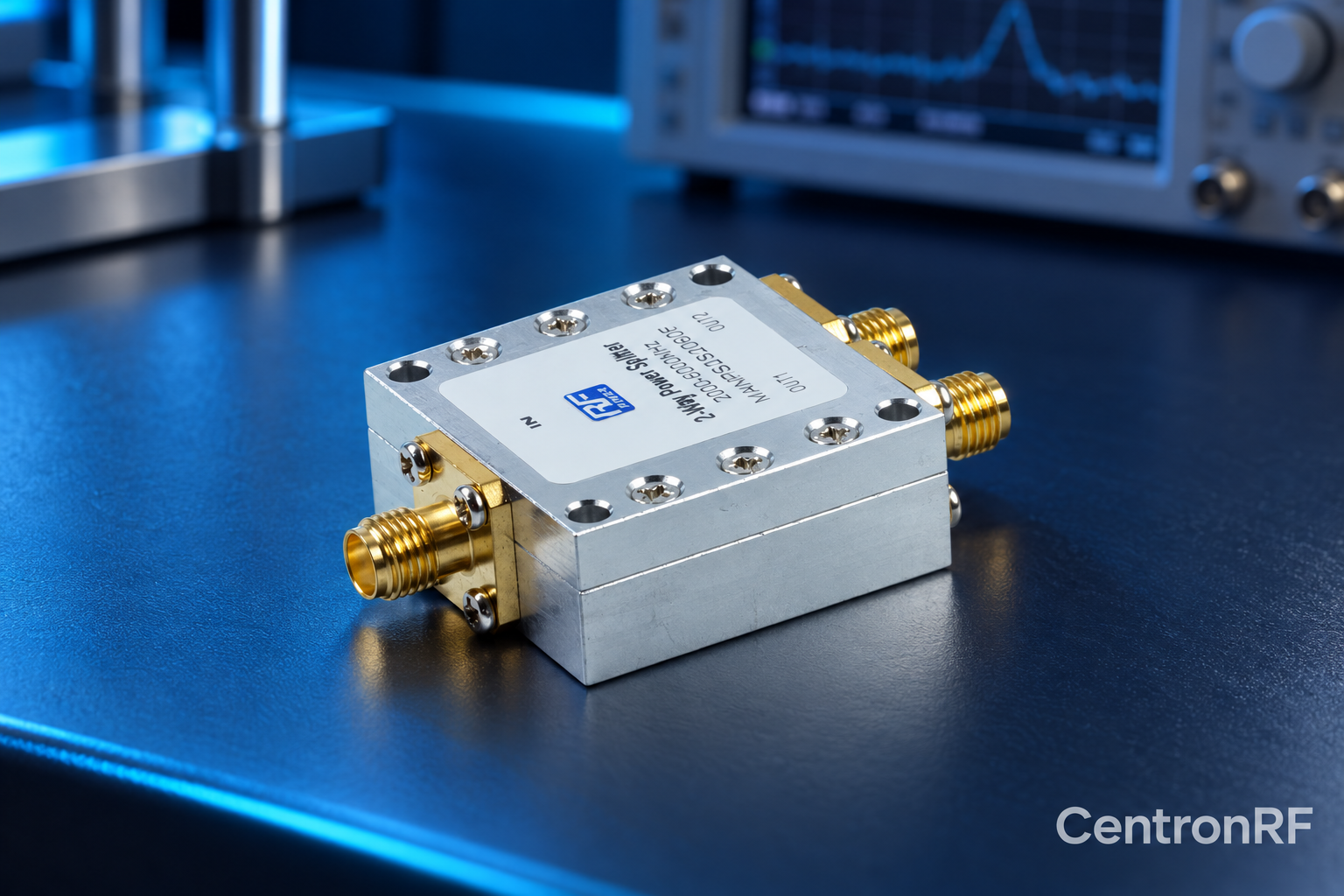
Check cable, connector, load and sensor differences before concluding that the divider is unbalanced. Use a repeatable comparison method.
How it works in practice
Swap measurement cables or sensors while maintaining safe connections and matching conditions. If the difference follows a cable, investigate that cable. If it stays with one divider port, compare against model specifications. Verify the source is stable during sequential readings.
Example and interpretation
A 1 dB branch difference that moves when cables are swapped points to the cables or their interfaces, not necessarily the divider.
Checks before use
- Stabilize the source
- Check terminations
- Swap comparison paths
- Measure divider balance separately
Important limit
Do not compare readings taken with different uncorrected sensor paths.
Related Centron RF product
RF power divider range. Compare the exact divider model, port count and current datasheet. Some catalog titles show inconsistent frequency ranges, so confirm the supplied model’s full passband, loss, isolation and power limits before selection.
Further reading
Mini-Circuits: Understanding Power Splitters. This background reference explains general principles; the selected Centron RF model’s datasheet governs its own ratings.
Related guides
Educational guide. Numerical examples use the stated assumptions and are not test results for a supplied unit.