

Category: RF Resistors & Thermal Design
Practical rf resistors & thermal design guides with product links, examples and specification checks.
-
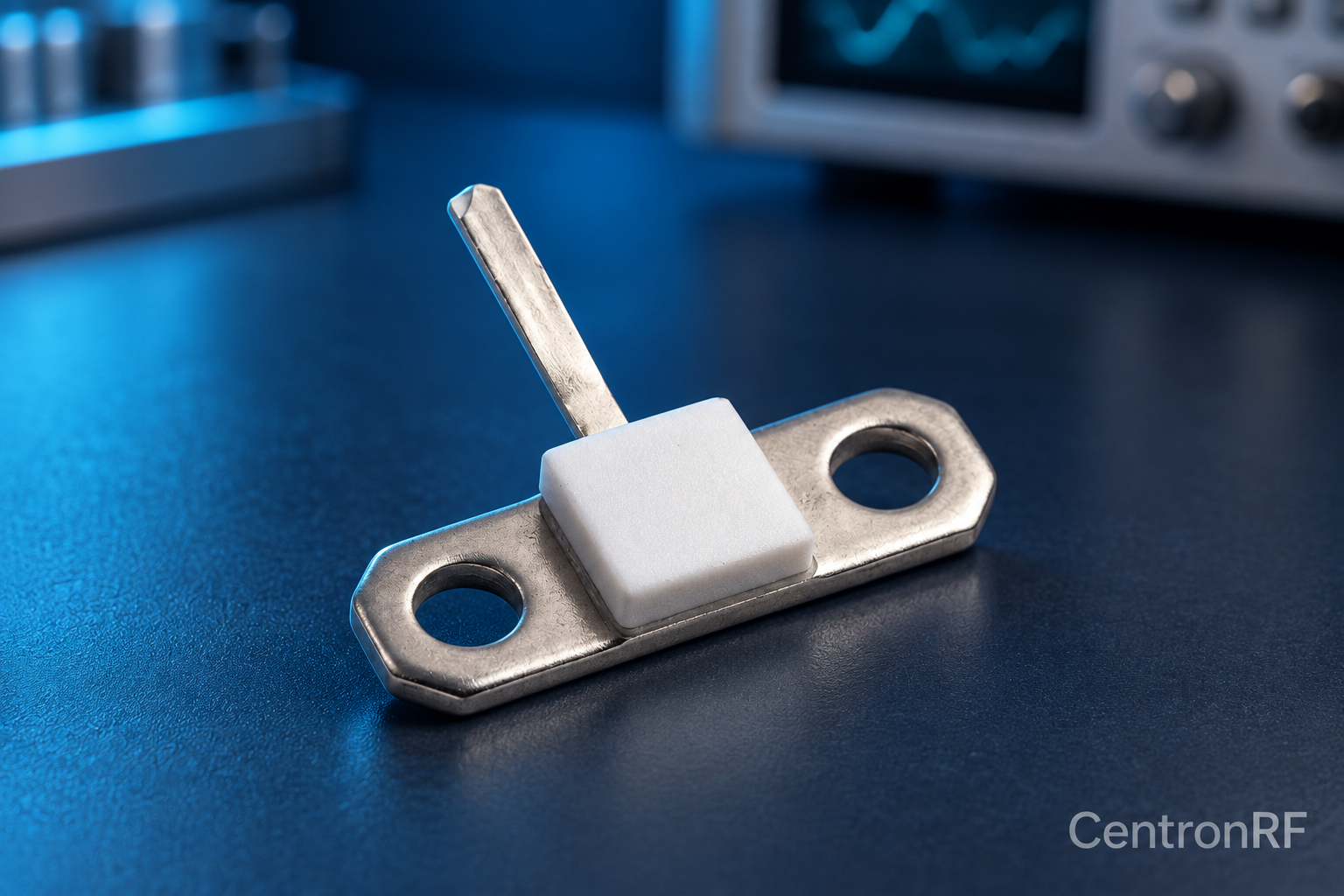
Ambient Versus Case Temperature for RF Resistors
Ambient temperature describes surrounding air; case temperature describes a defined point…
-
What Is a Thick-Film RF Resistor?
A thick-film RF resistor uses a resistive film on a substrate…
-
RF Resistor Layout for a 50-Ohm Signal Path
Keep the transmission-line transition and return path controlled according to the…
-
RF Resistor Versus Ordinary Resistor
An RF resistor is designed and characterized for high-frequency behavior; an…
-
Continuous RF Resistor Power Versus Short-Term Overload
Continuous rating addresses sustained dissipation under stated conditions. Short-term overload requires…
-
Why an RF Resistor Needs a Heatsink
A high-power RF resistor may rely on a specified heatsink to…
-
RF Resistor Procurement Details to Request
Request resistance, tolerance, full RF characterization, rated mounting conditions, derating, pulse…
-
RF Resistor Derating Explained
Derating reduces allowable power as temperature or other operating stress increases.…
-
Verifying an RF Resistor Assembly Before Full Power
Verify the finished assembly’s resistance, RF match and thermal arrangement before…
-
Resistance Tolerance in a 50-Ohm RF Termination
Resistance tolerance contributes to impedance error, but high-frequency parasitics and mounting…