


Verify the finished assembly's resistance, RF match and thermal arrangement before applying full rated stress. Use a controlled progression within documented limits.
How it works in practice
Begin with power removed for mechanical and electrical checks. Perform low-power RF measurements with appropriate calibration. Then increase operational stress gradually while monitoring the specified temperatures. The test needs defined acceptance limits; avoid claiming qualification from a brief observation alone.
Example and interpretation
A load assembly that passes low-power S11 still needs its thermal behavior checked under representative sustained power.
Checks before use
- Inspect assembly
- Check DC behavior where appropriate
- Measure RF match
- Verify thermal operation
Important limit
A successful low-power sweep does not establish full-power durability.
Related Centron RF product
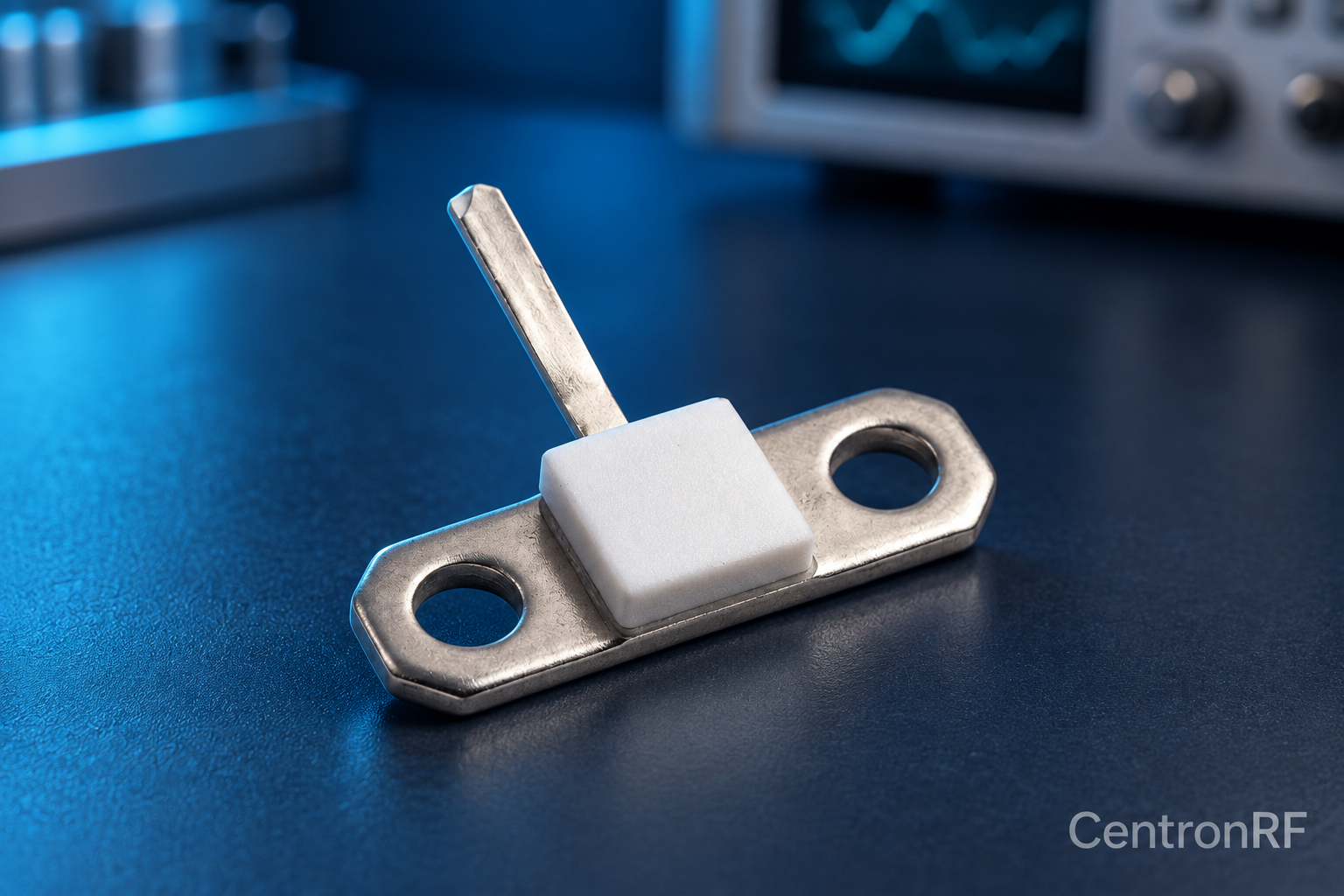
50-ohm 10 W thick-film RF resistor. The linked resistor is listed as 50 ohms, 10 W and 4 GHz. Request the recommended mounting, heatsink, derating, tolerance and pulse conditions; those determine whether it is suitable for the intended circuit.
Further reading
Vishay: Resistor Technical FAQ. This background reference explains general principles; the selected Centron RF model’s datasheet governs its own ratings.
Related guides
Educational guide. Numerical examples use the stated assumptions and are not test results for a supplied unit.