


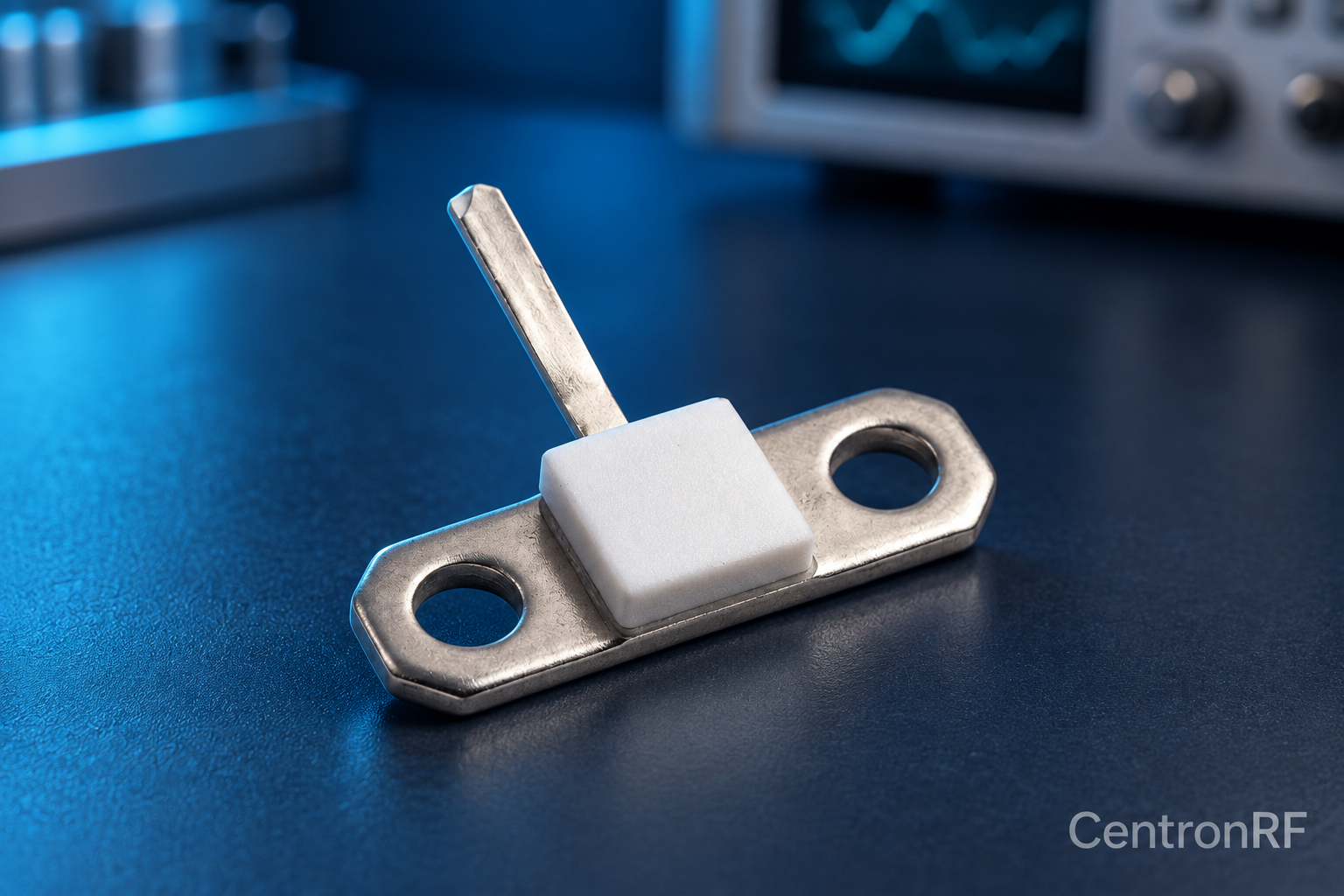
A thick-film RF resistor uses a resistive film on a substrate to provide a specified resistance in an RF circuit. Its usable performance depends on construction and mounting.
How it works in practice
At high frequency, parasitic capacitance and inductance affect impedance. Power dissipation depends on the thermal path into the substrate, mounting structure and heatsink. A resistance and wattage label cannot establish behavior in every circuit layout.
Example and interpretation
A nominal 50-ohm element can serve as part of a termination only when its RF and thermal installation supports that use.
Checks before use
- Check resistance and tolerance
- Check RF band
- Follow mounting instructions
- Check derating
Important limit
Do not assume a loose component achieves its full power rating without its specified mounting.
Related Centron RF product
50-ohm 10 W thick-film RF resistor. The linked resistor is listed as 50 ohms, 10 W and 4 GHz. Request the recommended mounting, heatsink, derating, tolerance and pulse conditions; those determine whether it is suitable for the intended circuit.
Further reading
Vishay: Resistor Technical FAQ. This background reference explains general principles; the selected Centron RF model’s datasheet governs its own ratings.
Related guides
Educational guide. Numerical examples use the stated assumptions and are not test results for a supplied unit.