


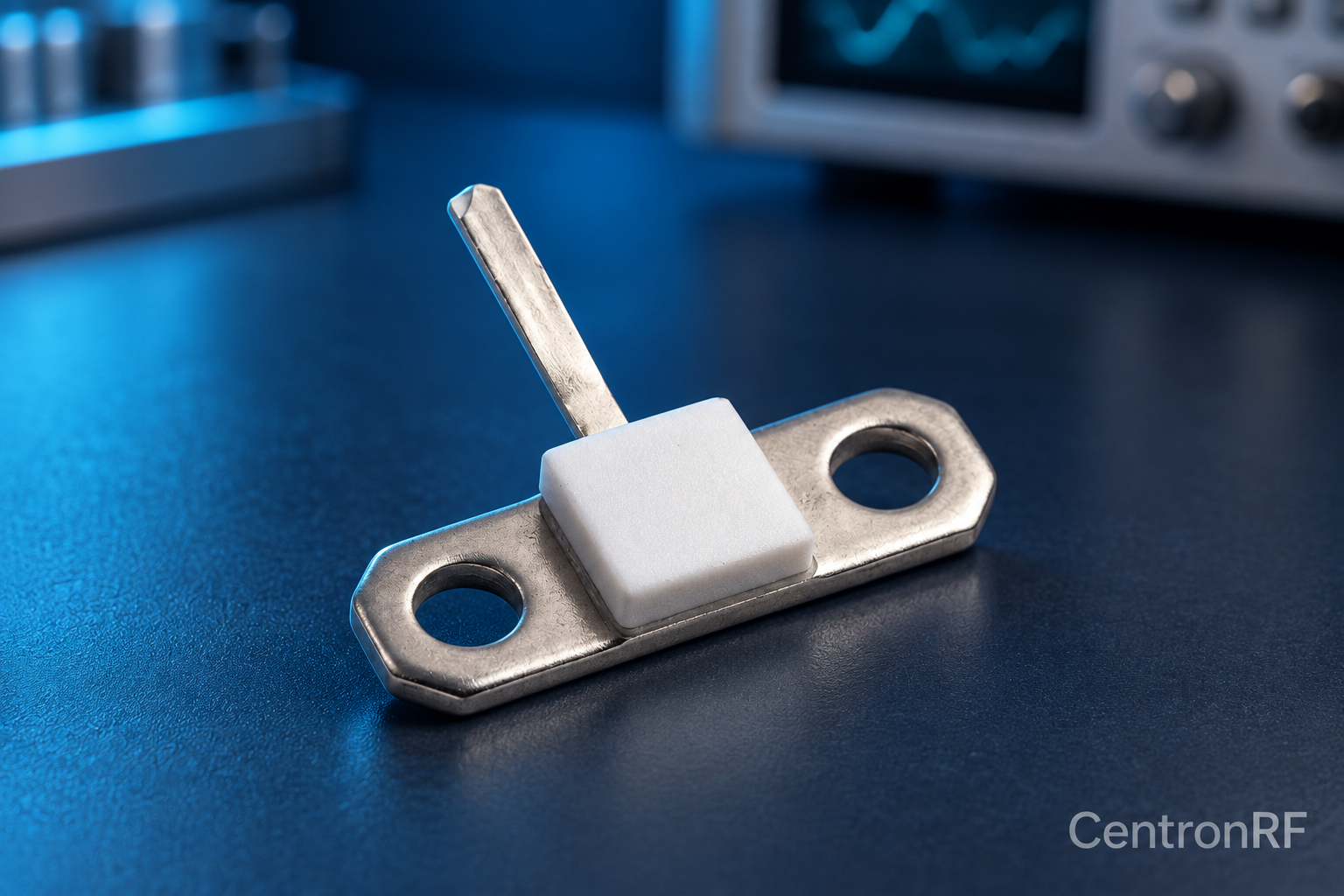
A suitable RF resistor can be part of a dummy-load assembly, but the finished load also needs an RF transition, grounding, cooling and mechanical protection.
How it works in practice
Design for the intended impedance over the required band and verify the completed assembly. A component power rating is conditional on mounting and thermal data. Connector and enclosure design can introduce mismatch. Do not present a bare resistor as a complete ready-to-use load.
Example and interpretation
A 50-ohm RF element on a suitable mount still needs a characterized connector transition before it is a reliable coaxial termination.
Checks before use
- Design the RF transition
- Provide specified cooling
- Measure return loss
- Verify sustained power conditions
Important limit
The resistor's catalog band does not automatically become the assembled load's band.
Related Centron RF product
50-ohm 10 W thick-film RF resistor. The linked resistor is listed as 50 ohms, 10 W and 4 GHz. Request the recommended mounting, heatsink, derating, tolerance and pulse conditions; those determine whether it is suitable for the intended circuit.
Further reading
Vishay: Resistor Technical FAQ. This background reference explains general principles; the selected Centron RF model’s datasheet governs its own ratings.
Related guides
Educational guide. Numerical examples use the stated assumptions and are not test results for a supplied unit.