


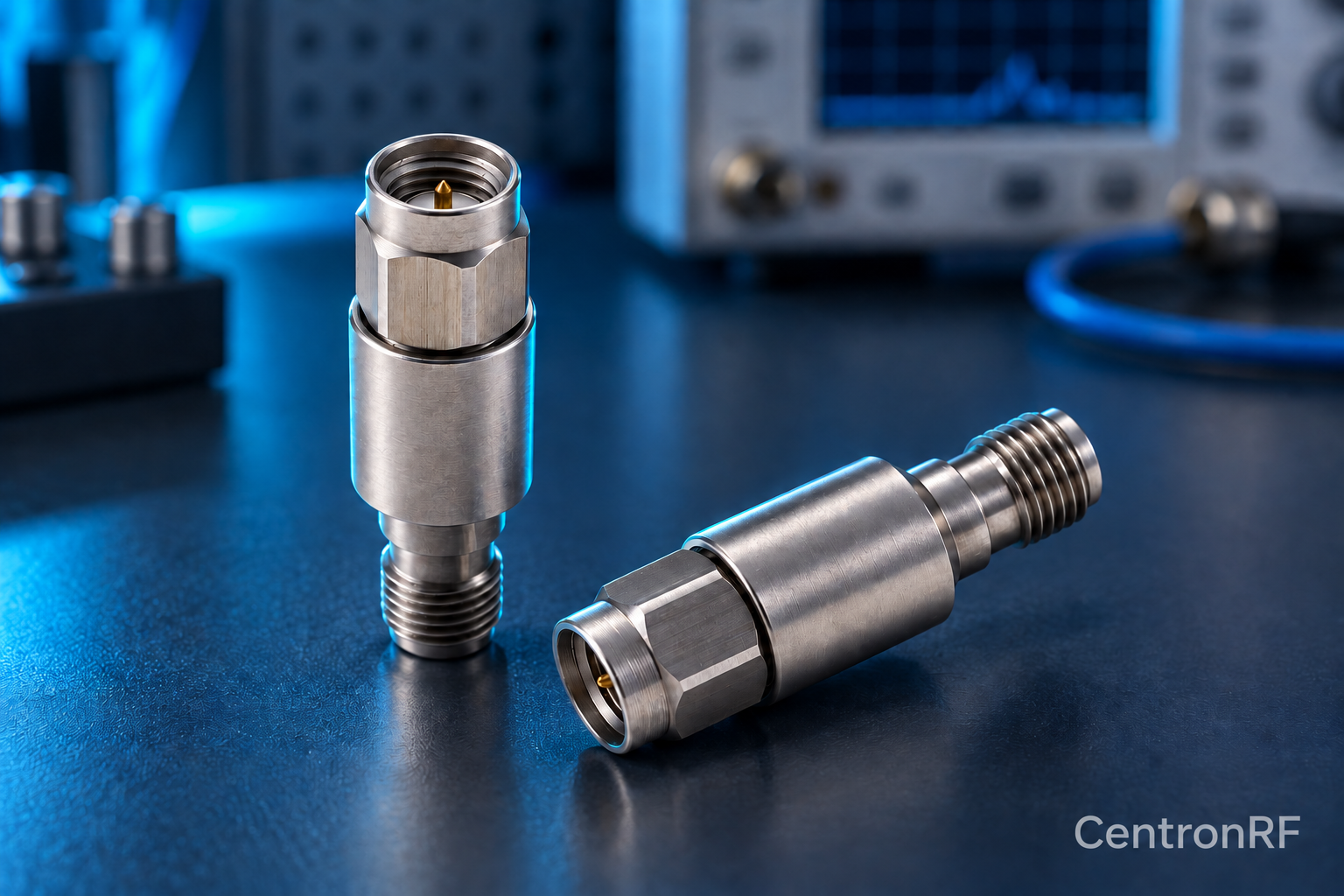
Inspect threads, center contacts and mating surfaces before connecting RF components. Damage or contamination can affect match and damage the mating part.
How it works in practice
Use the appropriate inspection method for the interface and keep protective caps on stored components. Do not scrape precision surfaces or insert tools into contacts without approved instructions. If debris or damage is present, follow the manufacturer's cleaning or repair guidance.
Example and interpretation
A bent center pin can harm an instrument port even if the external threads look normal.
Checks before use
- Disconnect power
- Inspect the mating geometry
- Check for contamination
- Connect only compatible undamaged parts
Important limit
Do not force a damaged connector to mate.
Related Centron RF product
N-type fixed attenuator for a compatible RF path. Use a product page to check both connector interfaces, nominal impedance and model-specific band and power requirements. The connector family alone cannot establish a component’s total RF capability.
Further reading
Rohde & Schwarz: Impedance, VSWR and Return Loss. This background reference explains general principles; the selected Centron RF model’s datasheet governs its own ratings.
Related guides
Educational guide. Numerical examples use the stated assumptions and are not test results for a supplied unit.