


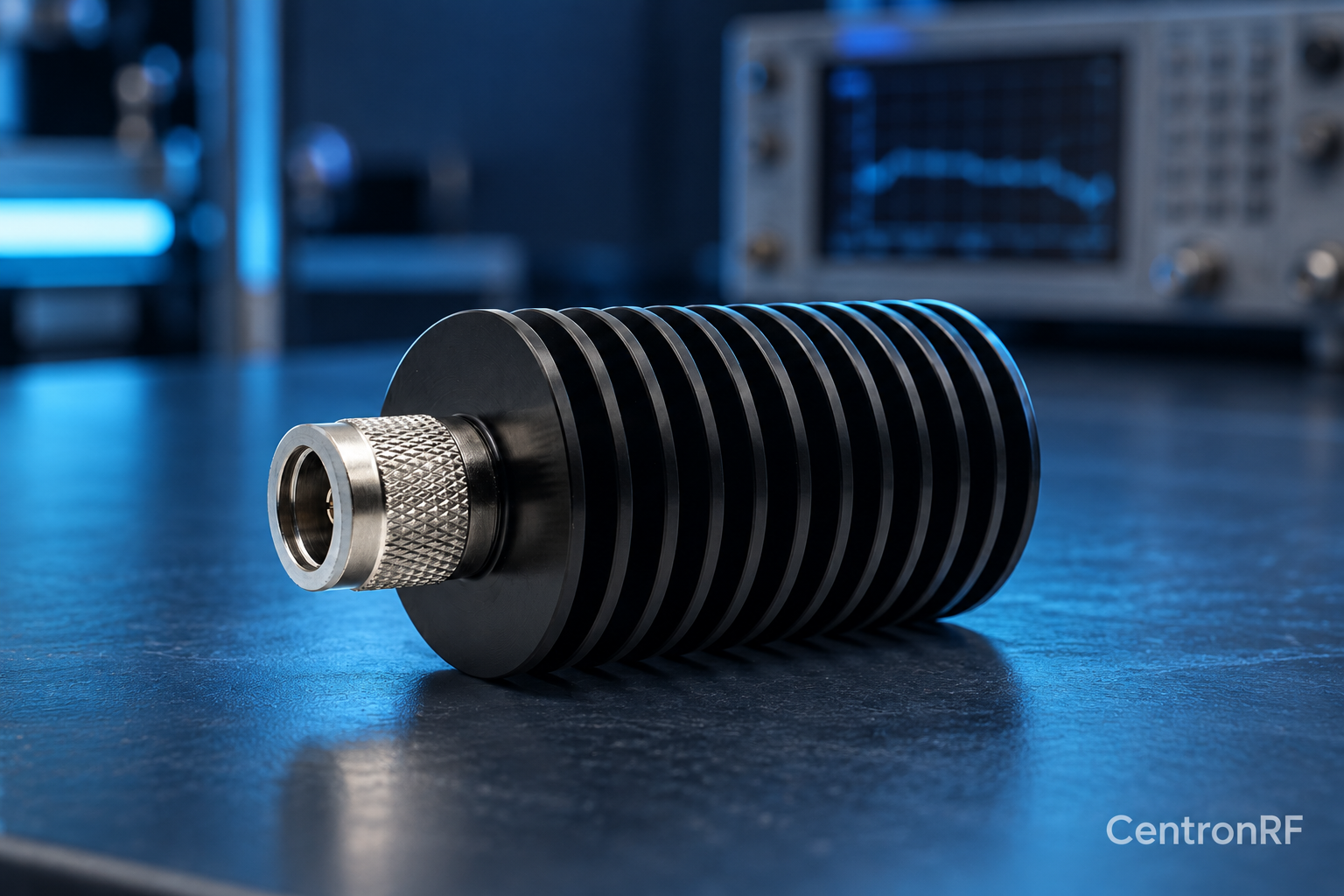
An N-type dummy load can provide a practical termination for compatible transmitter connections. Verify impedance, connector gender, bandwidth and power before connecting it.
How it works in practice
The larger mechanical interface can help with robust bench cabling, but connector type alone does not set the load rating. Support heavy cables and keep the mating surfaces clean. Use a directional coupler or appropriate sensor if power measurement is required; the load itself does not necessarily indicate watts.
Example and interpretation
A transmitter with an N-female output needs a compatible cable or load interface without bending the center contact.
Checks before use
- Confirm mating interfaces
- Rate the load and cable
- Connect with power off
- Increase power under monitoring
Important limit
Do not use a mechanically compatible load without checking its RF specifications.
Related Centron RF product
N-type 50 W 6 GHz dummy load. The linked N-type load is a starting point for comparing impedance, bandwidth, power and mechanical fit. Confirm the exact connector option and current thermal conditions before using any load near its rated power.
Further reading
Rohde & Schwarz: VSWR and Return Loss. This background reference explains general principles; the selected Centron RF model’s datasheet governs its own ratings.
Related guides
Educational guide. Numerical examples use the stated assumptions and are not test results for a supplied unit.