


Low VSWR means a load reflects less incident RF power at the specified frequency. Good matching helps protect test validity and reduce source mismatch effects.
How it works in practice
VSWR is not a direct measure of thermal capacity. A load may match well at low measurement power yet overheat under sustained high power. Check the match specification across the whole operating band and, when required, performance under the relevant temperature conditions.
Example and interpretation
A VSWR of 1.2 corresponds to a reflection coefficient magnitude near 0.091 and about 0.83% reflected power under the usual definitions.
Checks before use
- Read the frequency-dependent match limit
- Inspect connections
- Measure low-power S11
- Confirm thermal suitability separately
Important limit
A favorable VSWR does not authorize exceeding power limits.
Related Centron RF product
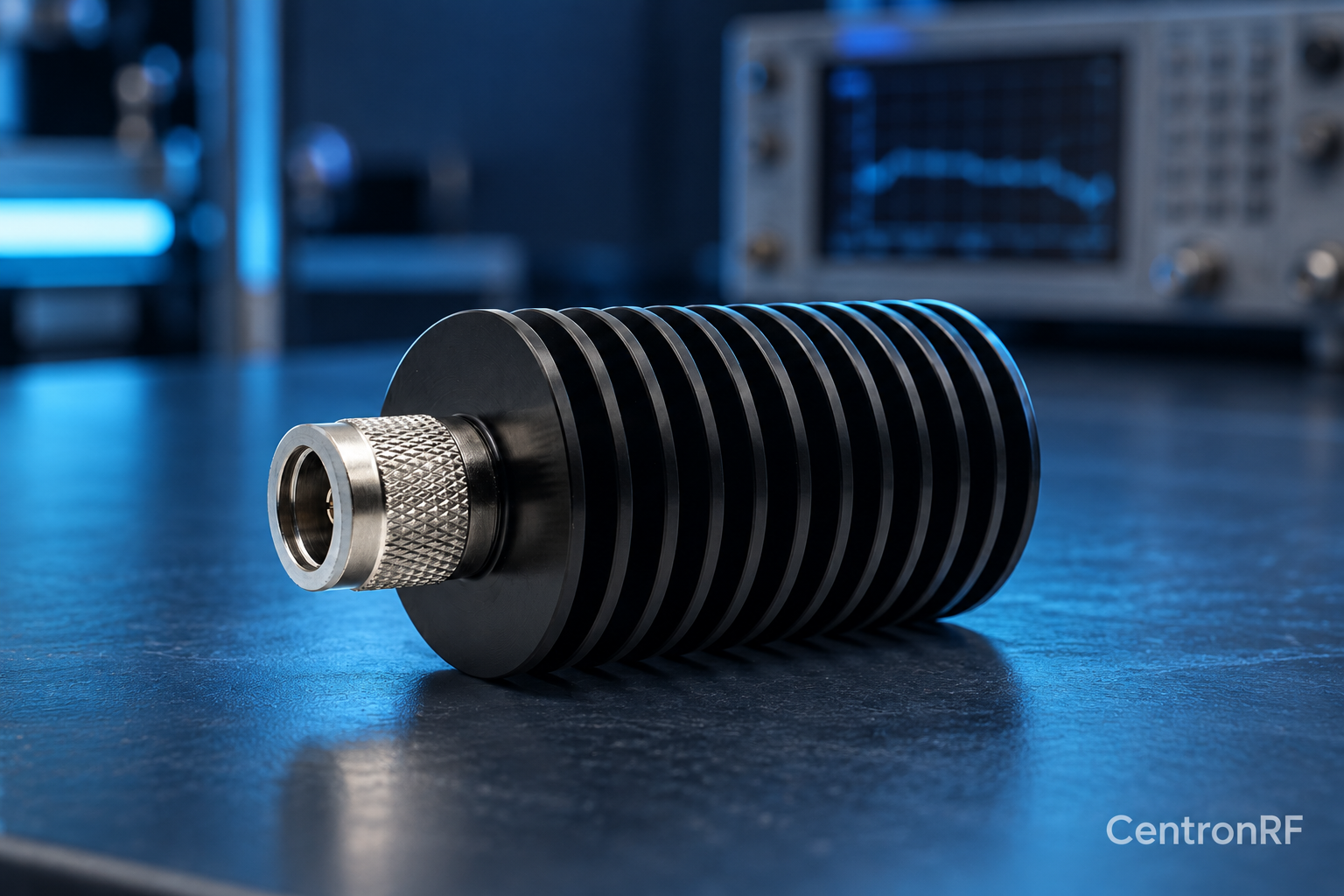
N-type 50 W 6 GHz dummy load. The linked N-type load is a starting point for comparing impedance, bandwidth, power and mechanical fit. Confirm the exact connector option and current thermal conditions before using any load near its rated power.
Further reading
Rohde & Schwarz: VSWR and Return Loss. This background reference explains general principles; the selected Centron RF model’s datasheet governs its own ratings.
Related guides
- Can a Dummy Load Replace an Antenna for Every Test?
- How to Check an RF Load Before Applying High Power
Educational guide. Numerical examples use the stated assumptions and are not test results for a supplied unit.