


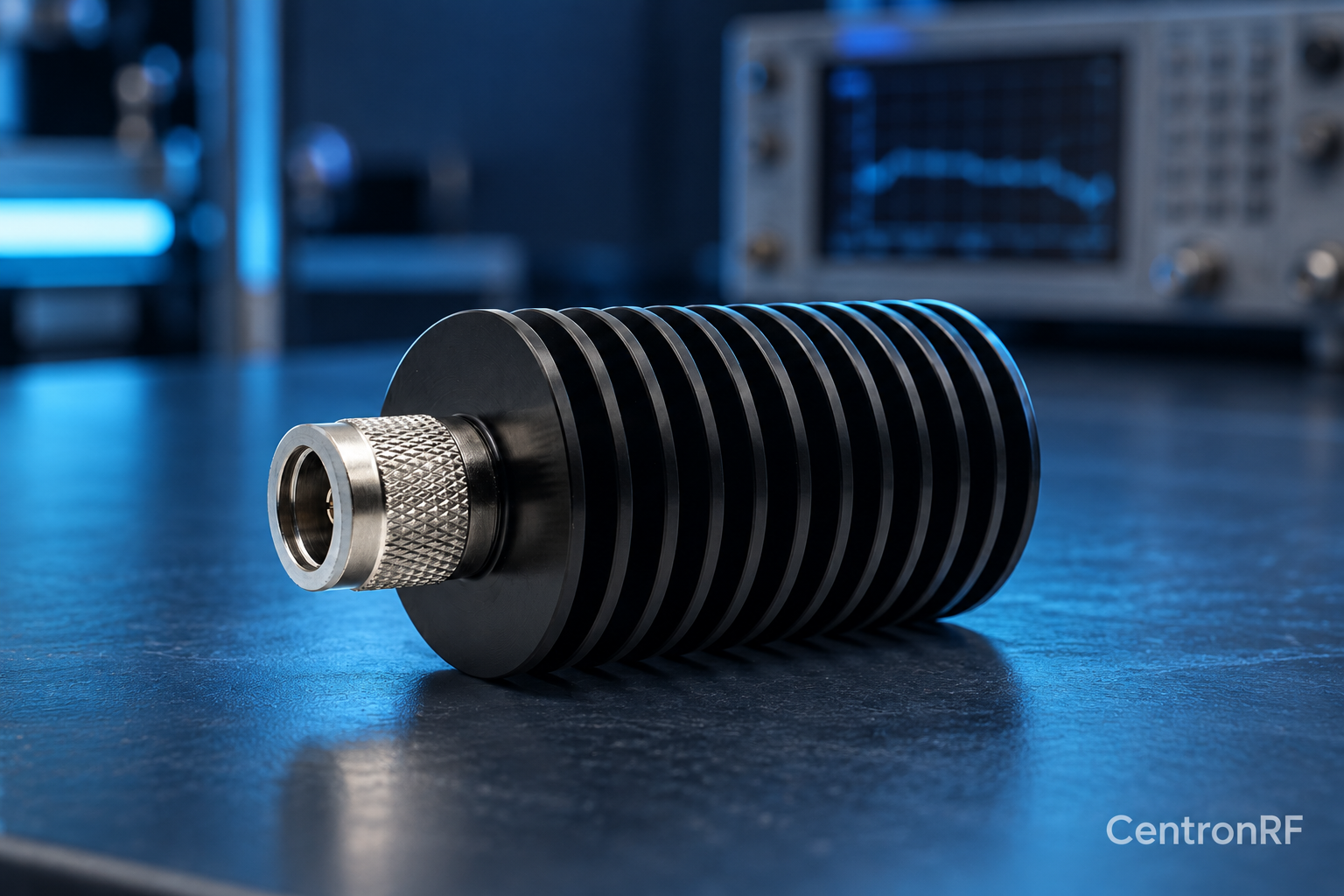
Inspect the load and verify its suitability at low power before connecting a high-power source. This reduces avoidable connector and mismatch problems.
How it works in practice
Check damage, loose parts, blocked cooling fins and signs of overheating. Confirm the label and current datasheet. A low-power return-loss measurement can reveal gross RF mismatch, but cannot prove high-power thermal capacity. If a DC resistance check is permitted, disconnect all RF sources first.
Example and interpretation
A reasonable DC resistance reading can coexist with poor GHz-frequency match because parasitic behavior matters.
Checks before use
- Inspect mechanically
- Confirm ratings
- Check low-power RF match
- Begin with reduced source power
Important limit
Do not use a resistance meter on an energized RF path.
Related Centron RF product
N-type 50 W 6 GHz dummy load. The linked N-type load is a starting point for comparing impedance, bandwidth, power and mechanical fit. Confirm the exact connector option and current thermal conditions before using any load near its rated power.
Further reading
Rohde & Schwarz: VSWR and Return Loss. This background reference explains general principles; the selected Centron RF model’s datasheet governs its own ratings.
Related guides
Educational guide. Numerical examples use the stated assumptions and are not test results for a supplied unit.