


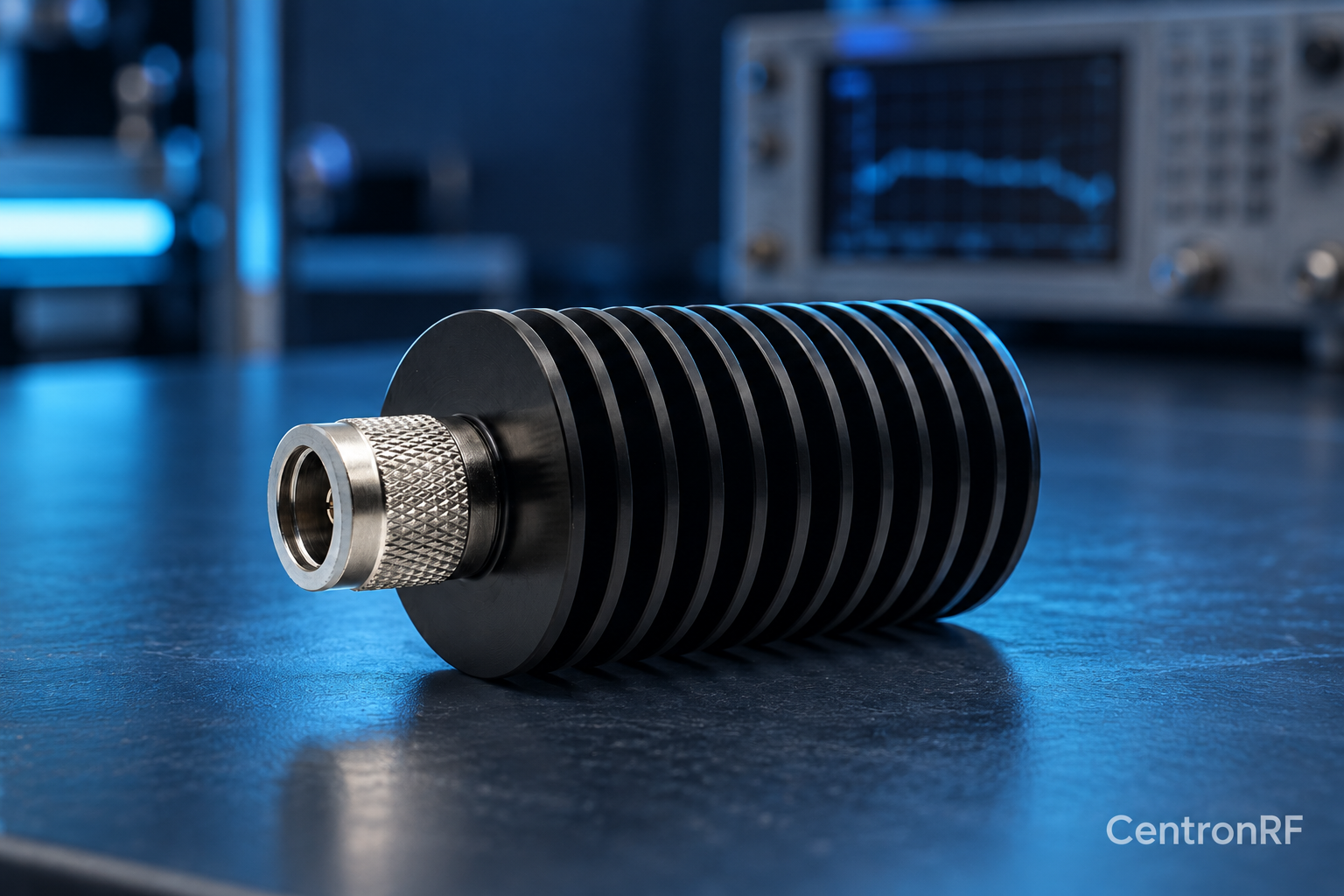
A dummy load converts accepted RF energy into heat. Temperature rise is expected, but safe operation depends on staying within its specified thermal limits.
How it works in practice
The internal resistive element transfers heat through the housing and cooling structure. Poor airflow or mounting can raise element temperature even when input is below the headline rating. A hot exterior does not reveal the exact internal temperature; use the manufacturer's limits and recommended monitoring method.
Example and interpretation
At 20 W input with negligible reflection, nearly 20 W must ultimately leave the load as heat.
Checks before use
- Provide clear airflow
- Follow mounting instructions
- Check allowed ambient temperature
- Reduce power if limits are approached
Important limit
Do not judge safe power solely by touching the housing.
Related Centron RF product
N-type 50 W 6 GHz dummy load. The linked N-type load is a starting point for comparing impedance, bandwidth, power and mechanical fit. Confirm the exact connector option and current thermal conditions before using any load near its rated power.
Further reading
Rohde & Schwarz: VSWR and Return Loss. This background reference explains general principles; the selected Centron RF model’s datasheet governs its own ratings.
Related guides
- Dummy Load Versus Attenuator: The Port Difference
- Can a Dummy Load Replace an Antenna for Every Test?
Educational guide. Numerical examples use the stated assumptions and are not test results for a supplied unit.