


DC-pass protection supports intended DC continuity on the RF path; DC-blocked designs may interrupt it. Choose the type required by cable-powered equipment.
How it works in practice
Bias tees, remote amplifiers and antenna electronics can depend on DC through the coax. Verify continuous voltage and current limits, polarity restrictions where applicable and the protector's RF band. A label saying surge protection does not establish DC continuity.
Example and interpretation
A remote amplifier receiving cable bias may stop operating if a DC-blocked protector is placed in its supply path.
Checks before use
- Map required DC routes
- Confirm protector topology
- Check bias limits
- Verify the powered equipment after installation
Important limit
Do not assume every lightning arrestor passes antenna bias.
Related Centron RF product
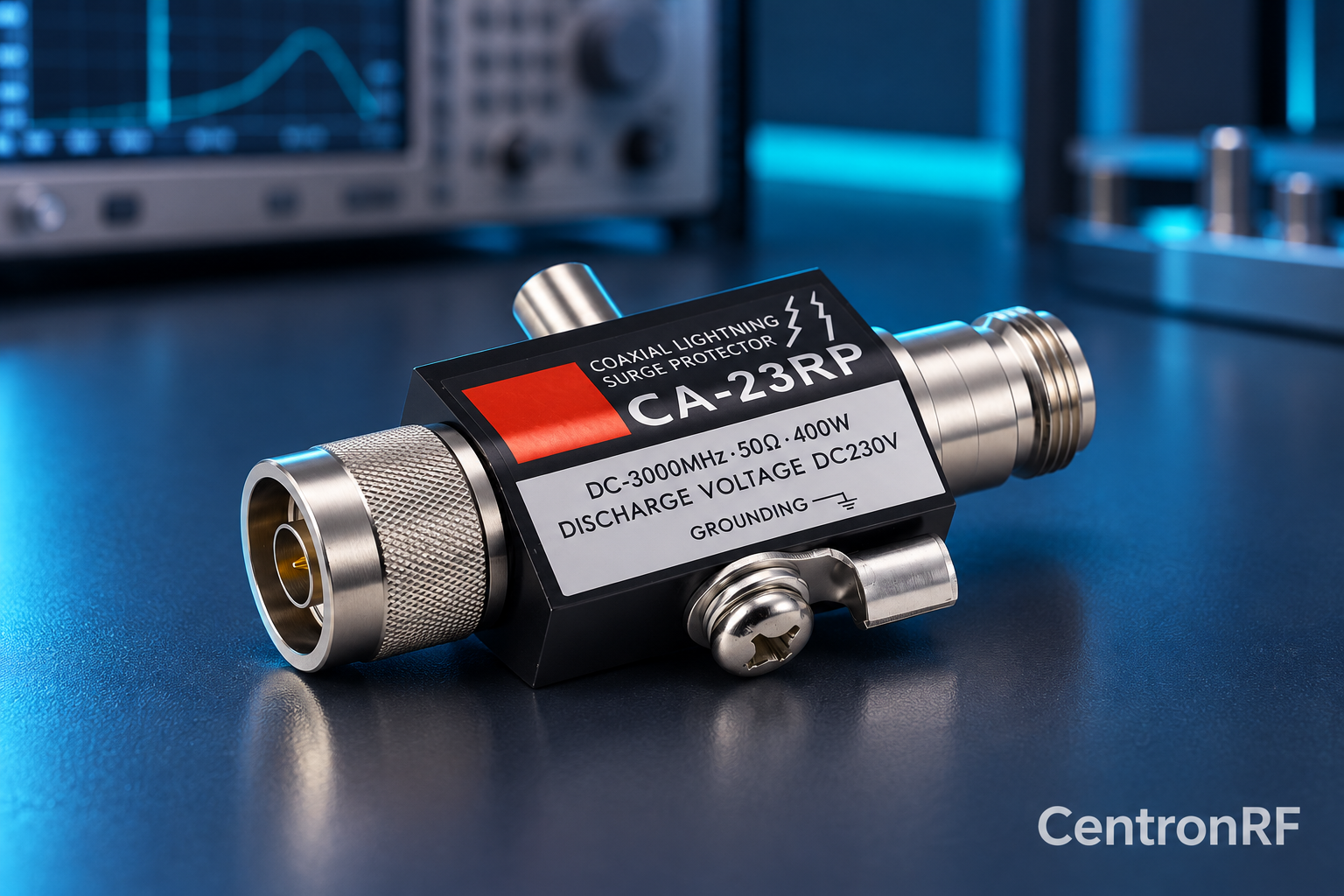
CA-23RP N-type coaxial surge protector. The linked CA-23RP product is listed for 50-ohm coaxial service up to 3 GHz. Obtain the current impulse, grounding, DC-pass and environmental specifications. Resolve inconsistent matching figures in the listing against the current datasheet.
Further reading
PolyPhaser: Example Coaxial Protector Installation Guide. This background reference explains general principles; the selected Centron RF model’s datasheet governs its own ratings.
Related guides
Educational guide. Numerical examples use the stated assumptions and are not test results for a supplied unit.