


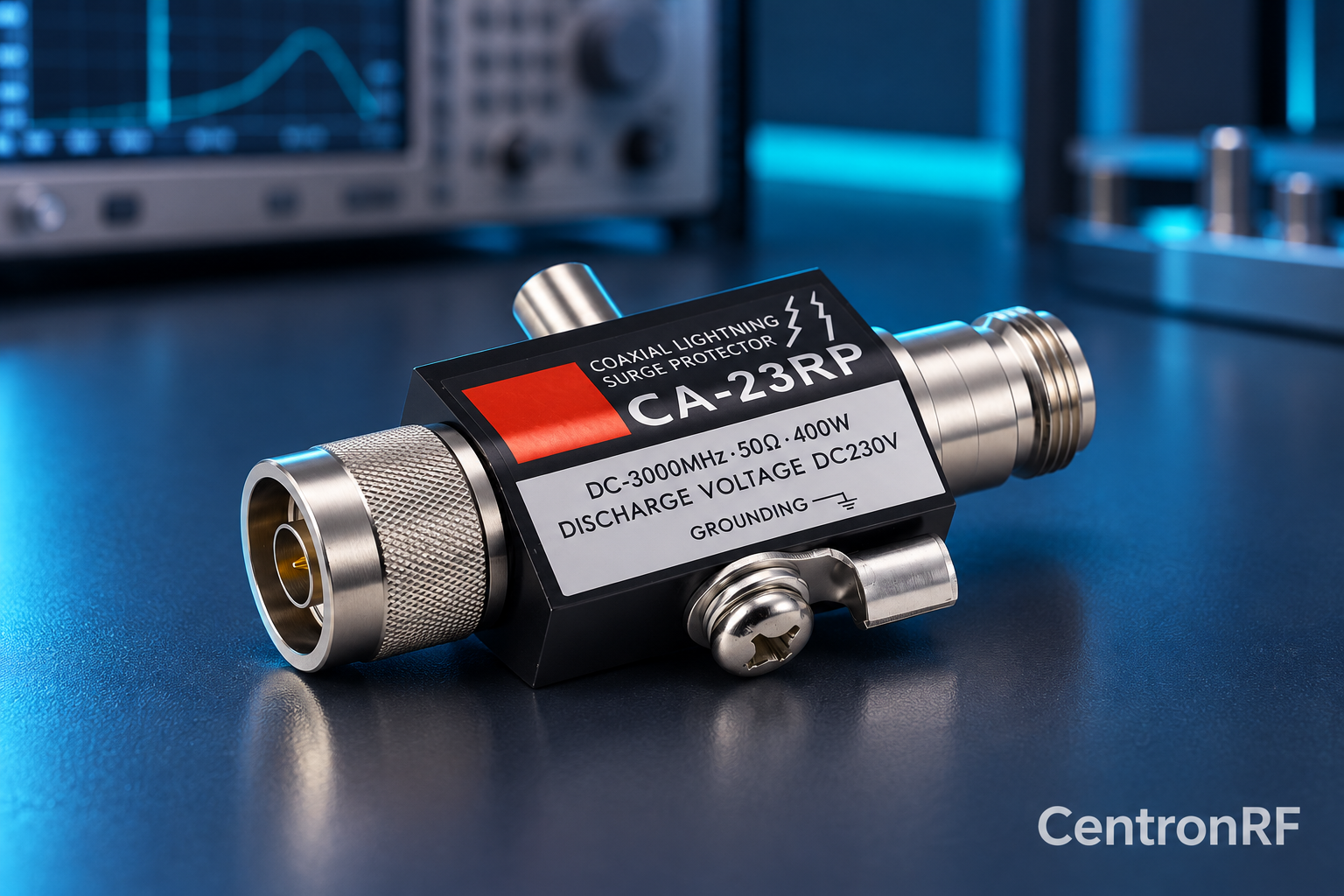
A gas discharge tube becomes conductive when the applied transient reaches its firing conditions. Its operation and residual voltage depend on the device and transient waveform.
How it works in practice
A coaxial protector may integrate a tube with a suitable RF structure. Check DC-pass behavior, nominal discharge voltage, impulse ratings and maintenance instructions. Nominal firing voltage is not the maximum voltage that sensitive equipment will necessarily experience during a fast surge.
Example and interpretation
A listed 230 V nominal discharge figure does not mean a receiver sees an exactly clamped 230 V waveform.
Checks before use
- Confirm the protection technology
- Read impulse specifications
- Check DC compatibility
- Follow replacement guidance
Important limit
Do not equate nominal firing voltage with guaranteed residual voltage.
Related Centron RF product
CA-23RP N-type coaxial surge protector. The linked CA-23RP product is listed for 50-ohm coaxial service up to 3 GHz. Obtain the current impulse, grounding, DC-pass and environmental specifications. Resolve inconsistent matching figures in the listing against the current datasheet.
Further reading
PolyPhaser: Example Coaxial Protector Installation Guide. This background reference explains general principles; the selected Centron RF model’s datasheet governs its own ratings.
Related guides
Educational guide. Numerical examples use the stated assumptions and are not test results for a supplied unit.