


A coaxial protector is designed for its specified coaxial signal path. Other incoming services need protection appropriate to their own interfaces and installation.
How it works in practice
Surge stress can enter through multiple cables or ground potential differences. Coordinated protection considers RF coax, power and data connections together. A coaxial device cannot be placed in an unrelated interface or assumed to protect equipment through another unprotected route.
Example and interpretation
A radio with protected coax but unprotected outdoor data wiring still has another possible surge path.
Checks before use
- List all incoming services
- Select interface-specific protection
- Coordinate bonding
- Follow equipment installation guidance
Important limit
Do not claim a single RF component protects every connection to a device.
Related Centron RF product
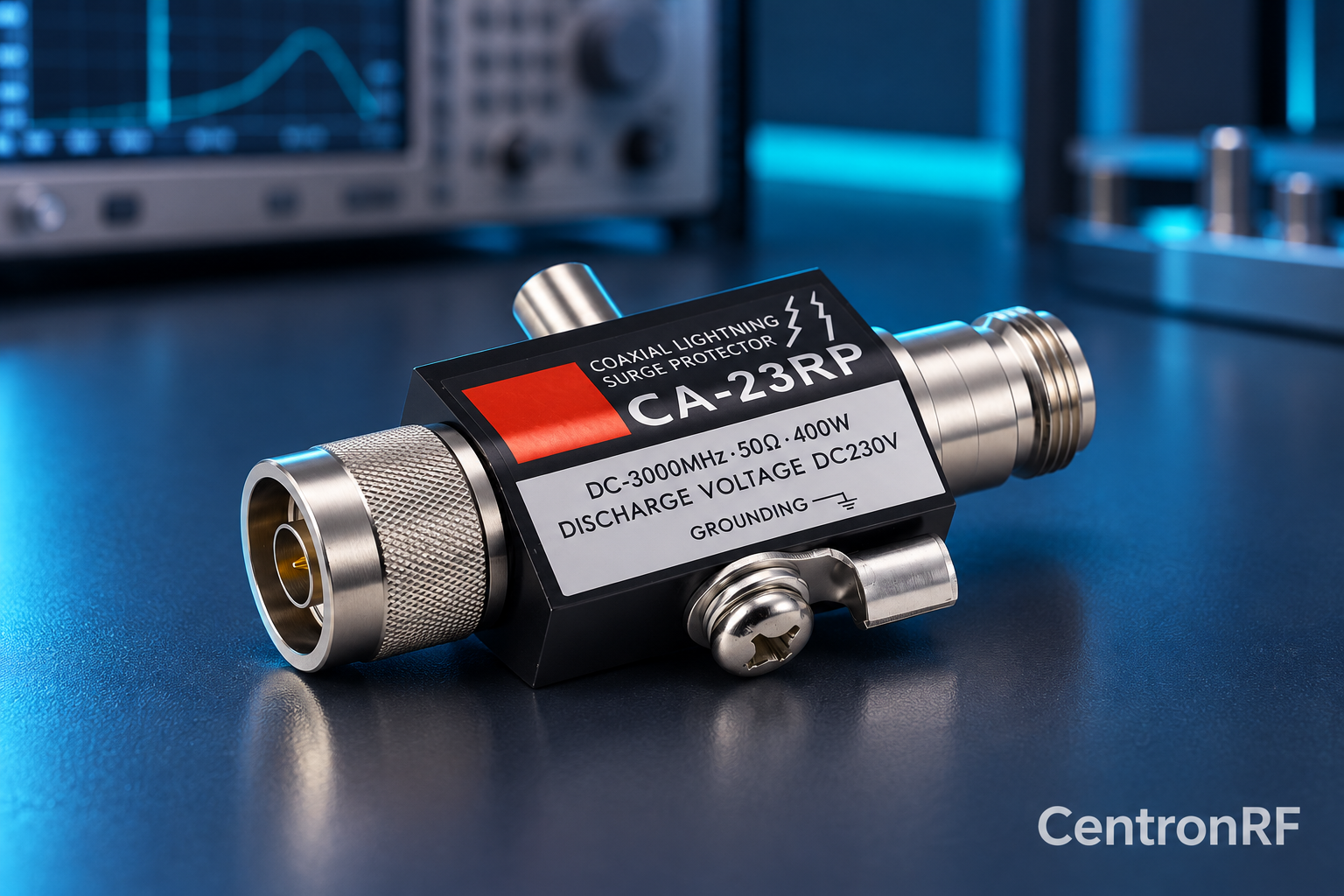
CA-23RP N-type coaxial surge protector. The linked CA-23RP product is listed for 50-ohm coaxial service up to 3 GHz. Obtain the current impulse, grounding, DC-pass and environmental specifications. Resolve inconsistent matching figures in the listing against the current datasheet.
Further reading
PolyPhaser: Example Coaxial Protector Installation Guide. This background reference explains general principles; the selected Centron RF model’s datasheet governs its own ratings.
Related guides
Educational guide. Numerical examples use the stated assumptions and are not test results for a supplied unit.