


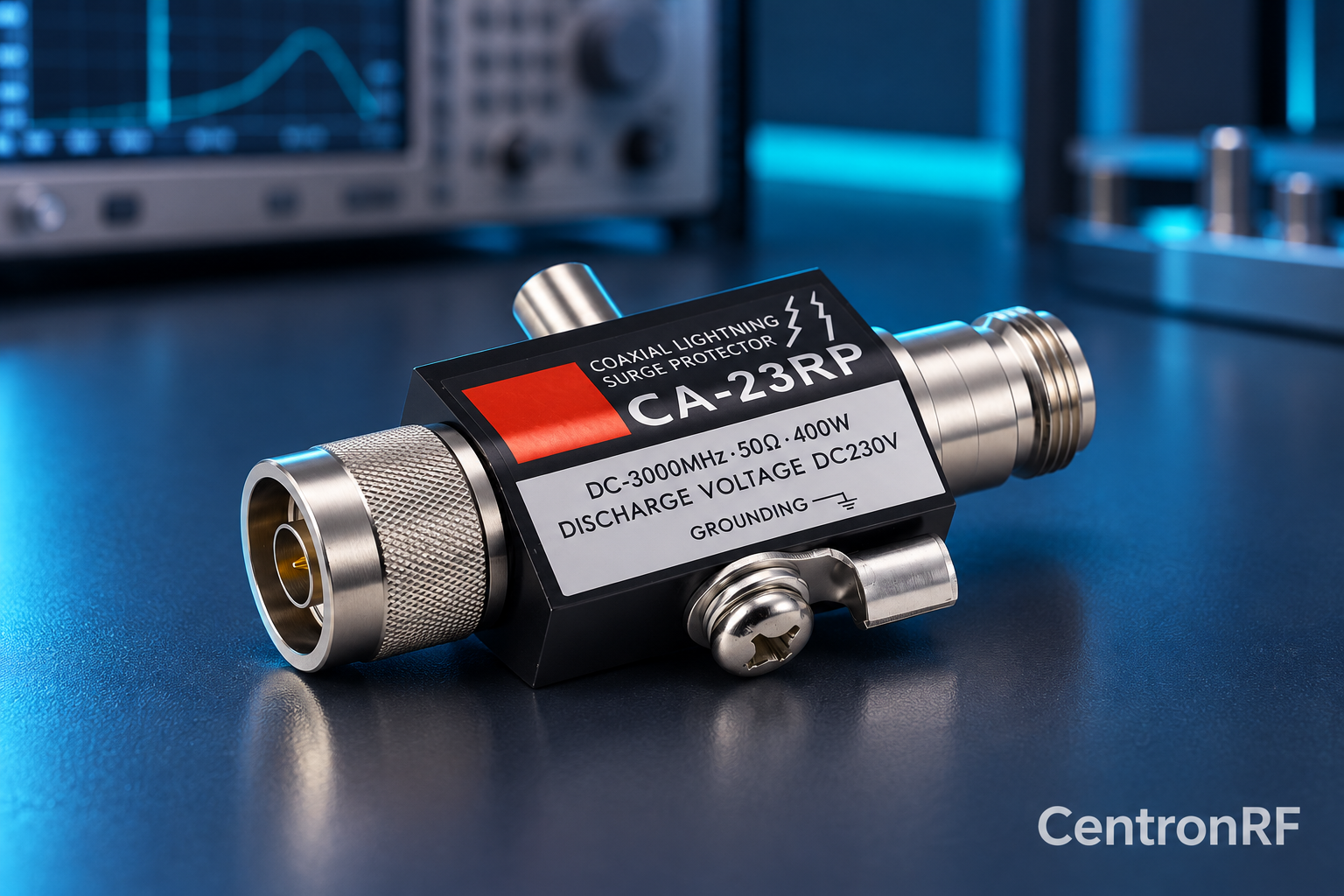
Follow the protector and site installation design, including the required bonding location and conductor arrangement. Placement affects how surge current is diverted.
How it works in practice
A protector often belongs near the cable entry or another specified bonding point, but installations differ. Keep the prescribed bonding path short and direct, with suitable connections. Local electrical requirements and the site's grounding system should govern the final arrangement.
Example and interpretation
An inline protector floating on a cable without the specified bond cannot be assumed to provide its intended protection.
Checks before use
- Read the installation guide
- Identify the bonding point
- Plan cable routing
- Have the installation checked against applicable requirements
Important limit
Do not copy a generic layout without checking the site's grounding design.
Related Centron RF product
CA-23RP N-type coaxial surge protector. The linked CA-23RP product is listed for 50-ohm coaxial service up to 3 GHz. Obtain the current impulse, grounding, DC-pass and environmental specifications. Resolve inconsistent matching figures in the listing against the current datasheet.
Further reading
PolyPhaser: Example Coaxial Protector Installation Guide. This background reference explains general principles; the selected Centron RF model’s datasheet governs its own ratings.
Related guides
Educational guide. Numerical examples use the stated assumptions and are not test results for a supplied unit.