


A step attenuator can identify the level at which a receiver starts compressing, clipping or losing performance. Begin with safe attenuation and reduce it gradually.
How it works in practice
Use the receiver's stated maximum input as an absolute boundary, not as a target. Select a measurable overload indicator, such as distortion or packet errors, and distinguish reversible performance degradation from damage. Check the source spectrum because its own distortion can be mistaken for receiver overload.
Example and interpretation
A 1 dB reduction in attenuation raises nominal receiver input by 1 dB, provided the source and path remain stable.
Checks before use
- Set a conservative starting loss
- Define an overload metric
- Reduce attenuation gradually
- Stop before the input limit
Important limit
Do not deliberately cross a damage limit to locate a performance threshold.
Related Centron RF product
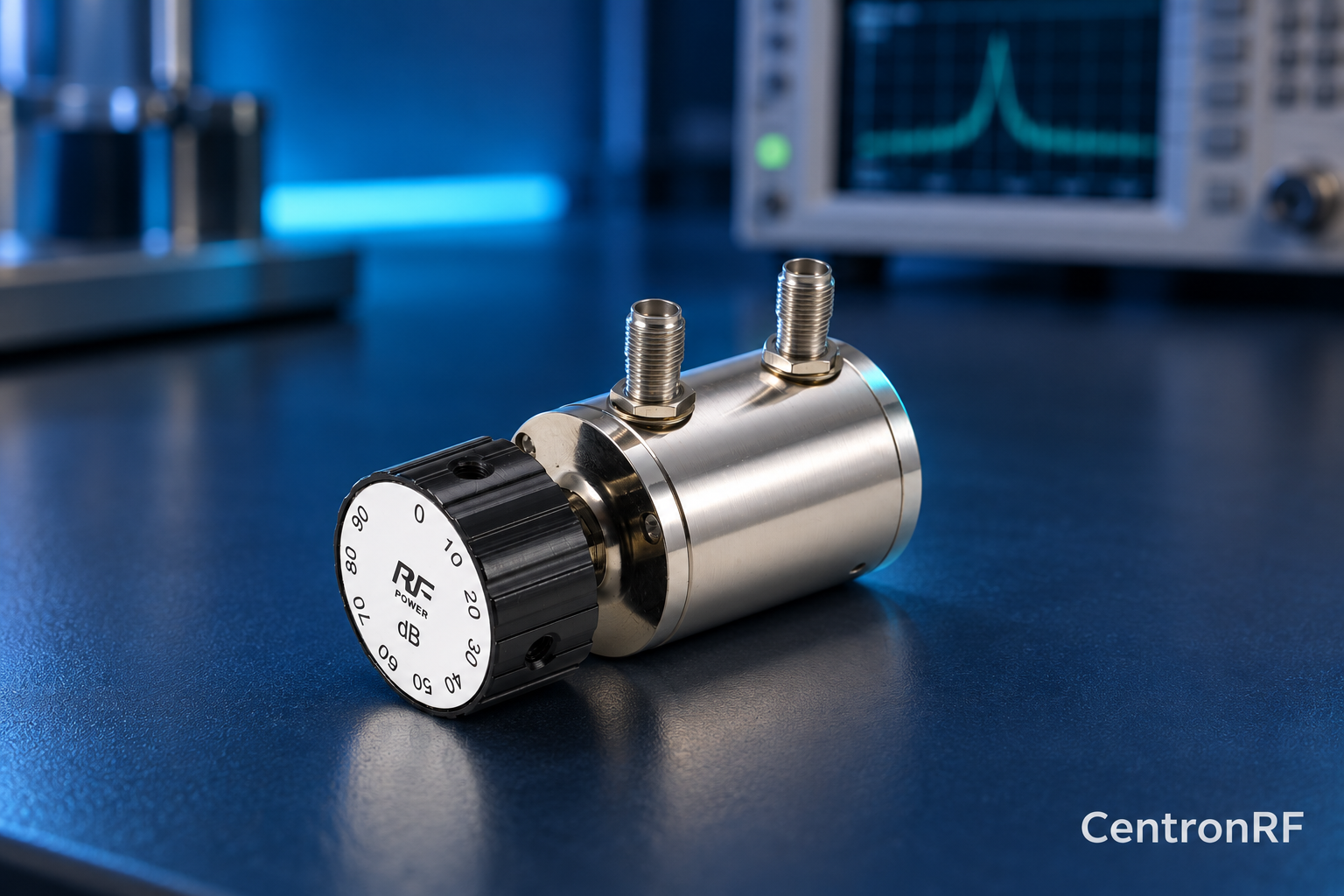
SMA rotary attenuator with 10 dB steps. The linked rotary model lists 0–90 dB adjustment in 10 dB steps, 50-ohm impedance and a DC–6 GHz band. Its listed continuous input is 2 W; obtain explicit switching and pulse limits before applying those stresses.
Further reading
Keysight: Accurate Network Measurements. This background reference explains general principles; the selected Centron RF model’s datasheet governs its own ratings.
Related guides
- Diagnosing an Erratic Rotary Attenuator Reading
- Selecting a Rotary Attenuator for a Purchase Specification
Educational guide. Numerical examples use the stated assumptions and are not test results for a supplied unit.