


A repeatable level test records the source, signal format, complete path and attenuator states so another person can reproduce it.
How it works in practice
Include source power at the reference plane, frequency, modulation, cable identifiers, baseline loss and the receiver criterion. Describe the order of switching and any settling time required by the instruments. Keep a results table with both nominal settings and corrected input levels. Version the procedure when hardware changes.
Example and interpretation
A record stating only 'passed at 50 dB' is incomplete; it needs source level, actual path loss and a clear pass condition.
Checks before use
- Define the reference plane
- Record all path components
- Log dial positions and measured results
- Retest after a fixture change
Important limit
A photograph of the dial cannot replace the test conditions.
Related Centron RF product
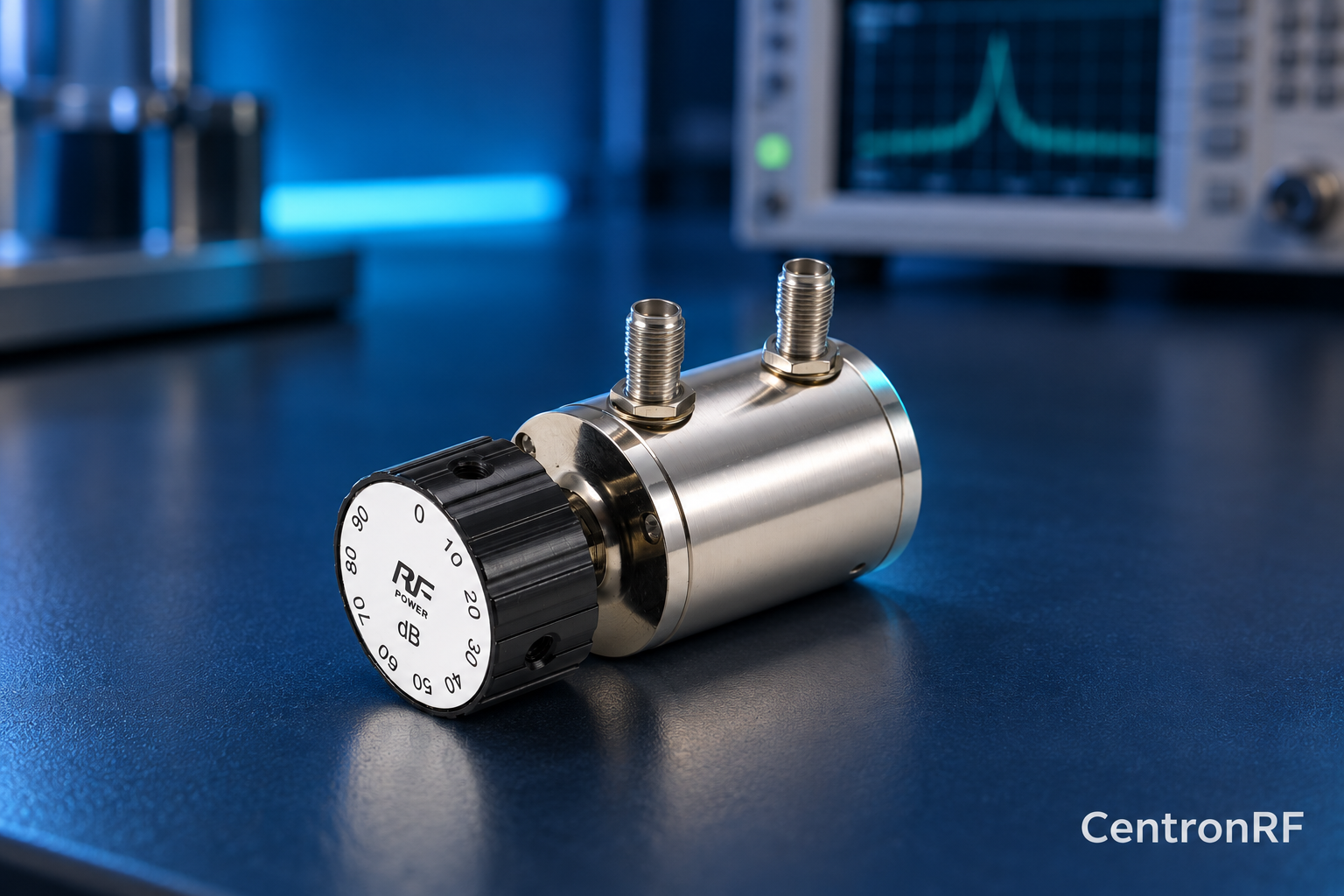
SMA rotary attenuator with 10 dB steps. The linked rotary model lists 0–90 dB adjustment in 10 dB steps, 50-ohm impedance and a DC–6 GHz band. Its listed continuous input is 2 W; obtain explicit switching and pulse limits before applying those stresses.
Further reading
Keysight: Accurate Network Measurements. This background reference explains general principles; the selected Centron RF model’s datasheet governs its own ratings.
Related guides
Educational guide. Numerical examples use the stated assumptions and are not test results for a supplied unit.