


S-parameters describe how the mounted resistor or fixture reflects and transmits RF under defined reference conditions. They reveal behavior beyond DC resistance.
How it works in practice
Check what was measured: a bare component, a specified mount or a complete termination. Reference planes and grounding affect the result. Use data matching the intended installation, or characterize your own assembly with proper calibration. A nominal frequency label is less informative than defined performance data.
Example and interpretation
A good S11 result for a manufacturer's test mount does not automatically transfer to a different long-lead layout.
Checks before use
- Identify the measured fixture
- Check reference impedance
- Compare frequency range
- Verify your assembly
Important limit
Do not treat fixture-dependent data as universal for every mounting arrangement.
Related Centron RF product
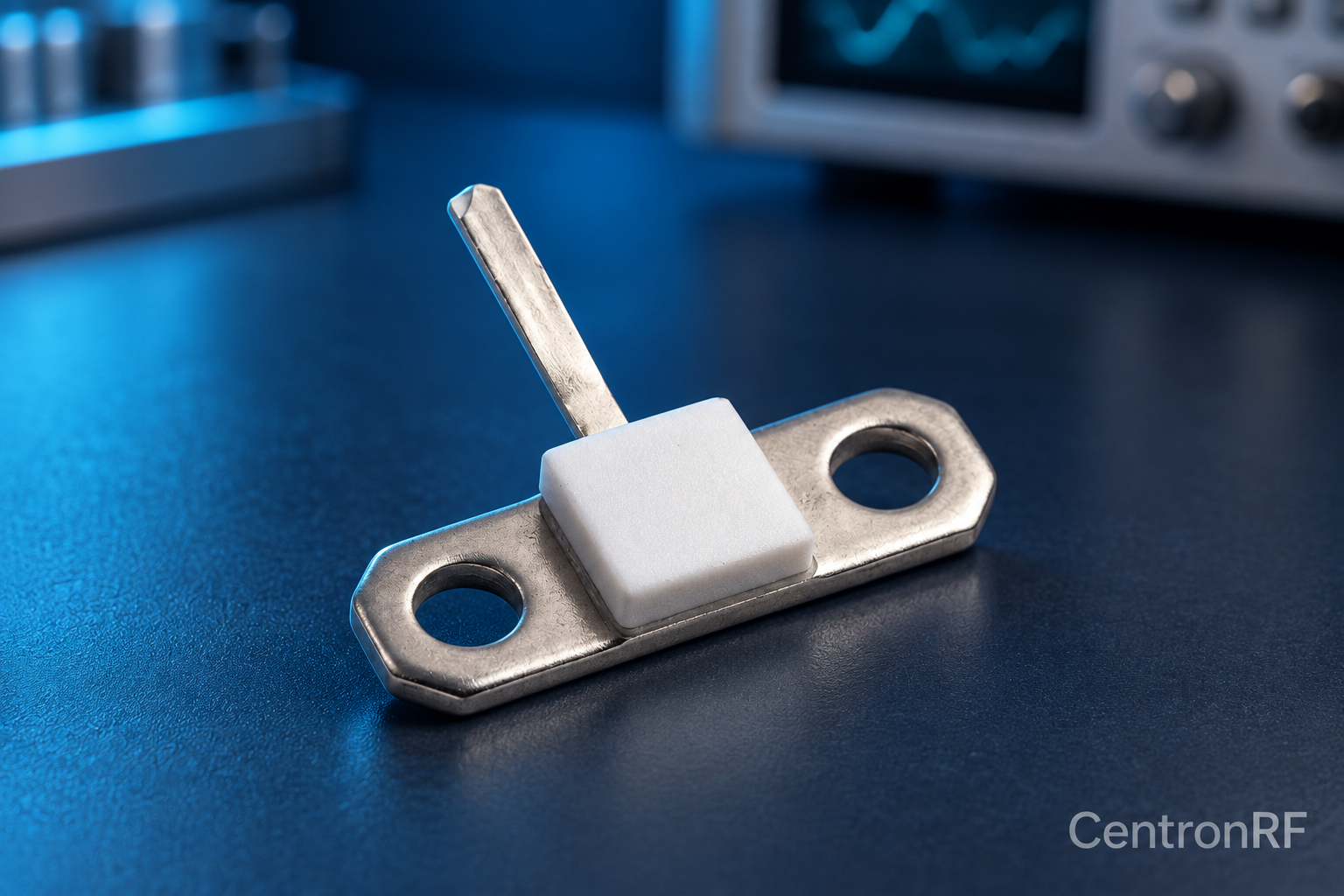
50-ohm 10 W thick-film RF resistor. The linked resistor is listed as 50 ohms, 10 W and 4 GHz. Request the recommended mounting, heatsink, derating, tolerance and pulse conditions; those determine whether it is suitable for the intended circuit.
Further reading
Vishay: Resistor Technical FAQ. This background reference explains general principles; the selected Centron RF model’s datasheet governs its own ratings.
Related guides
Educational guide. Numerical examples use the stated assumptions and are not test results for a supplied unit.