


Choose a calibration or verification interval from instrument guidance, use, stability, required accuracy and historical results. There is no universal interval for every RF component.
How it works in practice
Track drift, connector wear, environmental exposure and events such as overload or impact. Important changes can trigger earlier verification. Keep component characterization separate from instrument calibration. Use records to justify future intervals rather than assuming a generic date guarantees suitability.
Example and interpretation
A heavily handled test adapter may need verification sooner than a protected fixture with stable historical data.
Checks before use
- Read manufacturer guidance
- Review usage and history
- Define event triggers
- Adjust intervals from evidence
Important limit
A valid date label does not override known damage or an altered setup.
Related Centron RF product
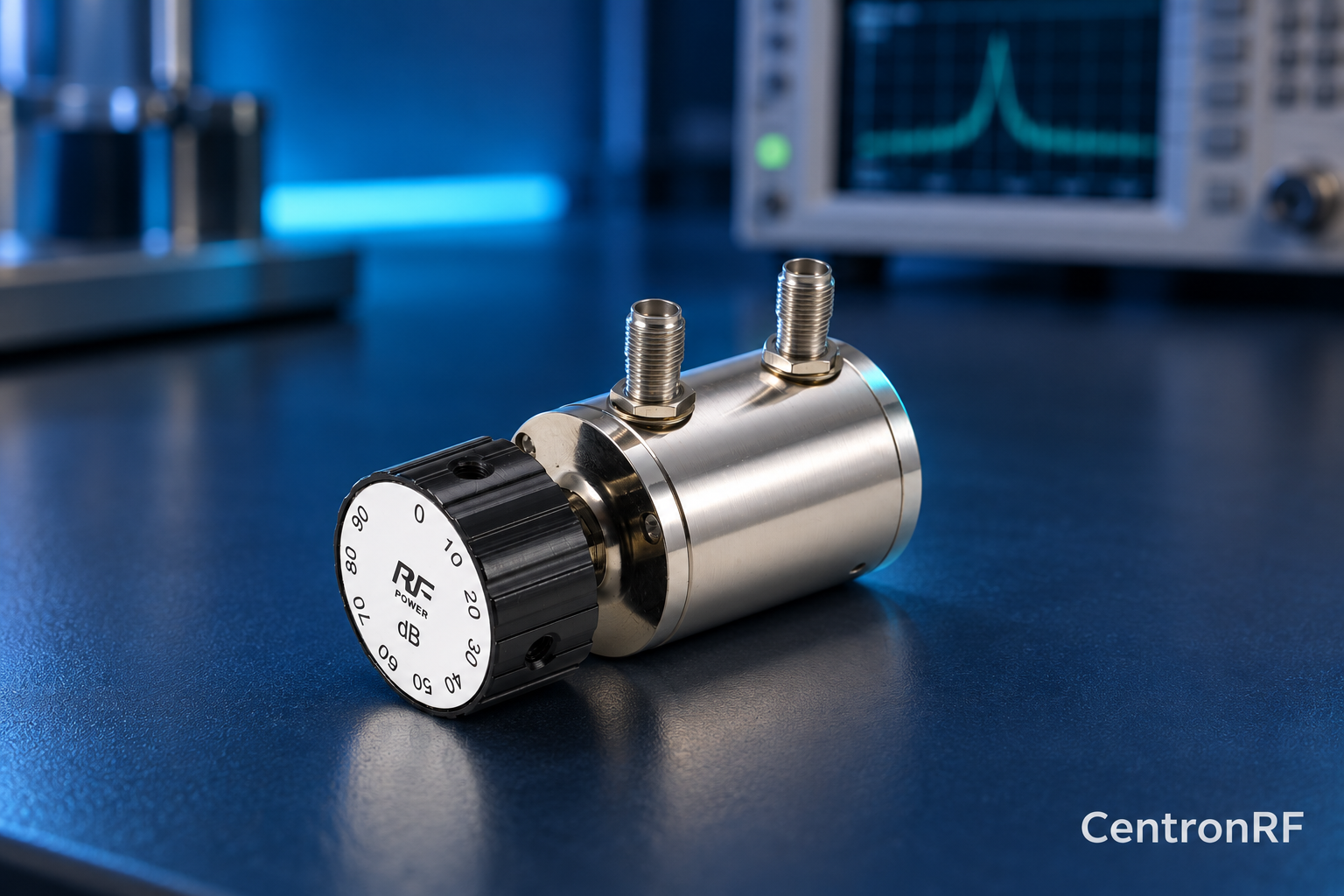
SMA rotary attenuator with 1 dB steps. The linked fine-step unit lists 0–10 dB in 1 dB increments. It can be considered for controlled level changes within its ratings. Dial resolution does not establish traceable accuracy; calibrate the assembled path as required.
Further reading
Keysight: Fundamentals of RF and Microwave Power Measurements. This background reference explains general principles; the selected Centron RF model’s datasheet governs its own ratings.
Related guides
- RF Measurement Uncertainty: What to Include
- Why Cable Movement Can Invalidate a Precise RF Comparison
Educational guide. Numerical examples use the stated assumptions and are not test results for a supplied unit.