


Resolution bandwidth affects frequency discrimination, noise visibility and measurement time. Choose it for the signal and measurement objective.
How it works in practice
A narrower bandwidth can lower displayed noise for noise-like signals but may require more settling time. Signal power readings depend on modulation, detector and integration method. Follow the analyzer's procedure for channel power rather than reading an arbitrary peak as total modulated power.
Example and interpretation
Reducing bandwidth by ten times ideally reduces integrated white-noise power by 10 dB, subject to the instrument's conventions.
Checks before use
- Define signal bandwidth
- Choose a suitable detector
- Set RBW and timing
- Use the appropriate power method
Important limit
A narrow-bin peak is not automatically the total power of a wideband signal.
Related Centron RF product
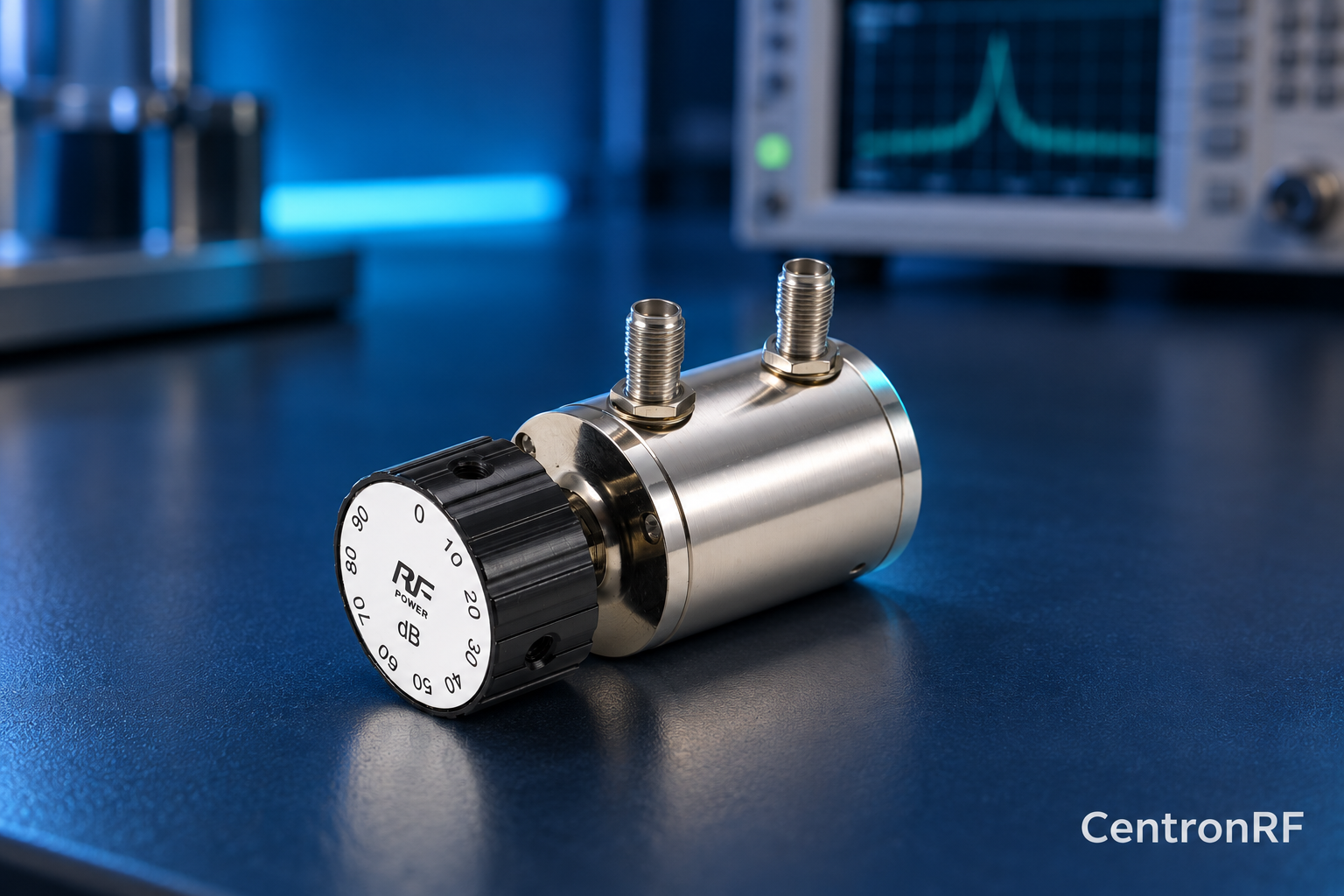
SMA rotary attenuator with 1 dB steps. The linked fine-step unit lists 0–10 dB in 1 dB increments. It can be considered for controlled level changes within its ratings. Dial resolution does not establish traceable accuracy; calibrate the assembled path as required.
Further reading
Keysight: Fundamentals of RF and Microwave Power Measurements. This background reference explains general principles; the selected Centron RF model’s datasheet governs its own ratings.
Related guides
Educational guide. Numerical examples use the stated assumptions and are not test results for a supplied unit.