


Compare components under equivalent frequencies, power, reference planes, loads and thermal conditions. Different setups can create misleading differences.
How it works in practice
Use a common calibrated fixture or account for necessary interface changes. State the specifications being compared and measurement uncertainty. Avoid inferring superiority from one favorable point when the application spans a band. If model ratings differ, report that difference directly.
Example and interpretation
Two pads measured with different uncorrected cables can appear to have different insertion loss even if their actual losses are similar.
Checks before use
- Define common conditions
- Calibrate transitions
- Measure the relevant band
- Report uncertainty and ratings
Important limit
Do not publish a comparative performance claim without supporting equivalent-condition data.
Related Centron RF product
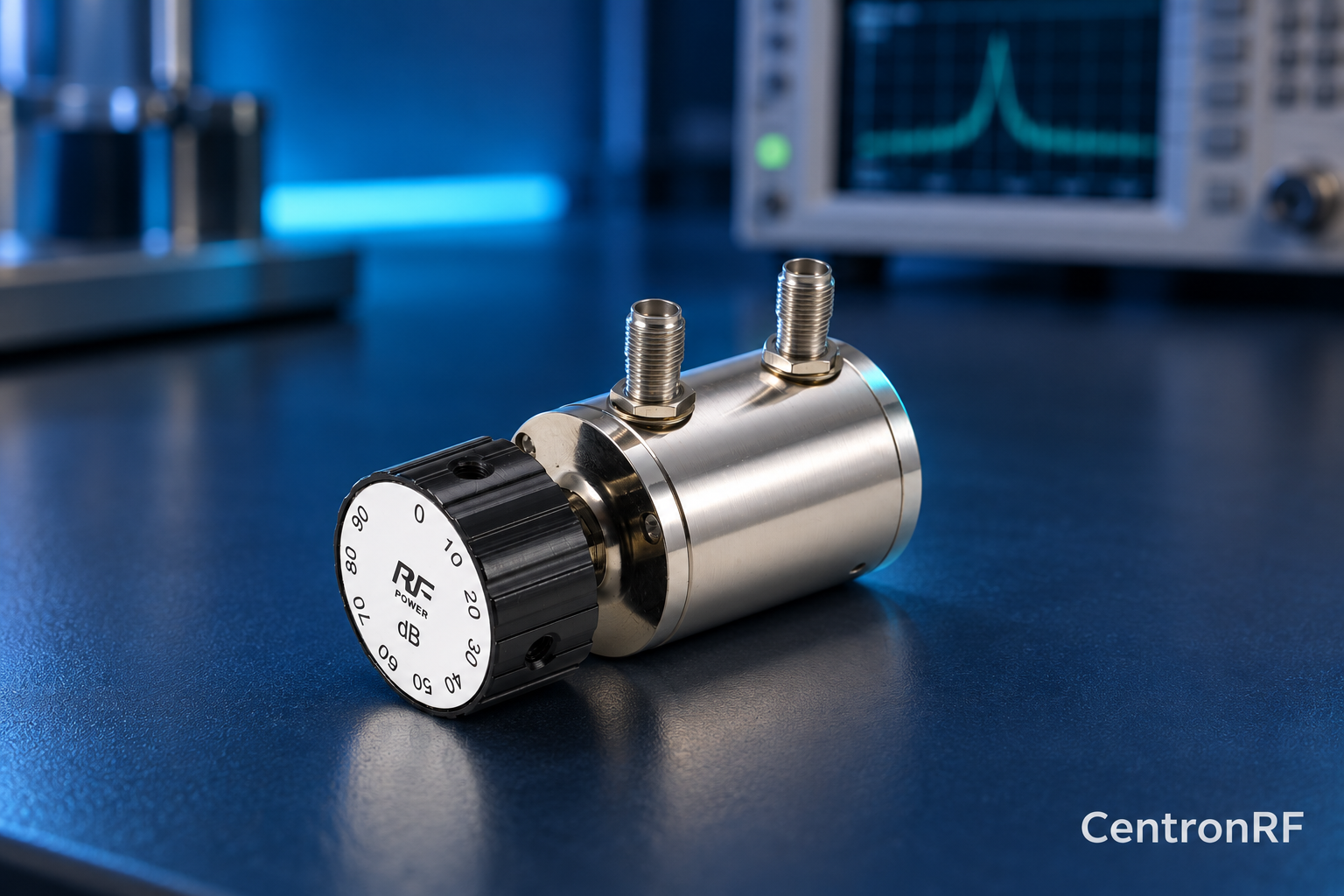
SMA rotary attenuator with 1 dB steps. The linked fine-step unit lists 0–10 dB in 1 dB increments. It can be considered for controlled level changes within its ratings. Dial resolution does not establish traceable accuracy; calibrate the assembled path as required.
Further reading
Keysight: Fundamentals of RF and Microwave Power Measurements. This background reference explains general principles; the selected Centron RF model’s datasheet governs its own ratings.
Related guides
Educational guide. Numerical examples use the stated assumptions and are not test results for a supplied unit.