


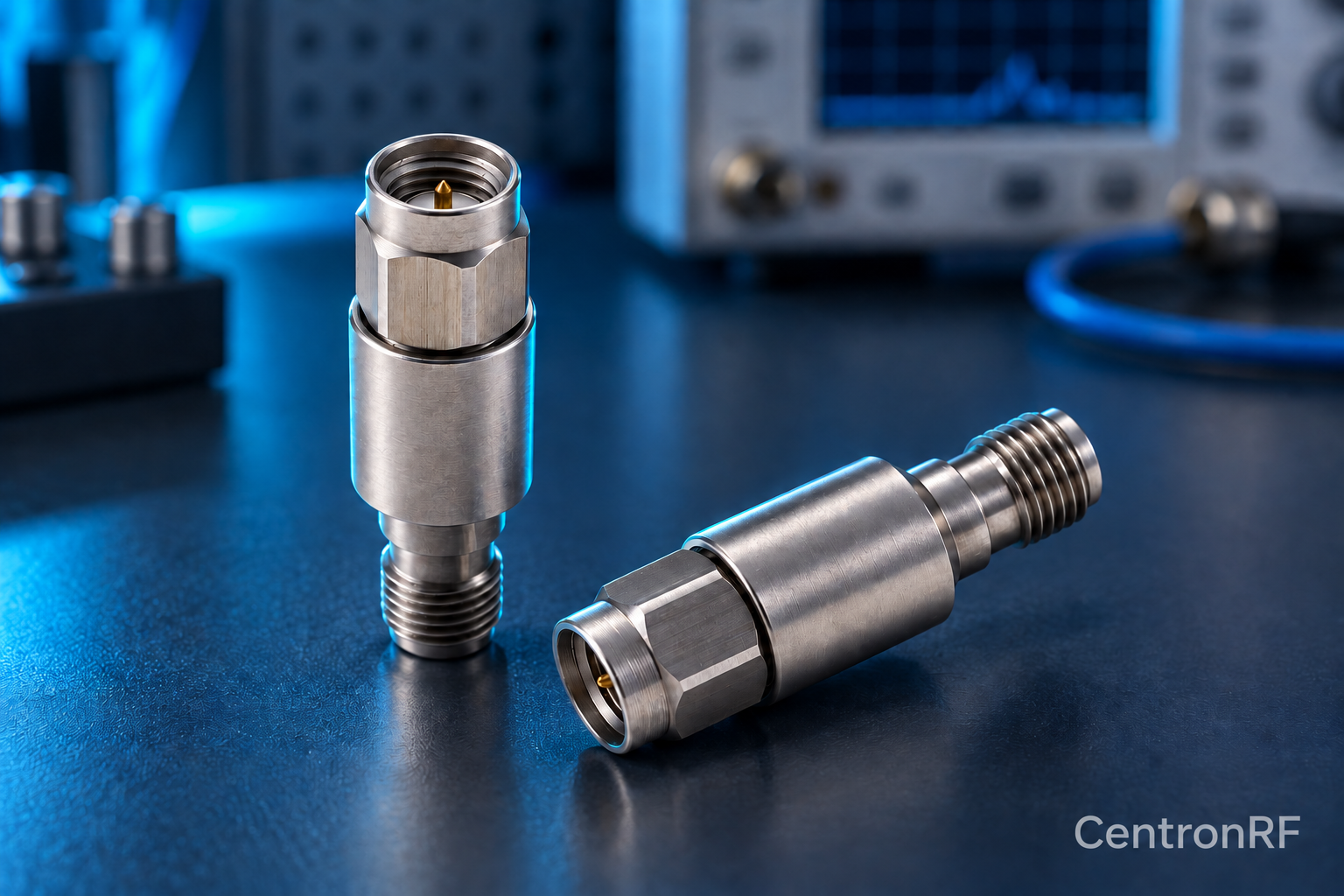
An attenuator before a low-noise amplifier reduces both wanted signal and interfering signals. It may prevent overload but usually reduces receiver sensitivity.
How it works in practice
An input pad introduces loss ahead of the first active gain stage. This matters most for weak-signal reception because the lost signal cannot be recovered by later amplification without the accompanying noise penalty. Use only enough attenuation to address a demonstrated level problem, and compare blocking performance with sensitivity.
Example and interpretation
A nominal 3 dB pad roughly halves the incident signal power. That may help strong-signal headroom, but it also removes half the wanted signal power.
Checks before use
- Measure the overload condition
- Check the LNA's input limits
- Try the minimum useful attenuation
- Recheck sensitivity and blocking performance
Important limit
A front-end pad is not a universal method for improving receiver noise performance.
Related Centron RF product
SMA 5 W 6 GHz fixed attenuator. The SMA 5 W model is listed as a 50-ohm fixed attenuator with a DC–6 GHz range. Select an available attenuation option and verify the current tolerance, cooling conditions and pulse limits for your application.
Further reading
Keysight: Spectrum Analysis Basics. This background reference explains general principles; the selected Centron RF model’s datasheet governs its own ratings.
Related guides
Educational guide. Numerical examples use the stated assumptions and are not test results for a supplied unit.