


Add the measured loss of every divider and cable along each branch in dB. Different path depths can produce different output levels.
How it works in practice
Separate ideal division and excess loss only when the datasheet convention requires it. A balanced tree can produce equal nominal division, but component tolerances and cables still matter. Include source and load mismatch in precision budgets.
Example and interpretation
A branch through two equal two-way stages has about 6.02 dB ideal division loss before their excess and cable losses.
Checks before use
- Draw every branch
- Count its stages
- Add actual loss conventions
- Verify branch balance
Important limit
Do not calculate one branch and assume a different topology has the same loss.
Related Centron RF product
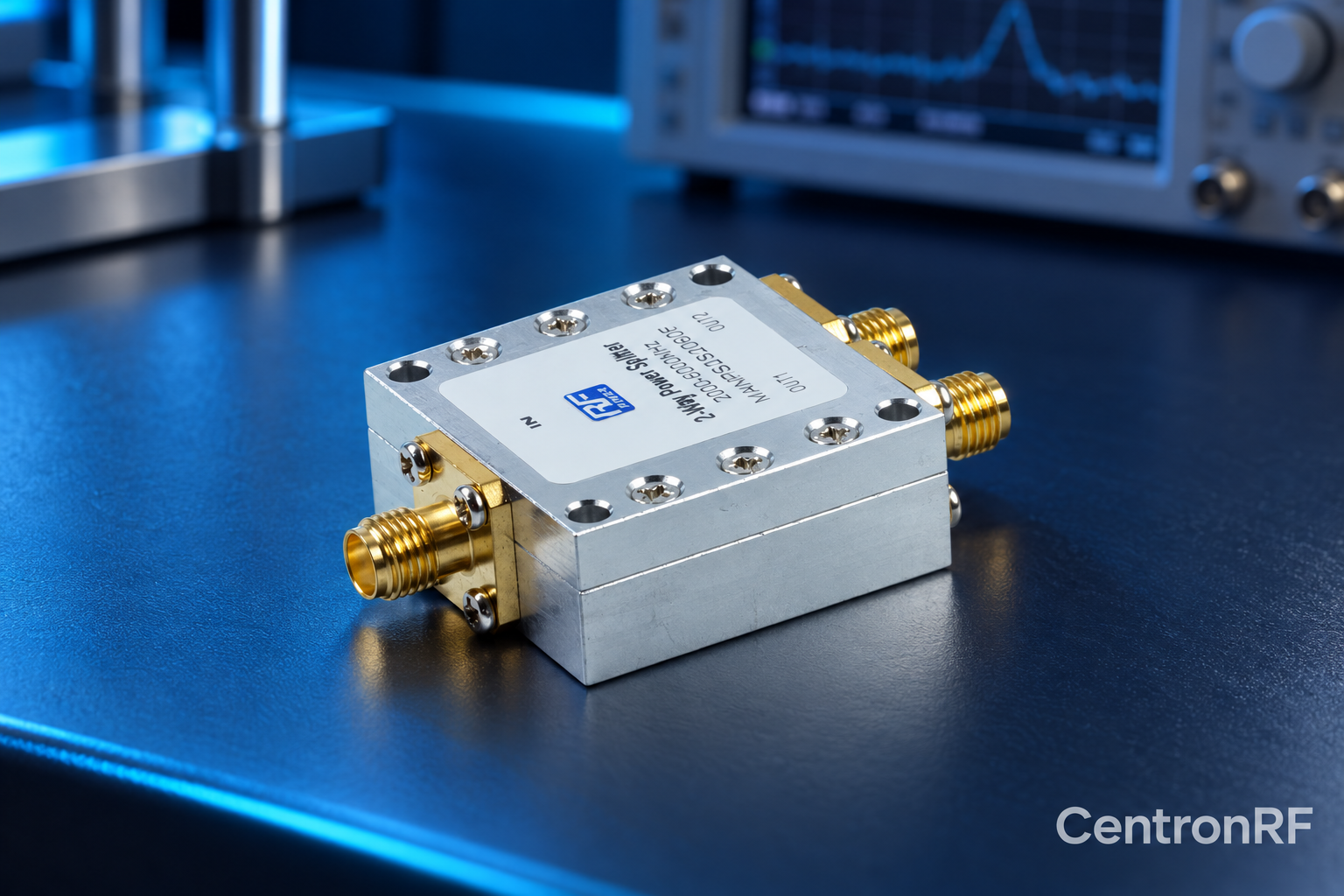
RF power divider range. Compare the exact divider model, port count and current datasheet. Some catalog titles show inconsistent frequency ranges, so confirm the supplied model’s full passband, loss, isolation and power limits before selection.
Further reading
Mini-Circuits: Understanding Power Splitters. This background reference explains general principles; the selected Centron RF model’s datasheet governs its own ratings.
Related guides
Educational guide. Numerical examples use the stated assumptions and are not test results for a supplied unit.