


A surge protector addresses specified transient stresses; an RF limiter controls RF amplitude within its defined operating conditions. Neither name establishes the other's function.
How it works in practice
Sensitive receivers may need protection against strong RF signals as well as cable transients. A limiter can have insertion loss, recovery time and power limits. A surge protector can allow RF levels that overload the receiver. Select each device for the relevant threat and verify the combined path.
Example and interpretation
A nearby transmitter can overload a receiver without producing the type of transient that triggers a coaxial surge device.
Checks before use
- Identify signal overload and transient risks
- Check each device's limits
- Plan component order
- Measure total RF loss
Important limit
Do not use a lightning arrestor as a universal receiver overload protector.
Related Centron RF product
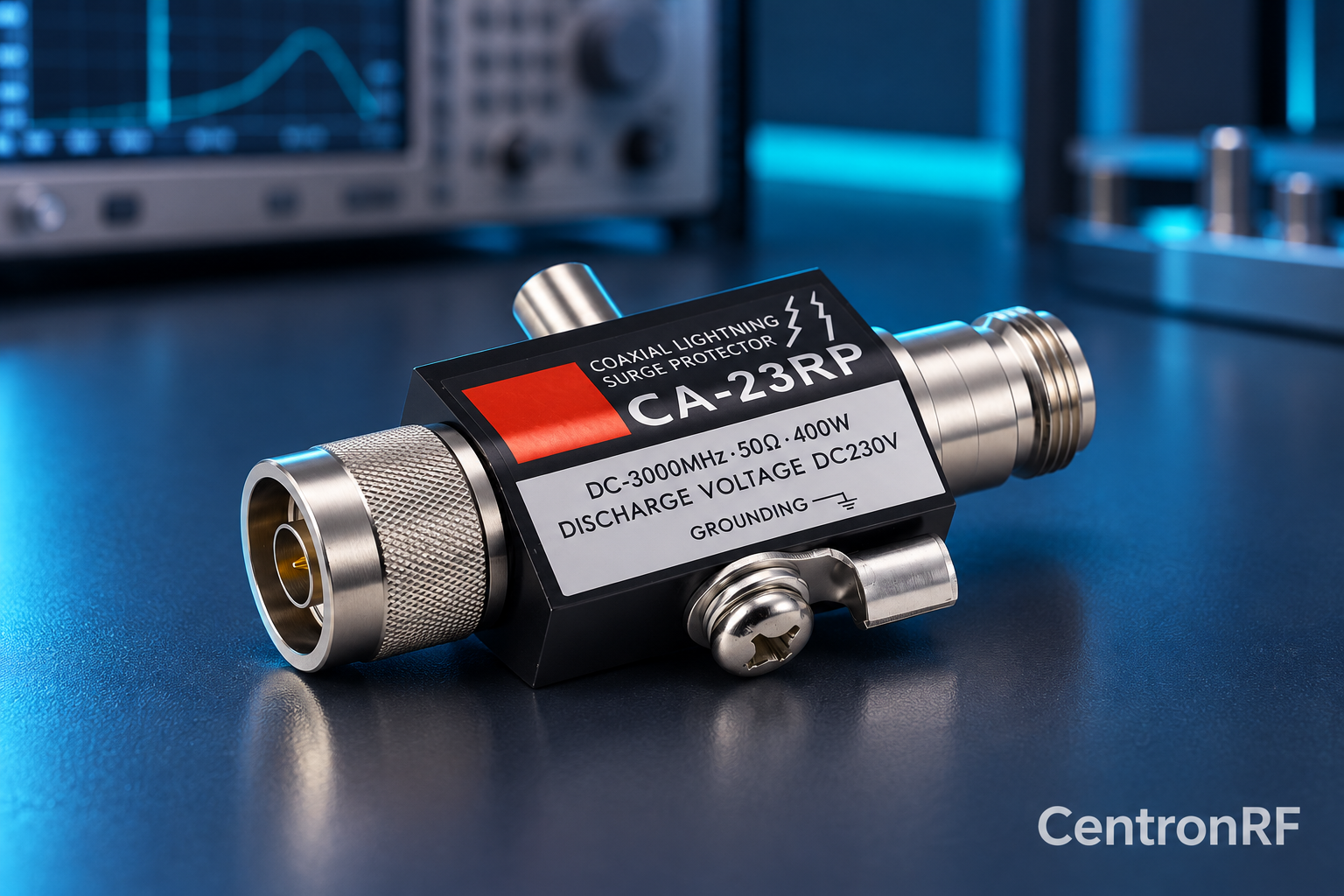
CA-23RP N-type coaxial surge protector. The linked CA-23RP product is listed for 50-ohm coaxial service up to 3 GHz. Obtain the current impulse, grounding, DC-pass and environmental specifications. Resolve inconsistent matching figures in the listing against the current datasheet.
Further reading
PolyPhaser: Example Coaxial Protector Installation Guide. This background reference explains general principles; the selected Centron RF model’s datasheet governs its own ratings.
Related guides
Educational guide. Numerical examples use the stated assumptions and are not test results for a supplied unit.