


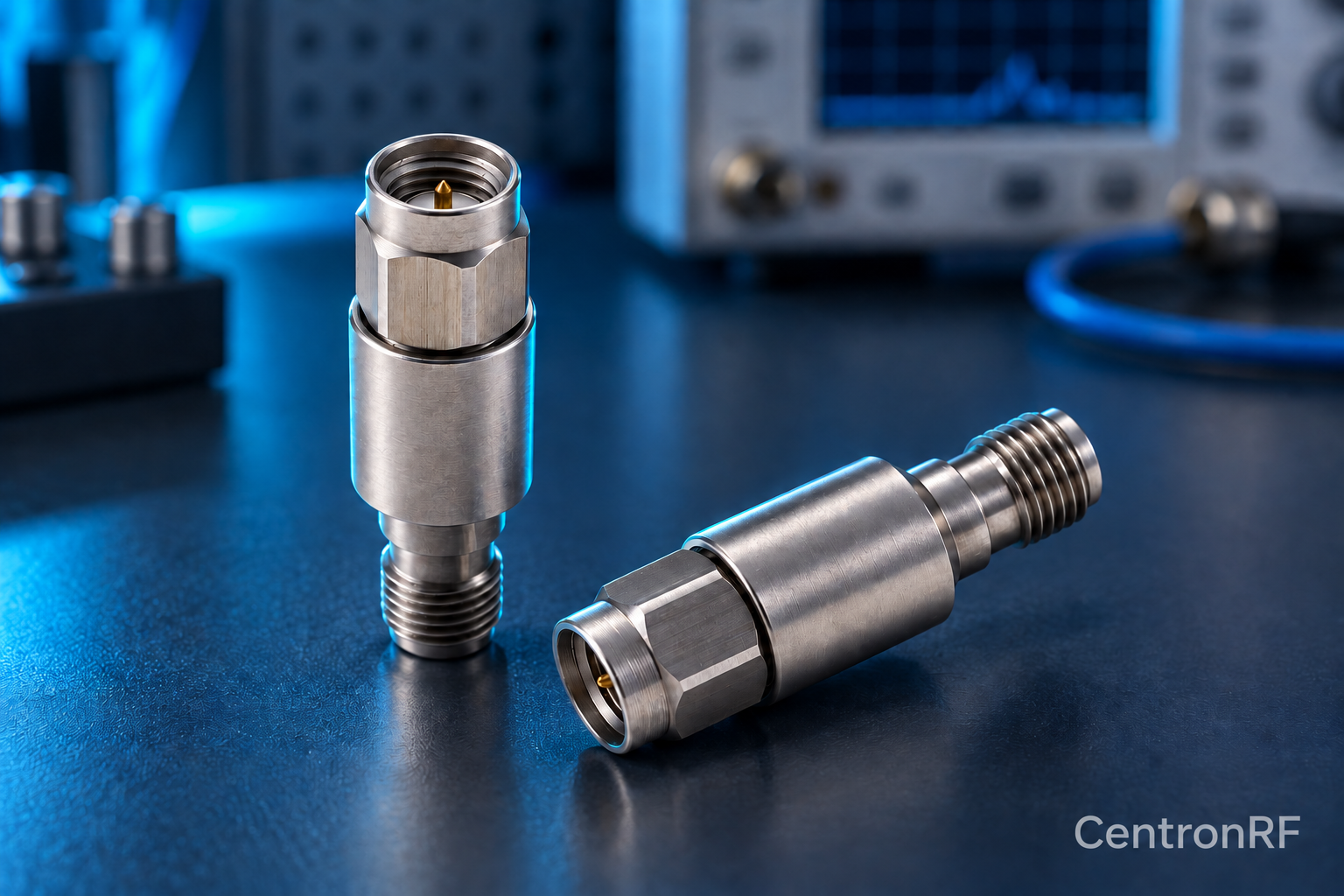
Protective caps help keep stored connector interfaces clean and reduce accidental contact damage. They support handling quality rather than establishing RF performance.
How it works in practice
Use caps suitable for the connector and storage environment. Avoid materials that leave debris or force the center contact. Label components separately so a cap does not hide a missing rating label. Inspect after removing a cap, especially following transport.
Example and interpretation
A capped attenuator stored in a clean case is less exposed to dust than one left loose with uncapped interfaces.
Checks before use
- Choose compatible caps
- Keep storage clean
- Label components
- Inspect before connection
Important limit
A cap cannot restore a damaged connector or validate calibration.
Related Centron RF product
N-type fixed attenuator for a compatible RF path. Use a product page to check both connector interfaces, nominal impedance and model-specific band and power requirements. The connector family alone cannot establish a component’s total RF capability.
Further reading
Rohde & Schwarz: Impedance, VSWR and Return Loss. This background reference explains general principles; the selected Centron RF model’s datasheet governs its own ratings.
Related guides
Educational guide. Numerical examples use the stated assumptions and are not test results for a supplied unit.