


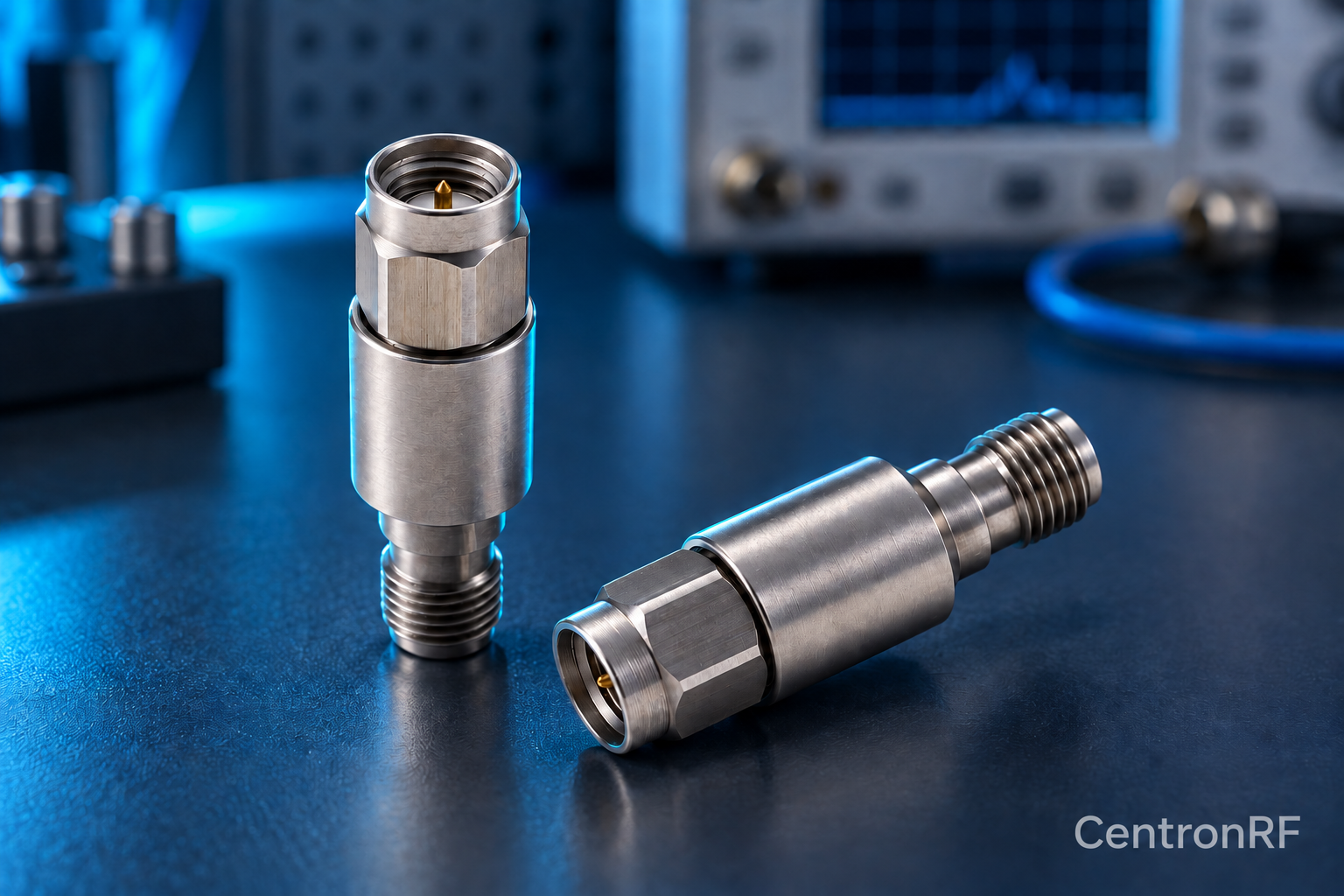
Use the manufacturer's torque guidance for the exact interface and component. Both inadequate and excessive tightening can create problems.
How it works in practice
A suitable calibrated torque tool improves consistency where specified. Hold the appropriate stationary body to avoid twisting cables or internal parts. Do not invent one torque value for every SMA or N-type assembly. Repeated hand tightening can produce inconsistent mechanical conditions.
Example and interpretation
A precision adapter may require a different procedure from an ordinary cable connector despite similar threads.
Checks before use
- Find the exact torque requirement
- Use the correct tool
- Prevent cable twisting
- Inspect after connection
Important limit
Do not tighten until it 'feels stronger' or exceed a documented limit.
Related Centron RF product
N-type fixed attenuator for a compatible RF path. Use a product page to check both connector interfaces, nominal impedance and model-specific band and power requirements. The connector family alone cannot establish a component’s total RF capability.
Further reading
Rohde & Schwarz: Impedance, VSWR and Return Loss. This background reference explains general principles; the selected Centron RF model’s datasheet governs its own ratings.
Related guides
Educational guide. Numerical examples use the stated assumptions and are not test results for a supplied unit.