


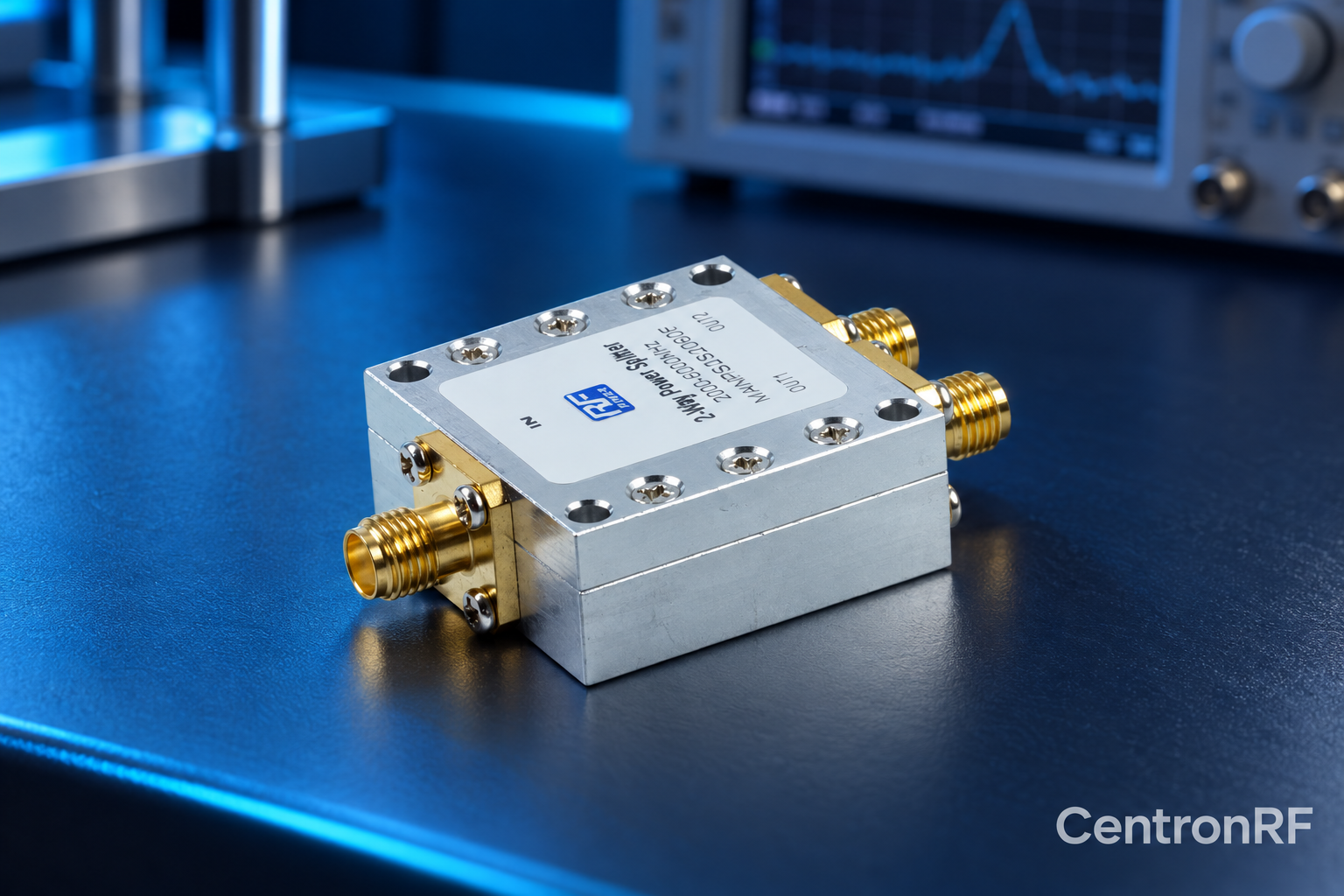
Output-port isolation describes how strongly a signal entering one output couples to another output under specified termination conditions. It differs from input-to-output loss.
How it works in practice
Isolation can limit interaction between connected devices. Its value depends on topology, frequency and matching at other ports. Use the manufacturer's port conditions when measuring it. High isolation at one frequency does not establish equivalent isolation over the entire band.
Example and interpretation
Two receivers sharing a divider can interact less when the divider has suitable isolation, but their own port behavior also matters.
Checks before use
- Identify the output pair
- Terminate other ports as specified
- Measure over the band
- Compare with the required isolation
Important limit
Do not infer isolation from the number of outputs.
Related Centron RF product
RF power divider range. Compare the exact divider model, port count and current datasheet. Some catalog titles show inconsistent frequency ranges, so confirm the supplied model’s full passband, loss, isolation and power limits before selection.
Further reading
Mini-Circuits: Understanding Power Splitters. This background reference explains general principles; the selected Centron RF model’s datasheet governs its own ratings.
Related guides
Educational guide. Numerical examples use the stated assumptions and are not test results for a supplied unit.