


Inspect the installation and follow the manufacturer's post-event testing or replacement guidance after a suspected surge. External appearance alone may not reveal internal damage.
How it works in practice
Disconnect and isolate equipment as required before inspection. Check connectors, bonds, enclosure damage and RF performance with suitable low-power tests. Some devices have replaceable elements or end-of-life indicators; others require replacement of the assembly. Use only the documented maintenance method.
Example and interpretation
Normal RF transmission after a storm does not prove that the surge element retains its original protection capability.
Checks before use
- Inspect safely
- Check bonds and interfaces
- Follow the specified test method
- Replace according to manufacturer criteria
Important limit
Do not assume a protector lasts indefinitely after repeated surges.
Related Centron RF product
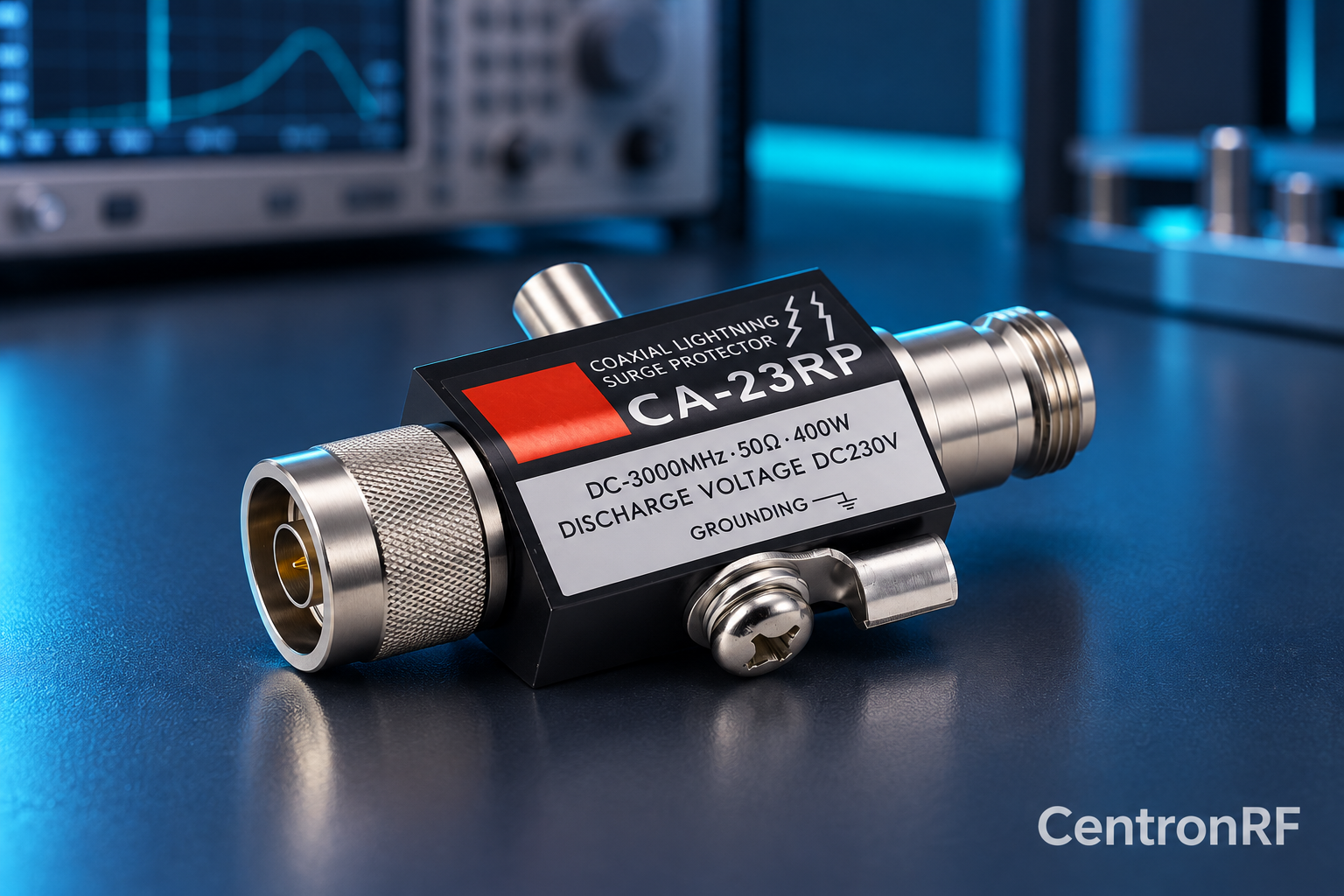
CA-23RP N-type coaxial surge protector. The linked CA-23RP product is listed for 50-ohm coaxial service up to 3 GHz. Obtain the current impulse, grounding, DC-pass and environmental specifications. Resolve inconsistent matching figures in the listing against the current datasheet.
Further reading
PolyPhaser: Example Coaxial Protector Installation Guide. This background reference explains general principles; the selected Centron RF model’s datasheet governs its own ratings.
Related guides
Educational guide. Numerical examples use the stated assumptions and are not test results for a supplied unit.