


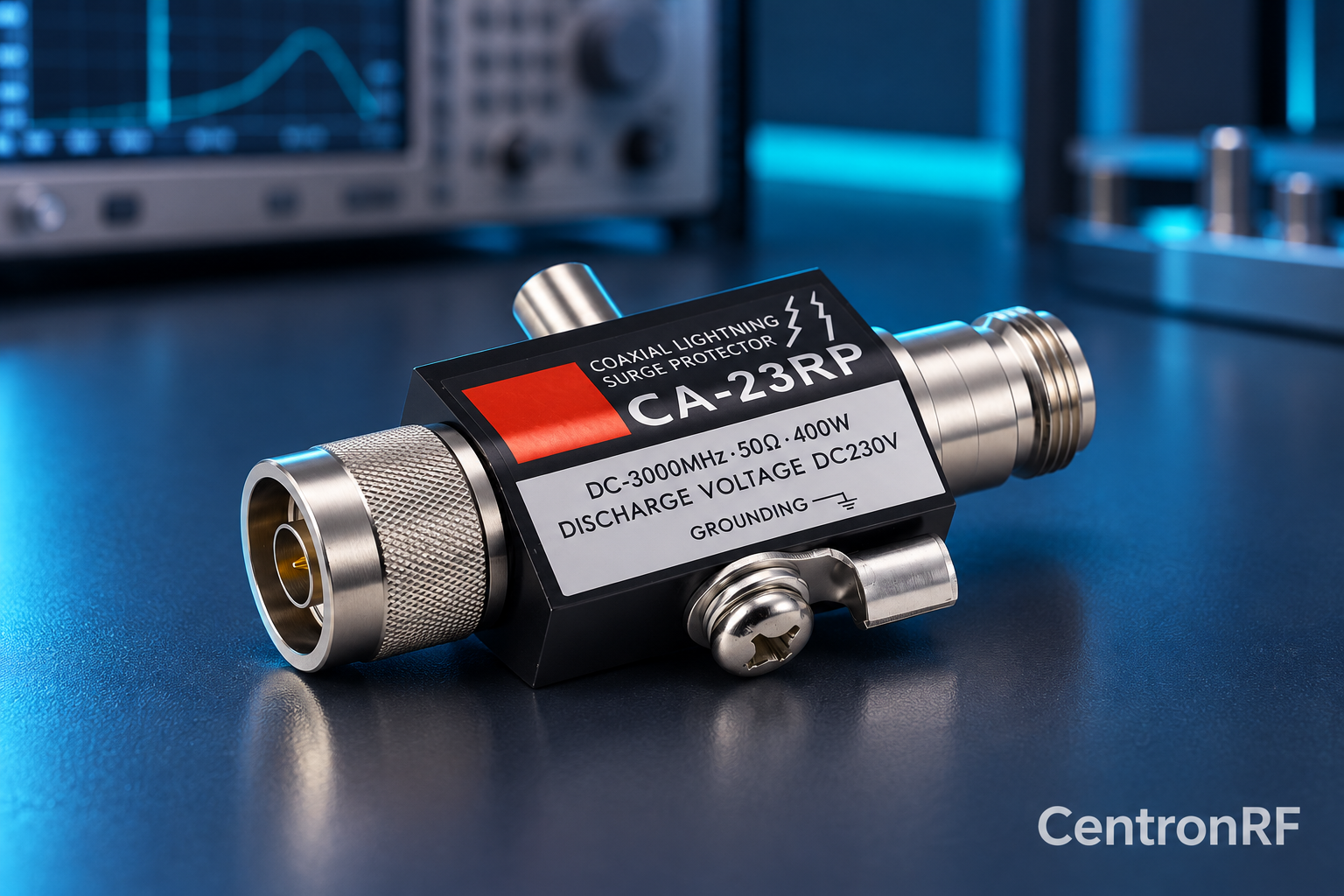
A coaxial surge protector introduces a frequency-dependent RF path. Confirm its passband, insertion loss and matching performance for the intended signal.
How it works in practice
Include the protector in the link budget and measure the installed path when precision matters. DC-pass designs and frequency-selective designs can have different usable low-frequency limits. Consider harmonics and wideband signals, not only the nominal carrier.
Example and interpretation
A 0.2 dB protector loss consumes 0.2 dB of link margin before cable and connector losses.
Checks before use
- List the operating band
- Check model-specific loss and match
- Include adapters
- Measure the complete path
Important limit
An upper frequency alone does not prove suitability at every lower frequency.
Related Centron RF product
CA-23RP N-type coaxial surge protector. The linked CA-23RP product is listed for 50-ohm coaxial service up to 3 GHz. Obtain the current impulse, grounding, DC-pass and environmental specifications. Resolve inconsistent matching figures in the listing against the current datasheet.
Further reading
PolyPhaser: Example Coaxial Protector Installation Guide. This background reference explains general principles; the selected Centron RF model’s datasheet governs its own ratings.
Related guides
Educational guide. Numerical examples use the stated assumptions and are not test results for a supplied unit.