


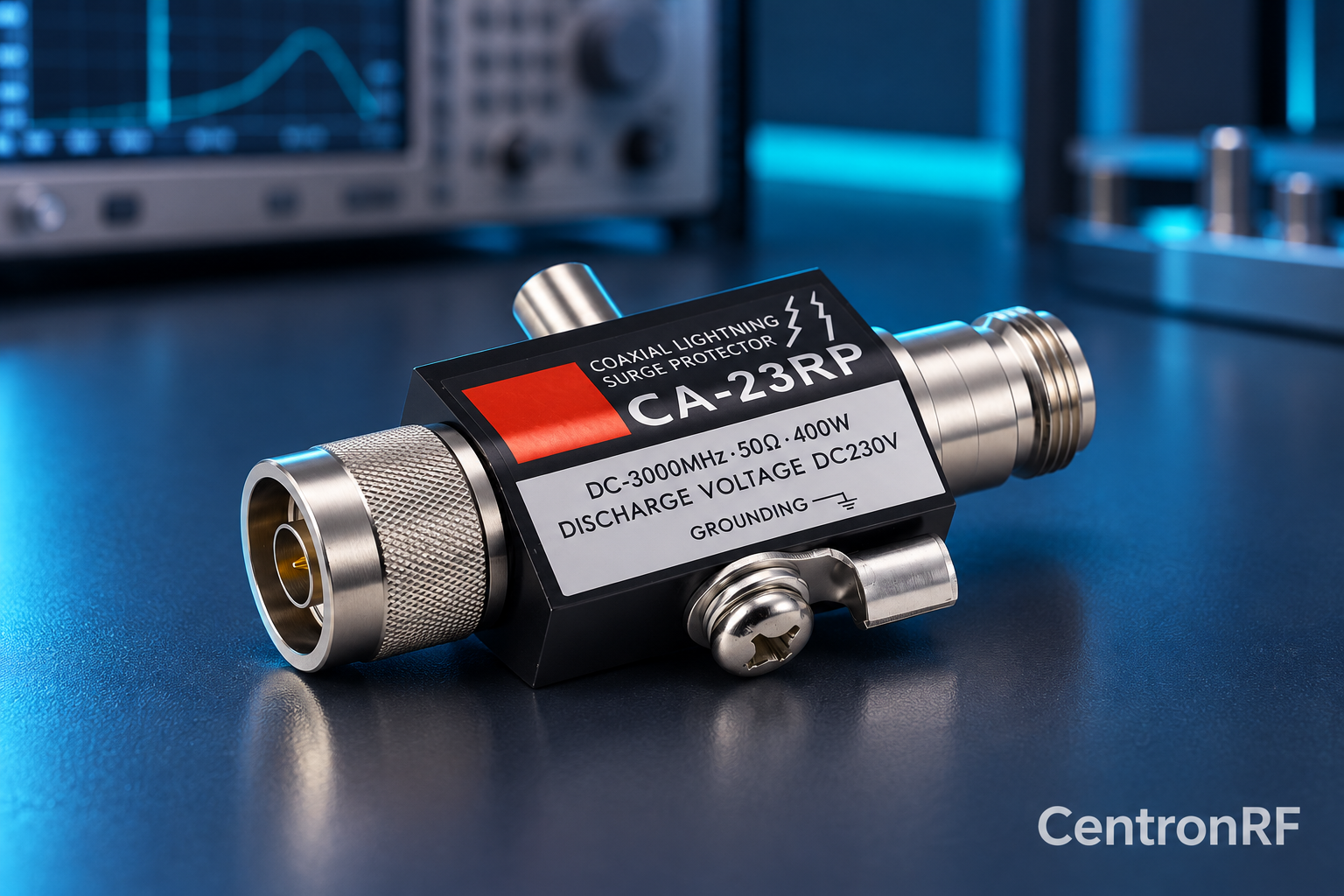
RF power and surge current describe different operating stresses. Verify both when selecting a coaxial protector.
How it works in practice
RF power concerns continuous or specified signal handling within the RF band. Surge ratings specify transient waveforms, current, energy or test conditions. A large RF-watt figure cannot be converted into lightning protection capability. Missing or conflicting figures need clarification from the manufacturer.
Example and interpretation
A 400 W RF label and a surge-current rating answer different questions and are not substitutes for one another.
Checks before use
- Check normal RF power
- Check transient test conditions
- Check residual protection level
- Resolve missing data
Important limit
Do not market high RF watts as proof of superior lightning protection.
Related Centron RF product
CA-23RP N-type coaxial surge protector. The linked CA-23RP product is listed for 50-ohm coaxial service up to 3 GHz. Obtain the current impulse, grounding, DC-pass and environmental specifications. Resolve inconsistent matching figures in the listing against the current datasheet.
Further reading
PolyPhaser: Example Coaxial Protector Installation Guide. This background reference explains general principles; the selected Centron RF model’s datasheet governs its own ratings.
Related guides
Educational guide. Numerical examples use the stated assumptions and are not test results for a supplied unit.