


A bias-tee system needs protection compatible with both RF and the intentional DC supply. Verify voltage, current and grounding requirements across the complete route.
How it works in practice
Identify which ports carry combined RF and DC. A protector must tolerate normal bias without unwanted firing or blocking, within its documented limits. The bias tee and power supply may also need protection under the system design. Do not infer suitability from RF power alone.
Example and interpretation
A cable-powered amplifier requires DC continuity through the chosen protector unless the architecture supplies power another way.
Checks before use
- Draw combined and separated paths
- Check bias limits
- Check surge coordination
- Verify operation after installation
Important limit
Do not assume a nominal discharge voltage establishes an allowable continuous bias voltage.
Related Centron RF product
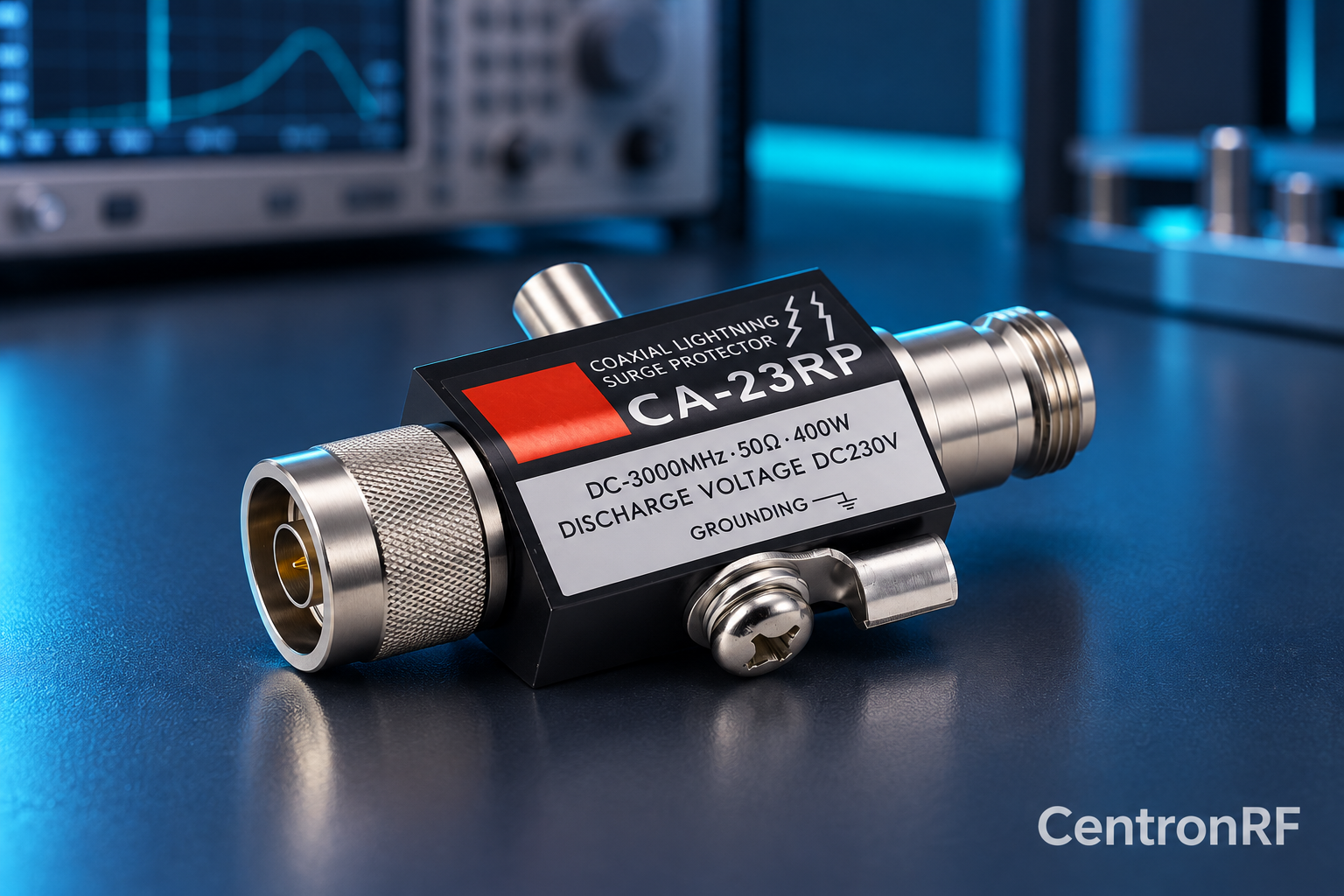
CA-23RP N-type coaxial surge protector. The linked CA-23RP product is listed for 50-ohm coaxial service up to 3 GHz. Obtain the current impulse, grounding, DC-pass and environmental specifications. Resolve inconsistent matching figures in the listing against the current datasheet.
Further reading
PolyPhaser: Example Coaxial Protector Installation Guide. This background reference explains general principles; the selected Centron RF model’s datasheet governs its own ratings.
Related guides
- Does a Surge Protector Need a Separate Earth Rod?
- Checking RF Performance After Installing a Protector
Educational guide. Numerical examples use the stated assumptions and are not test results for a supplied unit.