


VSWR describes RF matching, not transient suppression. Check its stated frequency conditions and distinguish it from surge ratings.
How it works in practice
Matching affects reflected power and link performance. If two catalog fields disagree, request the current datasheet rather than choosing the more favorable number. An installed measurement also includes adapters, cables and calibration uncertainty. Record where the measurement reference plane lies.
Example and interpretation
A listed VSWR limit at 3 GHz does not establish the same performance beyond the specified band.
Checks before use
- Read band and limit together
- Resolve inconsistent fields
- Inspect adapters
- Measure with an appropriate calibration
Important limit
A low VSWR does not prove a protector's surge element is healthy.
Related Centron RF product
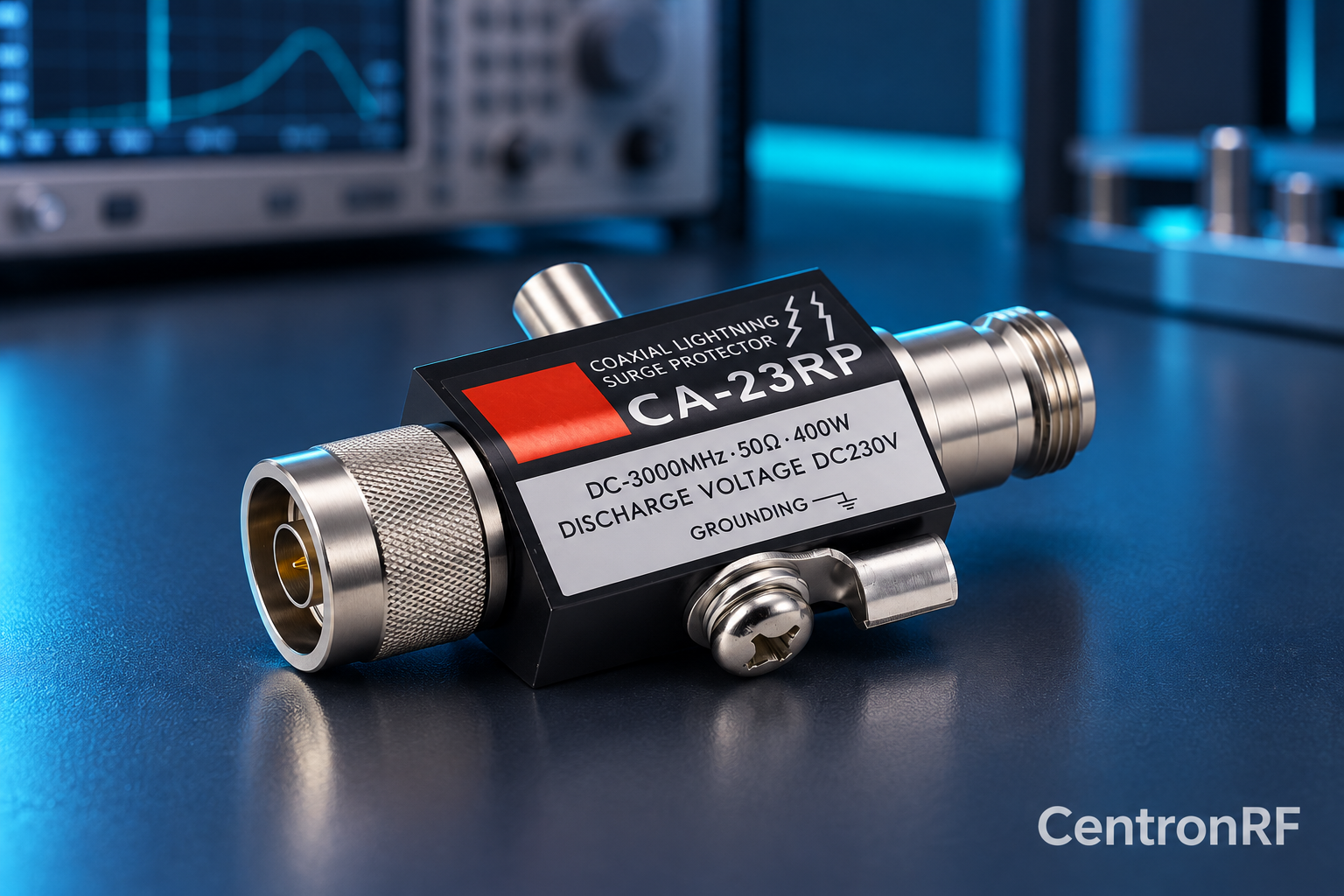
CA-23RP N-type coaxial surge protector. The linked CA-23RP product is listed for 50-ohm coaxial service up to 3 GHz. Obtain the current impulse, grounding, DC-pass and environmental specifications. Resolve inconsistent matching figures in the listing against the current datasheet.
Further reading
PolyPhaser: Example Coaxial Protector Installation Guide. This background reference explains general principles; the selected Centron RF model’s datasheet governs its own ratings.
Related guides
- How to Specify Coaxial Surge Protection for Procurement
- Does a Surge Protector Need a Separate Earth Rod?
Educational guide. Numerical examples use the stated assumptions and are not test results for a supplied unit.