


Choose an initial attenuation that keeps the downstream device below its permitted input, while ensuring the attenuator itself can tolerate the source.
How it works in practice
Calculate the worst-case source output and subtract verified path loss. Starting with high attenuation can protect the receiver only if the upstream component's rating is adequate at that setting. For an unknown source, first measure through a suitably rated protective path or reduce source power.
Example and interpretation
A 30 dBm source and a receiver limited to 0 dBm need at least 30 dB nominal loss before tolerances and operating margin are considered.
Checks before use
- Find the source maximum
- Find the receiver limit
- Check attenuator input rating
- Calculate a conservative starting state
Important limit
Maximum attenuation does not make an under-rated attenuator safe at its input.
Related Centron RF product
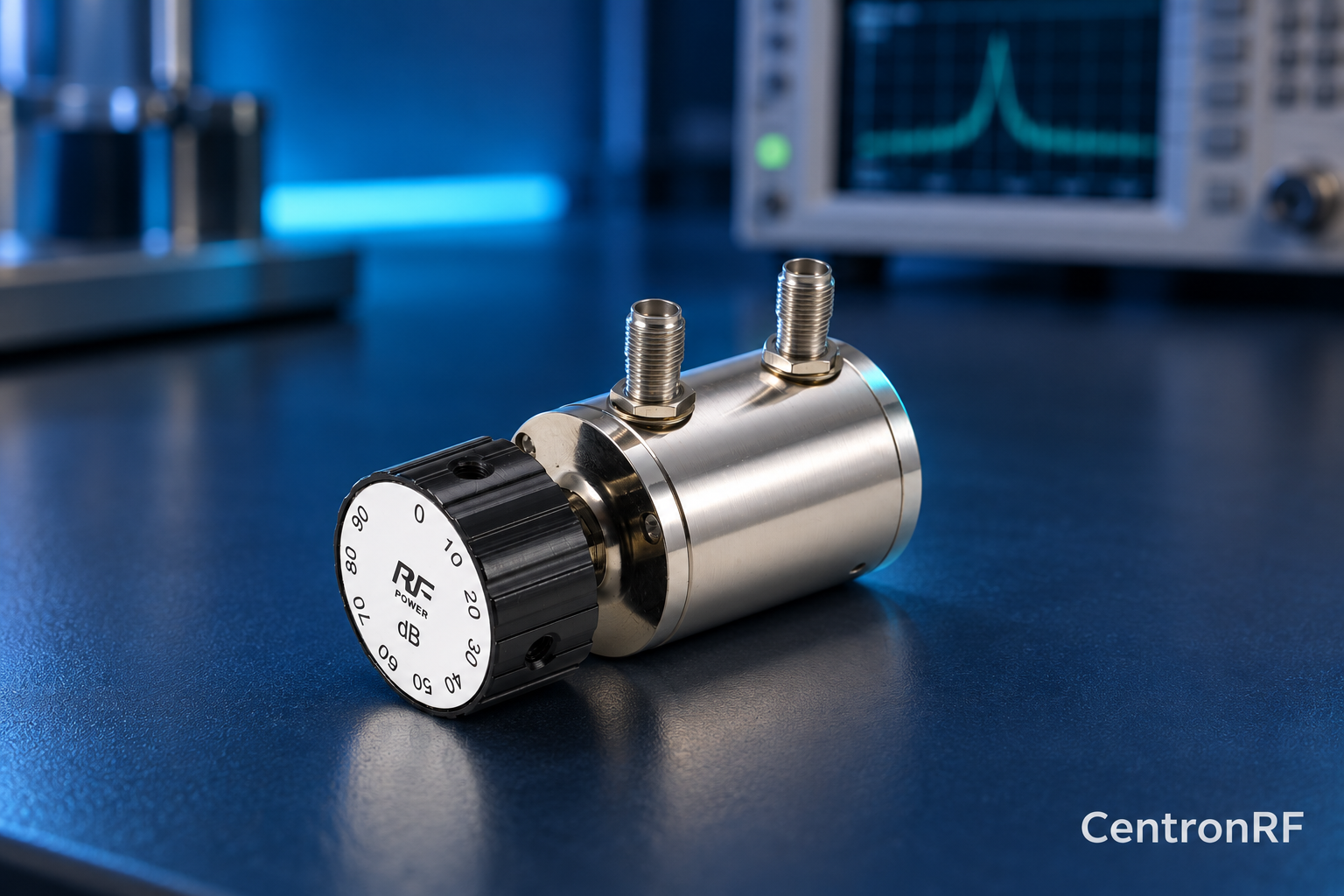
SMA rotary attenuator with 10 dB steps. The linked rotary model lists 0–90 dB adjustment in 10 dB steps, 50-ohm impedance and a DC–6 GHz band. Its listed continuous input is 2 W; obtain explicit switching and pulse limits before applying those stresses.
Further reading
Keysight: Accurate Network Measurements. This background reference explains general principles; the selected Centron RF model’s datasheet governs its own ratings.
Related guides
- 1 dB Versus 10 dB Attenuator Steps: How to Choose
- Rotary Attenuator Range Versus Resolution Explained
Educational guide. Numerical examples use the stated assumptions and are not test results for a supplied unit.