


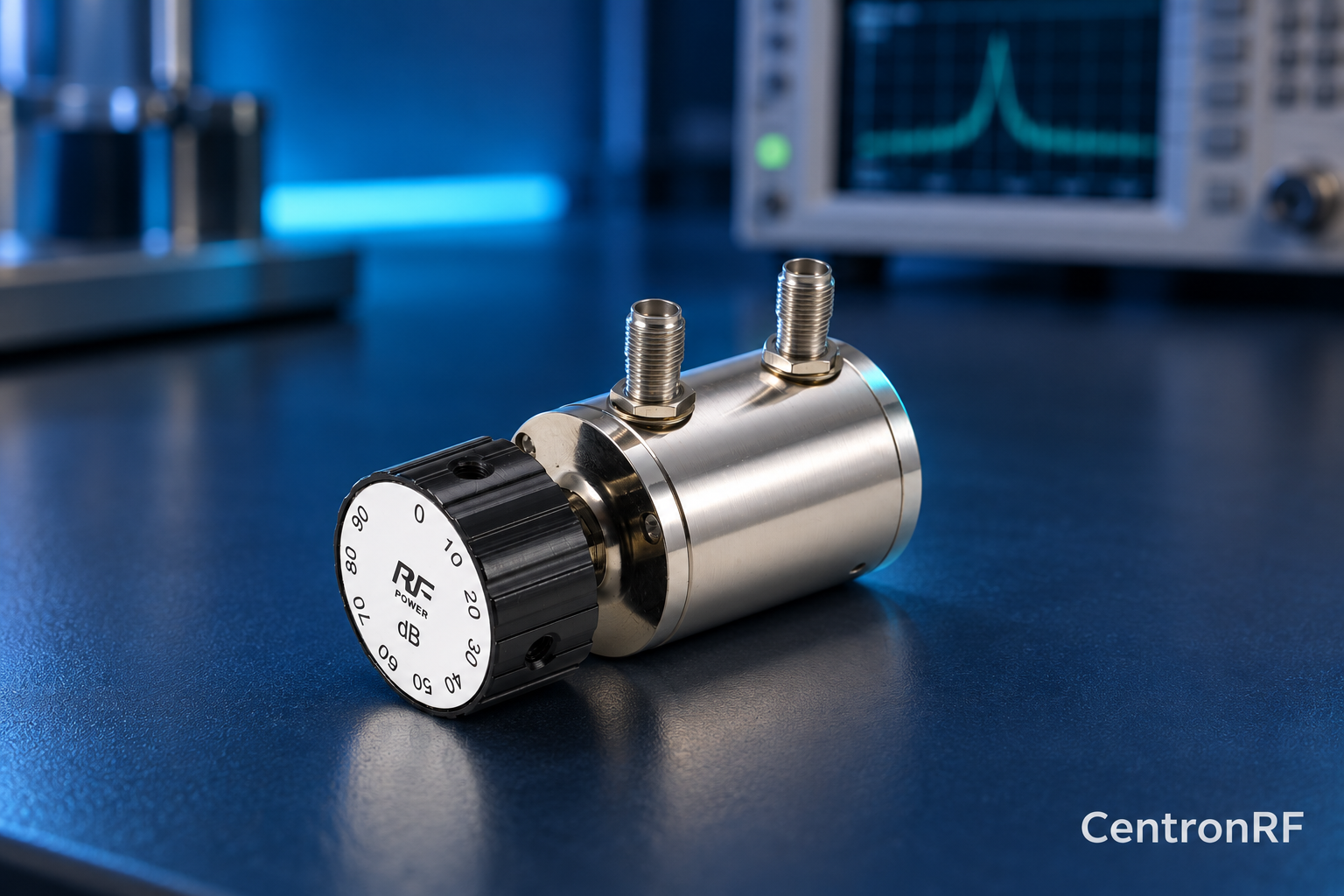
Range is the span of available attenuation settings; resolution is the size of the smallest selectable step. A large range can still have coarse resolution.
How it works in practice
Read both figures before comparing products. A 0–10 dB device with 1 dB increments supports finer adjustment over a smaller span than a 0–90 dB device with 10 dB increments. The useful signal range also depends on the source, detector floor and leakage through the setup.
Example and interpretation
If a receiver transition occurs between 40 and 50 dB attenuation, a 10 dB dial only brackets it. A fine pad can narrow that bracket.
Checks before use
- List minimum and maximum settings
- List step size
- Check the receiver level window
- Plan coarse and fine adjustment
Important limit
The maximum dial value is not a guaranteed usable dynamic range for every fixture.
Related Centron RF product
SMA rotary attenuator with 10 dB steps. The linked rotary model lists 0–90 dB adjustment in 10 dB steps, 50-ohm impedance and a DC–6 GHz band. Its listed continuous input is 2 W; obtain explicit switching and pulse limits before applying those stresses.
Further reading
Keysight: Accurate Network Measurements. This background reference explains general principles; the selected Centron RF model’s datasheet governs its own ratings.
Related guides
- Can You Switch a Rotary Attenuator with RF Power Applied?
- How to Establish the Zero Reference of a Step Attenuator
Educational guide. Numerical examples use the stated assumptions and are not test results for a supplied unit.