


Select attenuation from the strongest expected receiver input and the required operating level, then verify that useful weak signals remain measurable.
How it works in practice
Receiver damage limits and linear operating limits are separate. A level below the damage limit can still overload the receiver or distort a measurement. Include blockers, multicarrier total power and startup behavior. Establish a measured operating window rather than sizing the pad only for the typical wanted signal.
Example and interpretation
If the expected input is -5 dBm and the desired operating point is -25 dBm, nominal 20 dB attenuation provides the intended reduction before tolerance is included.
Checks before use
- Determine worst-case total input
- Read damage and compression limits
- Calculate the operating-level reduction
- Recheck weak-signal sensitivity
Important limit
A typical signal level may conceal a stronger blocker that sets the actual requirement.
Related Centron RF product
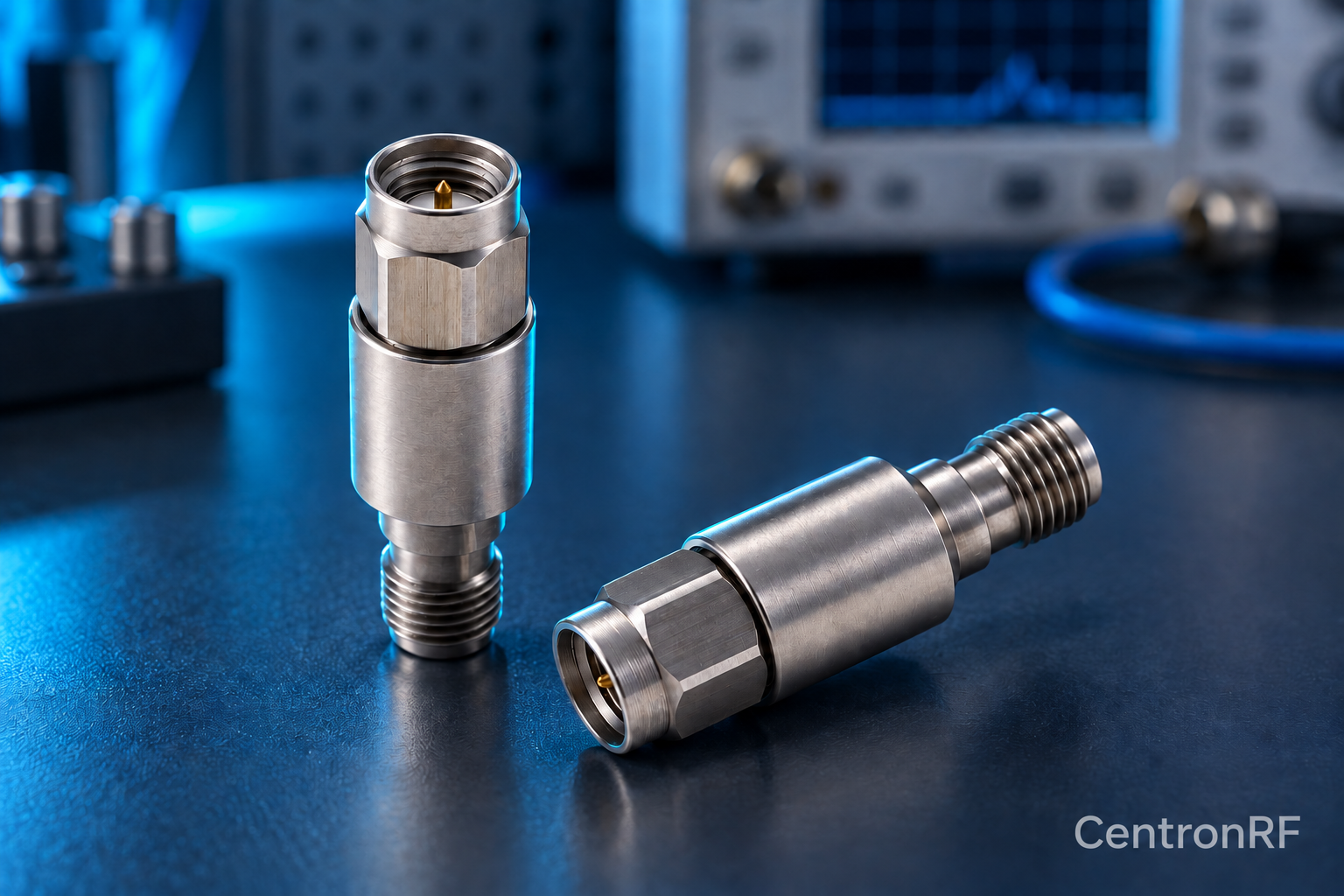
SMA 5 W 6 GHz fixed attenuator. The SMA 5 W model is listed as a 50-ohm fixed attenuator with a DC–6 GHz range. Select an available attenuation option and verify the current tolerance, cooling conditions and pulse limits for your application.
Further reading
Keysight: Spectrum Analysis Basics. This background reference explains general principles; the selected Centron RF model’s datasheet governs its own ratings.
Related guides
- How to Specify an RF Attenuator in a Purchase Request
- Troubleshooting Unexpected Loss Through an RF Attenuator
Educational guide. Numerical examples use the stated assumptions and are not test results for a supplied unit.