


Unexpected mismatch, unstable measurements, damaged connectors or overheating evidence are reasons to inspect and verify a termination before further critical use.
How it works in practice
Compare current low-power RF measurements with previous results under the same conditions. Check cables and adapters first so a fixture fault is not mistaken for load failure. Discoloration or loose hardware warrants investigation, but appearance alone cannot establish whether the internal element is intact.
Example and interpretation
A sudden change in S11 after a connector impact is a meaningful trigger for inspection and requalification.
Checks before use
- Disconnect the source
- Inspect the interface and cooling
- Compare measured match
- Quarantine uncertain components
Important limit
Do not repair a high-power load internally without manufacturer instructions and proper requalification.
Related Centron RF product
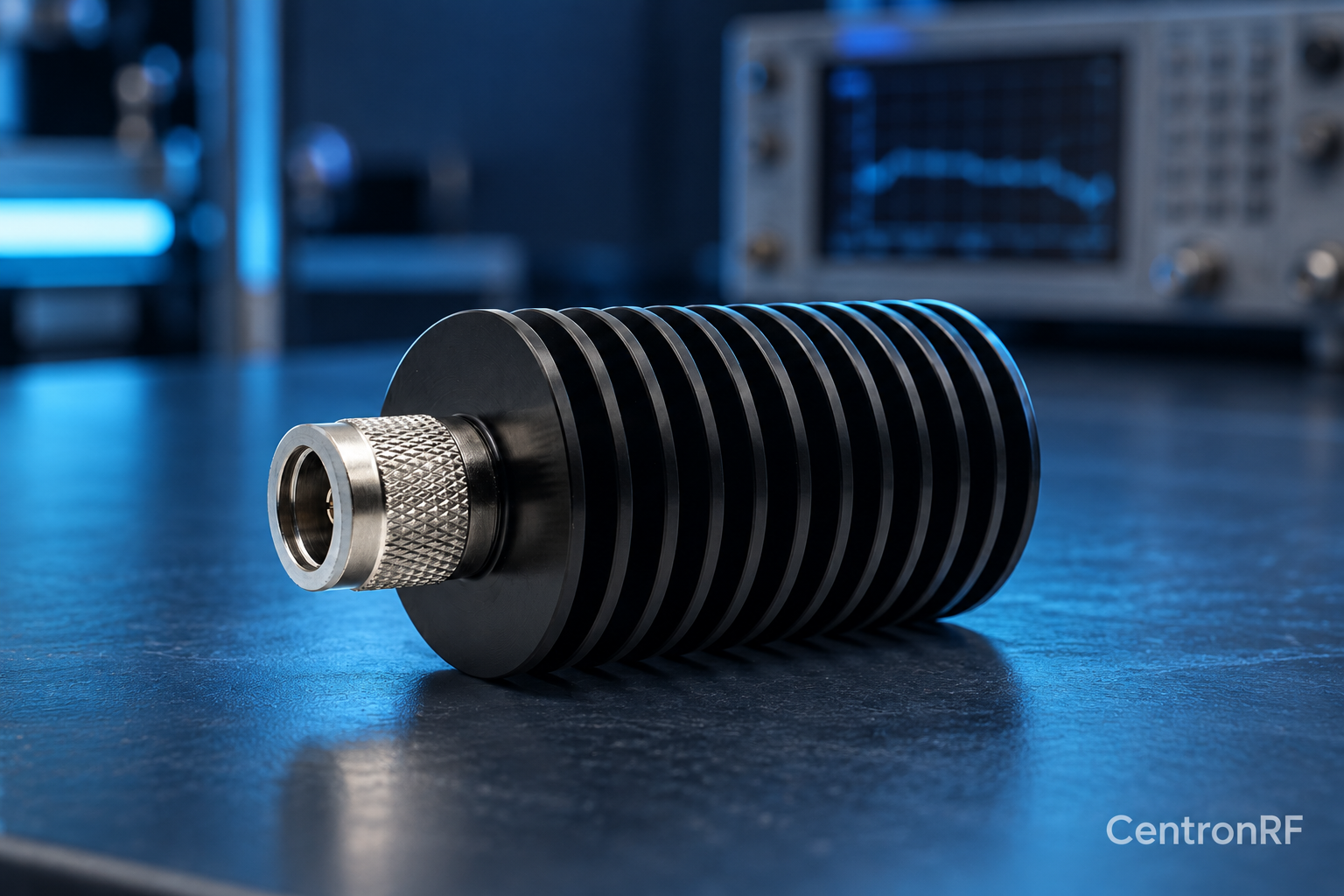
N-type 50 W 6 GHz dummy load. The linked N-type load is a starting point for comparing impedance, bandwidth, power and mechanical fit. Confirm the exact connector option and current thermal conditions before using any load near its rated power.
Further reading
Rohde & Schwarz: VSWR and Return Loss. This background reference explains general principles; the selected Centron RF model’s datasheet governs its own ratings.
Related guides
Educational guide. Numerical examples use the stated assumptions and are not test results for a supplied unit.