

Category: RF Calculations & Applications
Practical rf calculations & applications guides with product links, examples and specification checks.
-
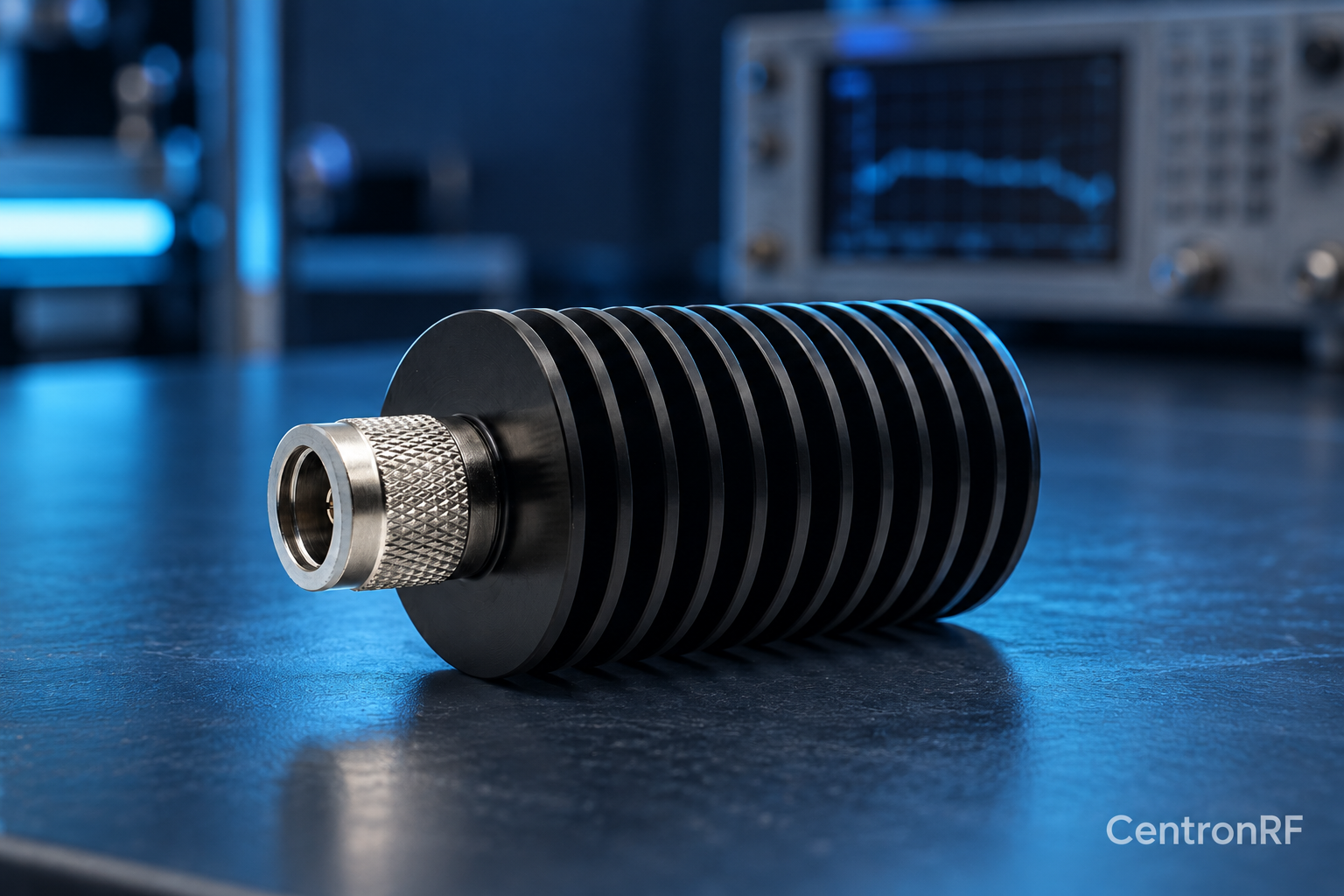
3 dB, 6 dB and 10 dB Attenuation in Power Terms
Attenuation in dB represents a power ratio. Approximately 3 dB halves…
-
Why Cascaded RF Losses Add in dB
Multiplicative linear power ratios become additive when expressed logarithmically. Therefore, matched…
-
How to Calculate Required Receiver Protection Attenuation
Subtract the permitted downstream level from the worst-case upstream level in…
-
Adding Two RF Powers: Why dBm Cannot Be Added Directly
For independent power quantities that can be summed, convert each dBm…
-
VSWR to Reflection Coefficient: The Formula
For a passive load under the usual definition, reflection coefficient magnitude…
-
Return Loss to Reflected Power: A Worked Example
Return loss in dB is −20 log10 of reflection coefficient magnitude.…
-
How to Convert VSWR to Return Loss
First compute reflection coefficient magnitude from VSWR, then calculate −20 log10…
-
Mismatch Loss: How Much Power Is Accepted?
For a simple load mismatch with a defined incident wave, accepted-power…
-
Ideal N-Way RF Splitter Loss
An equal ideal N-way split has 10 log10(N) dB division loss…
-
RF Voltage from Power in a 50-Ohm System
For a purely resistive matched load, RMS voltage equals the square…