

Category: Power Dividers & Combiners
Practical power dividers & combiners guides with product links, examples and specification checks.
-
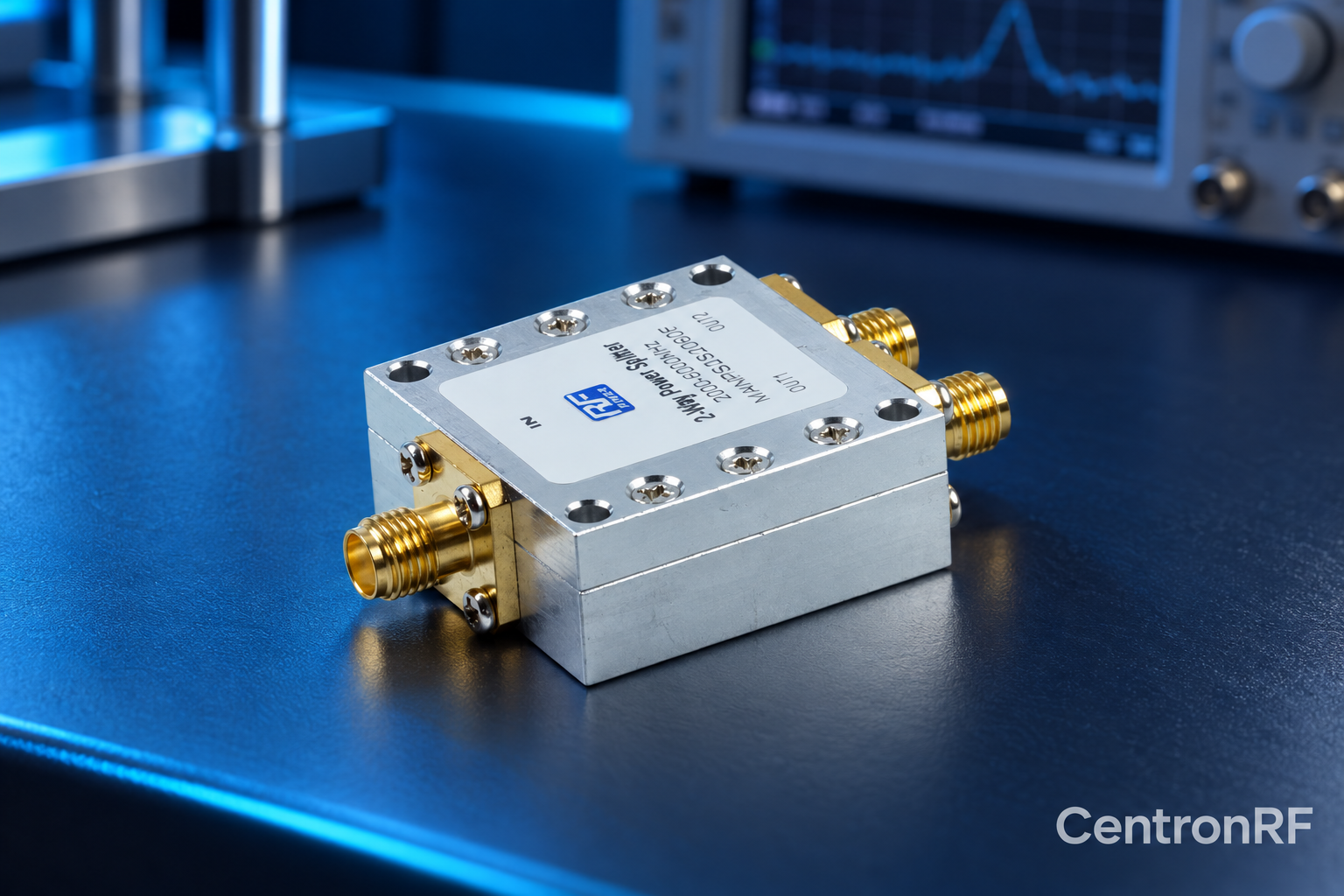
RF Divider Amplitude Balance Explained
Amplitude balance is the difference between output levels of a divider.…
-
Two-Way Versus Four-Way RF Power Division
More equal outputs mean less power per branch before excess losses.…
-
Power Divider Bandwidth: Verify the Actual Model
Use the exact model’s documented operating band and performance limits. Conflicting…
-
Terminations in an RF Combining Setup
Terminations may absorb imbalance or unwanted power in a combining network.…
-
Cascading RF Dividers: How to Budget Branch Loss
Add the measured loss of every divider and cable along each…
-
RF Divider Input Match and Load Conditions
A divider’s input match depends on its design and the loads…
-
Resistive Versus Wilkinson RF Dividers
Resistive and Wilkinson dividers use different networks, leading to different loss,…
-
Splitting a Signal Between Two Receivers
A divider can feed two receivers from one source if each…
-
RF Power Divider Versus Directional Coupler
A divider distributes substantial signal power among outputs; a directional coupler…
-
Divider Connector Choice: SMA or N-Type
Choose connectors to match the cable system and mechanical environment, then…