


An equal two-way split sends one half of the input power to each output. Ten times log10 of one half is approximately −3.01 dB.
How it works in practice
This division loss exists even in an ideal lossless divider. Real devices add excess dissipative and mismatch losses. Clarify whether a datasheet reports total insertion loss or only excess loss; the distinction changes your link budget.
Example and interpretation
With 1 W input, an ideal matched divider provides 0.5 W per output before excess losses.
Checks before use
- Identify equal or unequal division
- Calculate ideal loss
- Add specified excess loss
- Check the measurement convention
Important limit
Do not add 3 dB twice if total insertion loss already includes division loss.
Related Centron RF product
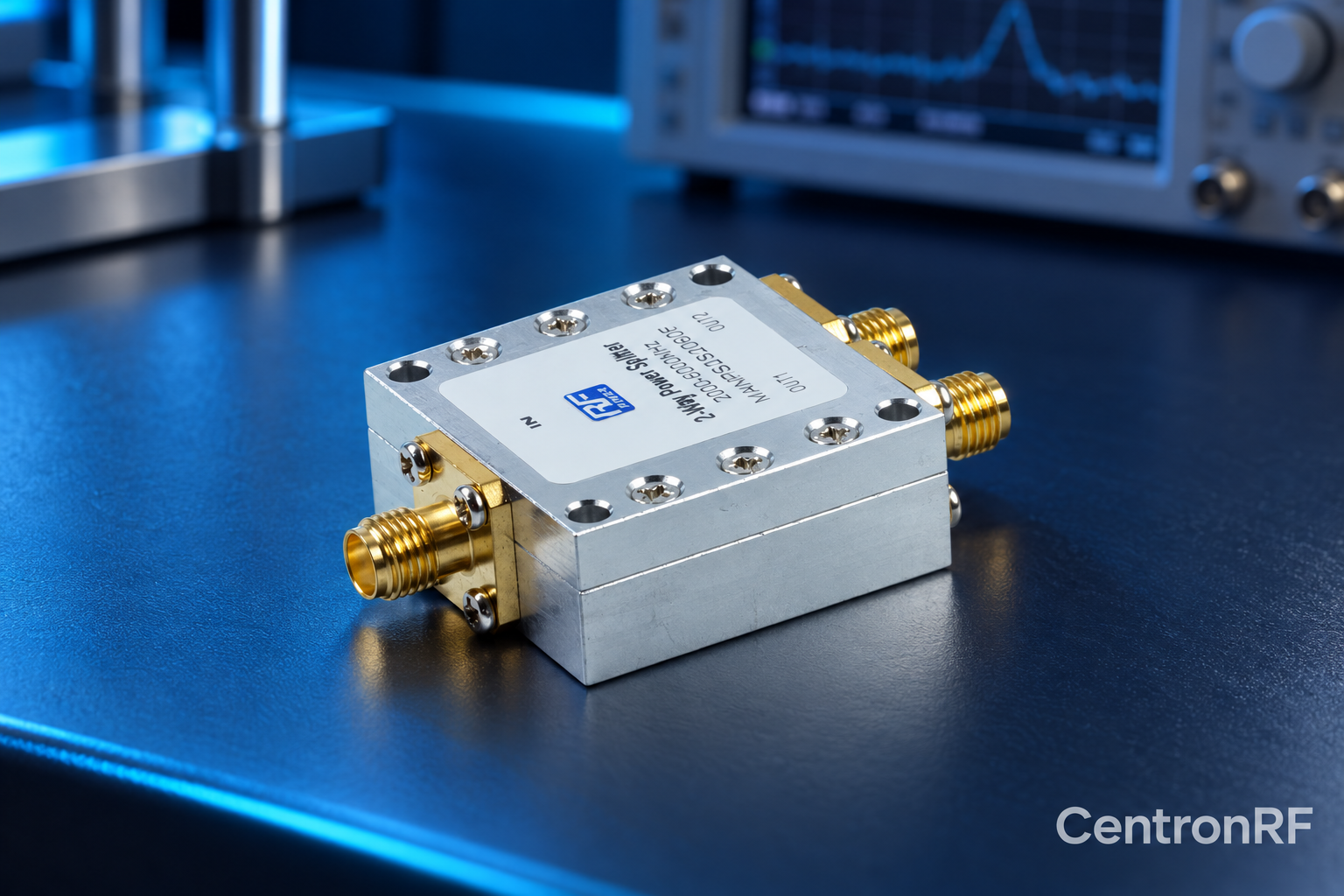
RF power divider range. Compare the exact divider model, port count and current datasheet. Some catalog titles show inconsistent frequency ranges, so confirm the supplied model’s full passband, loss, isolation and power limits before selection.
Further reading
Mini-Circuits: Understanding Power Splitters. This background reference explains general principles; the selected Centron RF model’s datasheet governs its own ratings.
Related guides
Educational guide. Numerical examples use the stated assumptions and are not test results for a supplied unit.