


The grounding arrangement must follow the site design and applicable installation requirements. Do not add an isolated earth electrode without evaluating bonding to the existing system.
How it works in practice
Separate uncoordinated grounds can develop dangerous voltage differences during a surge. A protector's bond needs an appropriate connection into the designed grounding system. Manufacturer diagrams are examples within their stated conditions, not a substitute for a site-specific electrical design.
Example and interpretation
A new rod beside an antenna entry does not by itself demonstrate coordinated bonding with the building's other services.
Checks before use
- Review the existing grounding design
- Follow applicable rules
- Coordinate bonding
- Have changes assessed by a qualified installer
Important limit
Do not prescribe an isolated rod as a universal solution.
Related Centron RF product
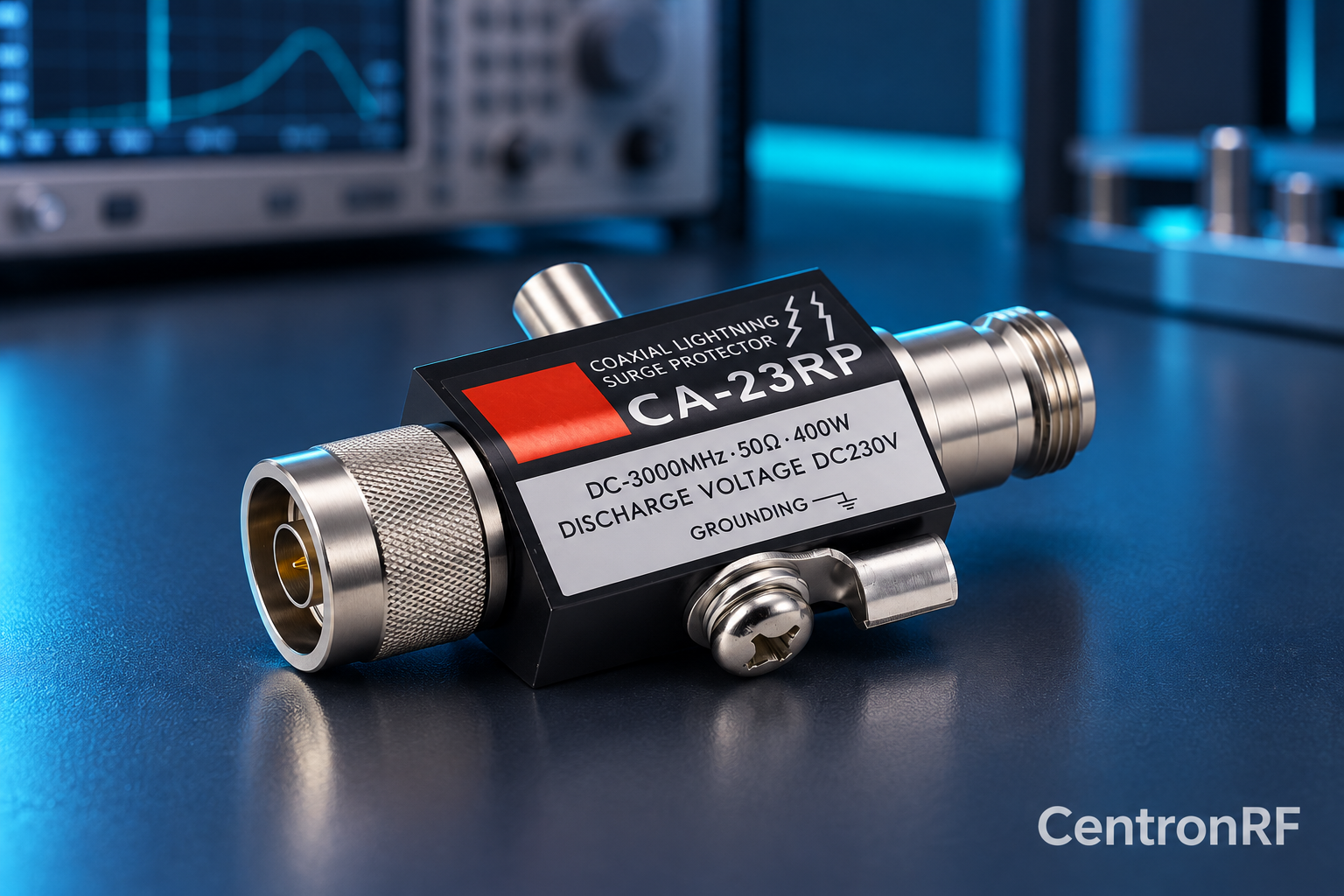
CA-23RP N-type coaxial surge protector. The linked CA-23RP product is listed for 50-ohm coaxial service up to 3 GHz. Obtain the current impulse, grounding, DC-pass and environmental specifications. Resolve inconsistent matching figures in the listing against the current datasheet.
Further reading
PolyPhaser: Example Coaxial Protector Installation Guide. This background reference explains general principles; the selected Centron RF model’s datasheet governs its own ratings.
Related guides
Educational guide. Numerical examples use the stated assumptions and are not test results for a supplied unit.