


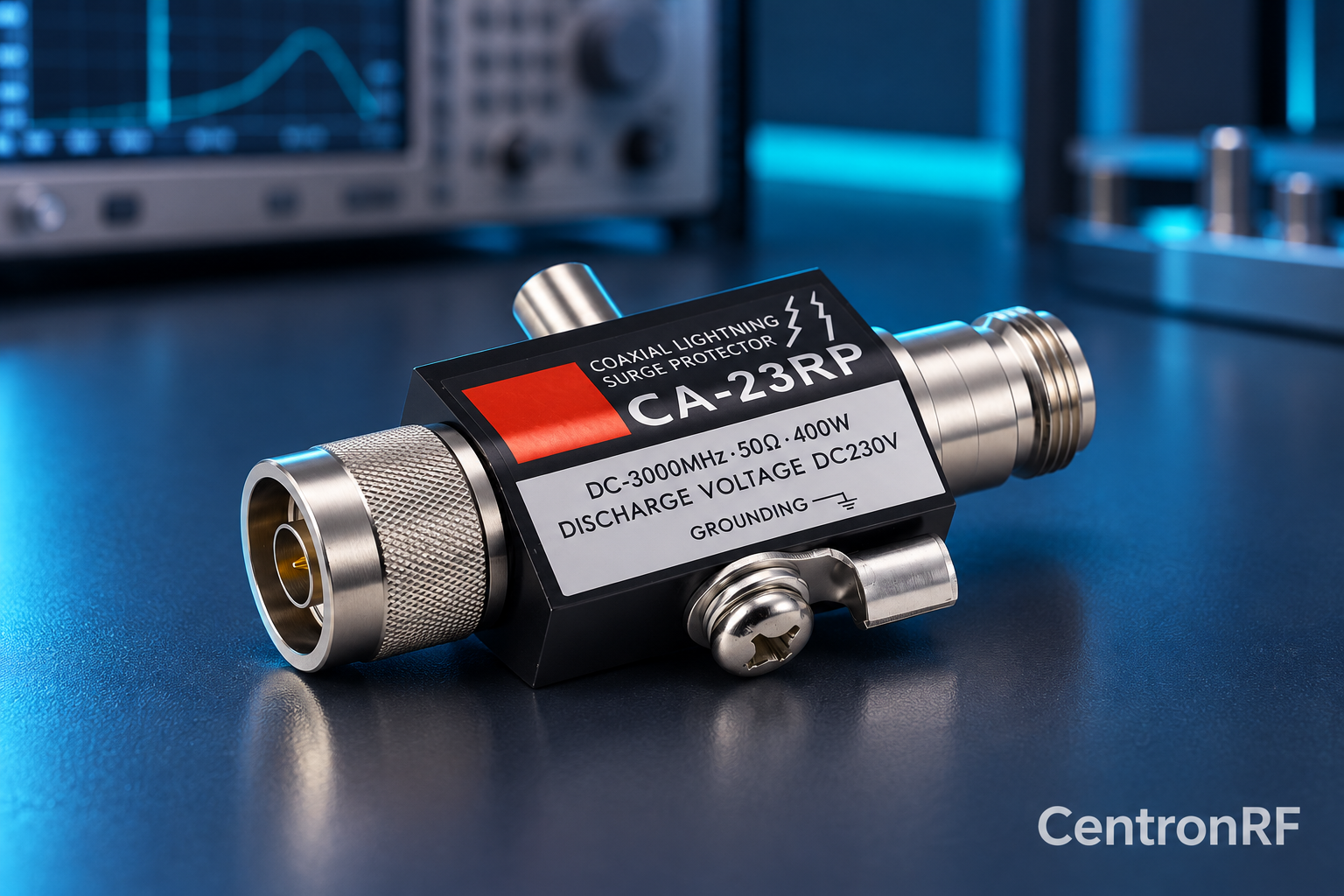
Choose an N-type protector by its exact interface, impedance, RF band, DC behavior and surge specifications. Mechanical compatibility is only the first check.
How it works in practice
Confirm male or female connectors on both sides and any mounting or bonding hardware required. Support cables to avoid torque on the housing. Verify environmental suitability if it will be exposed to weather; a metal enclosure is not itself a documented ingress rating.
Example and interpretation
Two N-female ports require compatible cable ends or suitable adapters, with the full assembly remaining within its ratings.
Checks before use
- Check both interface genders
- Check electrical specifications
- Check bonding hardware
- Check environmental data
Important limit
Do not invent a waterproof rating from appearance.
Related Centron RF product
CA-23RP N-type coaxial surge protector. The linked CA-23RP product is listed for 50-ohm coaxial service up to 3 GHz. Obtain the current impulse, grounding, DC-pass and environmental specifications. Resolve inconsistent matching figures in the listing against the current datasheet.
Further reading
PolyPhaser: Example Coaxial Protector Installation Guide. This background reference explains general principles; the selected Centron RF model’s datasheet governs its own ratings.
Related guides
Educational guide. Numerical examples use the stated assumptions and are not test results for a supplied unit.