


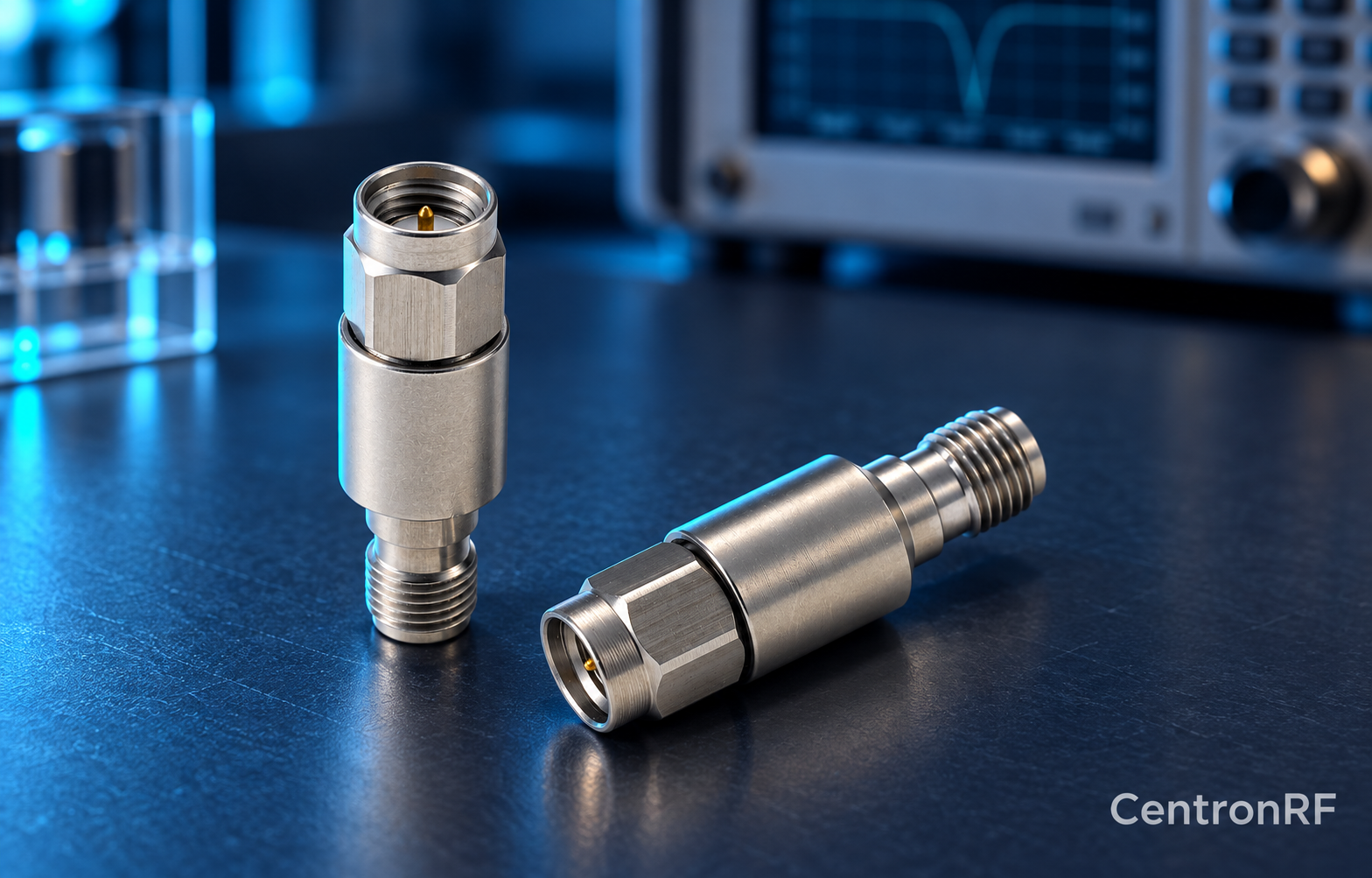
An RF DC block uses capacitive coupling to interrupt DC continuity while passing RF within a specified band. It is used where DC on a coaxial path must be isolated.
How it works in practice
Its lower operating frequency, insertion loss, voltage rating and construction type matter. A product label showing an upper frequency alone is insufficient. A DC block cannot provide a passband that includes zero frequency, because rejecting DC is its purpose.
Example and interpretation
A DC block can isolate an instrument input from intentional cable bias only when its voltage and RF ratings cover the setup.
Checks before use
- Identify the DC source
- Find the block type
- Check voltage and RF band
- Confirm the instrument's limits
Important limit
Do not describe a DC block as passing DC merely because a catalog range begins with 'DC'.
Related Centron RF product
SMA DC block listed for 8 GHz applications. The linked SMA block gives an upper-frequency reference. Confirm its lower passband limit, working voltage, RF power and whether it blocks the inner, outer or both conductors. A catalog range starting with DC should not be interpreted as DC transmission.
Further reading
Mini-Circuits: DC Block Specifications. This background reference explains general principles; the selected Centron RF model’s datasheet governs its own ratings.
Related guides
Educational guide. Numerical examples use the stated assumptions and are not test results for a supplied unit.