


Specify impedance, frequency band, matching limit, continuous and pulse power, connector interface and cooling conditions. This makes alternatives meaningfully comparable.
How it works in practice
Include installation space, mounting needs and expected ambient temperature. Ask for the current datasheet when a listing lacks derating or pulse details. If weight or dimensions matter, resolve conflicting catalog fields before procurement. Define any required acceptance measurements separately from nominal product ratings.
Example and interpretation
A request for '50 ohms, N-male, 100 W continuous at 2.4 GHz' still needs thermal conditions and allowed VSWR.
Checks before use
- State electrical limits
- State mechanical interfaces
- Specify cooling and ambient conditions
- Request missing acceptance data
Important limit
Do not treat conflicting catalog fields as verified engineering dimensions.
Related Centron RF product
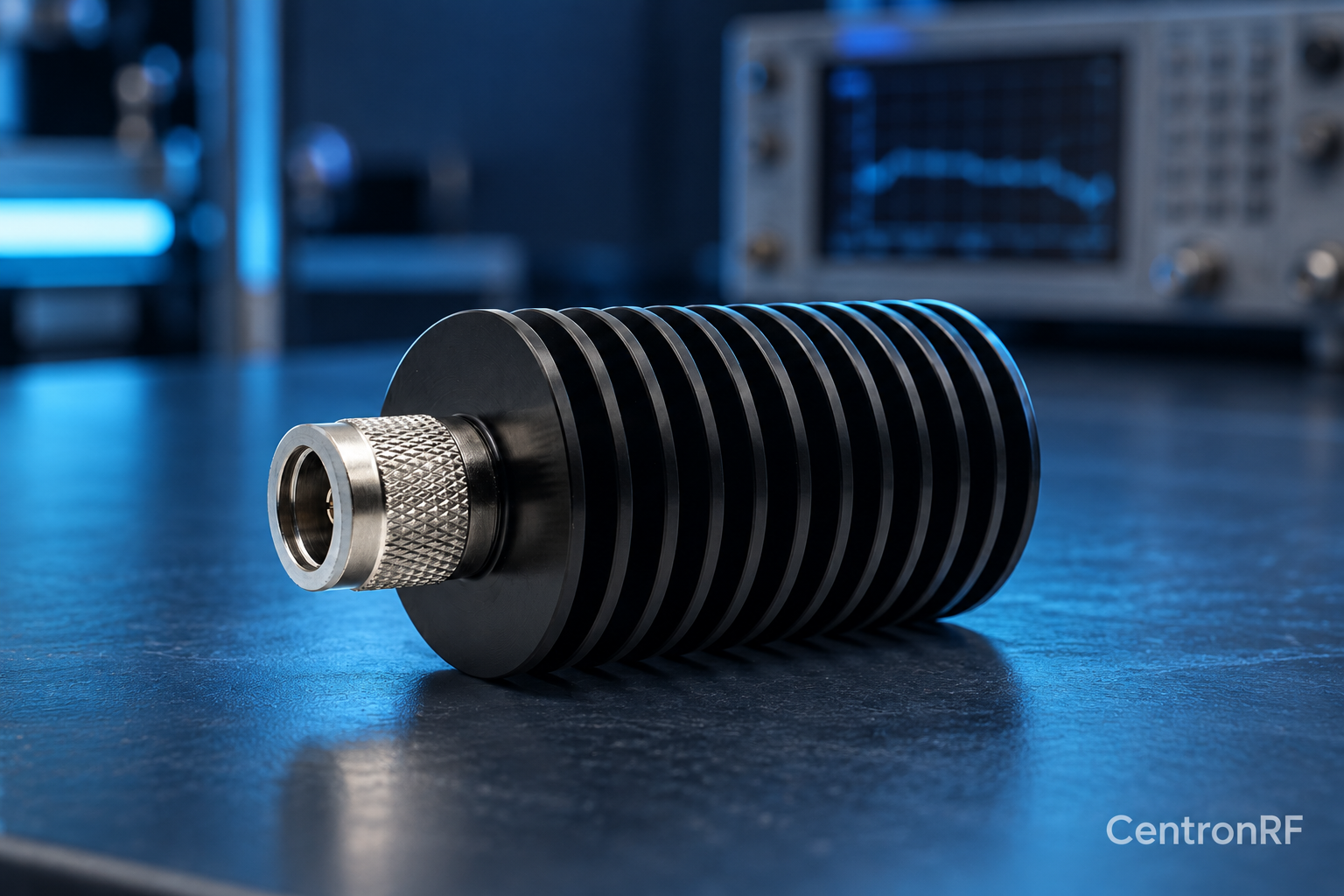
N-type 50 W 6 GHz dummy load. The linked N-type load is a starting point for comparing impedance, bandwidth, power and mechanical fit. Confirm the exact connector option and current thermal conditions before using any load near its rated power.
Further reading
Rohde & Schwarz: VSWR and Return Loss. This background reference explains general principles; the selected Centron RF model’s datasheet governs its own ratings.
Related guides
Educational guide. Numerical examples use the stated assumptions and are not test results for a supplied unit.