


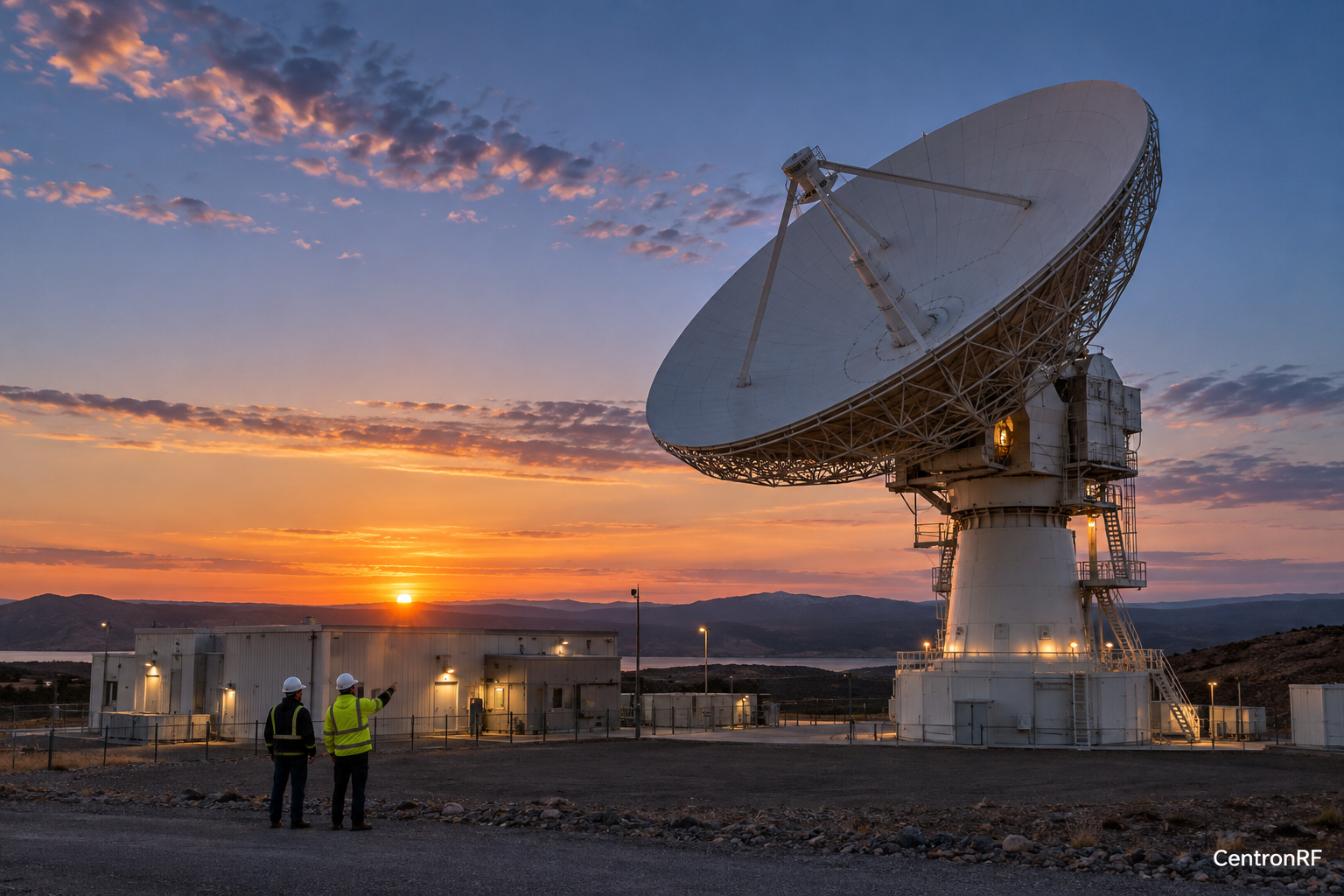
A documented reference path can help isolate ground-receiver faults from fixture changes. Use controlled substitutions and measure levels at consistent interfaces.
Why this matters in the industry
An unexpected decoding problem can come from the source, passive route, converter or receiver. Changing several parts at once makes the outcome difficult to interpret.
The technical reasoning
A reference route supports troubleshooting by providing a controlled alternative, but only if its behavior is sufficiently known and the comparison changes one relevant factor at a time. Preserve receiver settings and signal conditions while substituting the path. A passing alternative narrows the investigation without automatically identifying a single failed component.
From instrument readings to defensible results
Calibration, correction and verification have different roles. Calibration establishes a relationship under stated conditions; correction uses a model to adjust an indication; verification checks selected behavior against a defined criterion. A calibrated instrument does not automatically characterize the cables, adapters, fixtures and software around it. Repeated readings can estimate some random variation, but they do not expose every systematic error. The method must identify the measured quantity and the route through which its value is inferred.
How to structure the investigation
Establish a known configuration and replace one suspect element at a time within the approved test method. Recheck delivered levels after each substitution. Record both the changed hardware and unchanged settings, then confirm the suspected fault with an appropriate independent measurement.
Define the plane, frequency range and operating state. Preserve raw readings, correction files and reference identities, and distinguish measurements made without reconnecting from repetitions of the full setup. Use an independent reference check where practical. When comparing two routes or stations, collect repeated observations and look for frequency-dependent offsets and spread. Investigate unexplained differences before treating a software correction as a solution.
Worked example or engineering scenario
If reception is restored with a known path, compare loss, leakage, bias and port loading between routes. The improvement does not by itself prove the original cable was the only cause.
Evidence to collect
| Record | Purpose |
|---|---|
| Use one substitution at a time | Defines the tested state and scope of the comparison. |
| Recheck input levels | Makes the stimulus or route condition reproducible. |
| Record unchanged settings | Supports interpretation of variation and possible confounding effects. |
| Confirm the suspected fault | Connects the observation with the stated engineering decision. |
Trade-offs and common interpretation errors
Agreement between two systems can conceal a shared error. A stable reference can also drift or be damaged. State the scope of the comparison and the evidence supporting the reference's stability. A small observed difference should be interpreted alongside uncertainty and repeatability, rather than assumed to be a meaningful device improvement.
What the result can support
Use the reference comparison to prioritize additional measurements and retain the original fault conditions.
A substitution result alone does not identify every physical failure mechanism.
Further technical reading
Related industry knowledge
- Satellite Ground-Test Fixture Acceptance: What to Measure
- Satellite IF Versus Ku and Ka Bands: Selecting a Rated Test Path
Numerical scenarios are illustrative assumptions, not reported measurements of a supplied product or installation.