


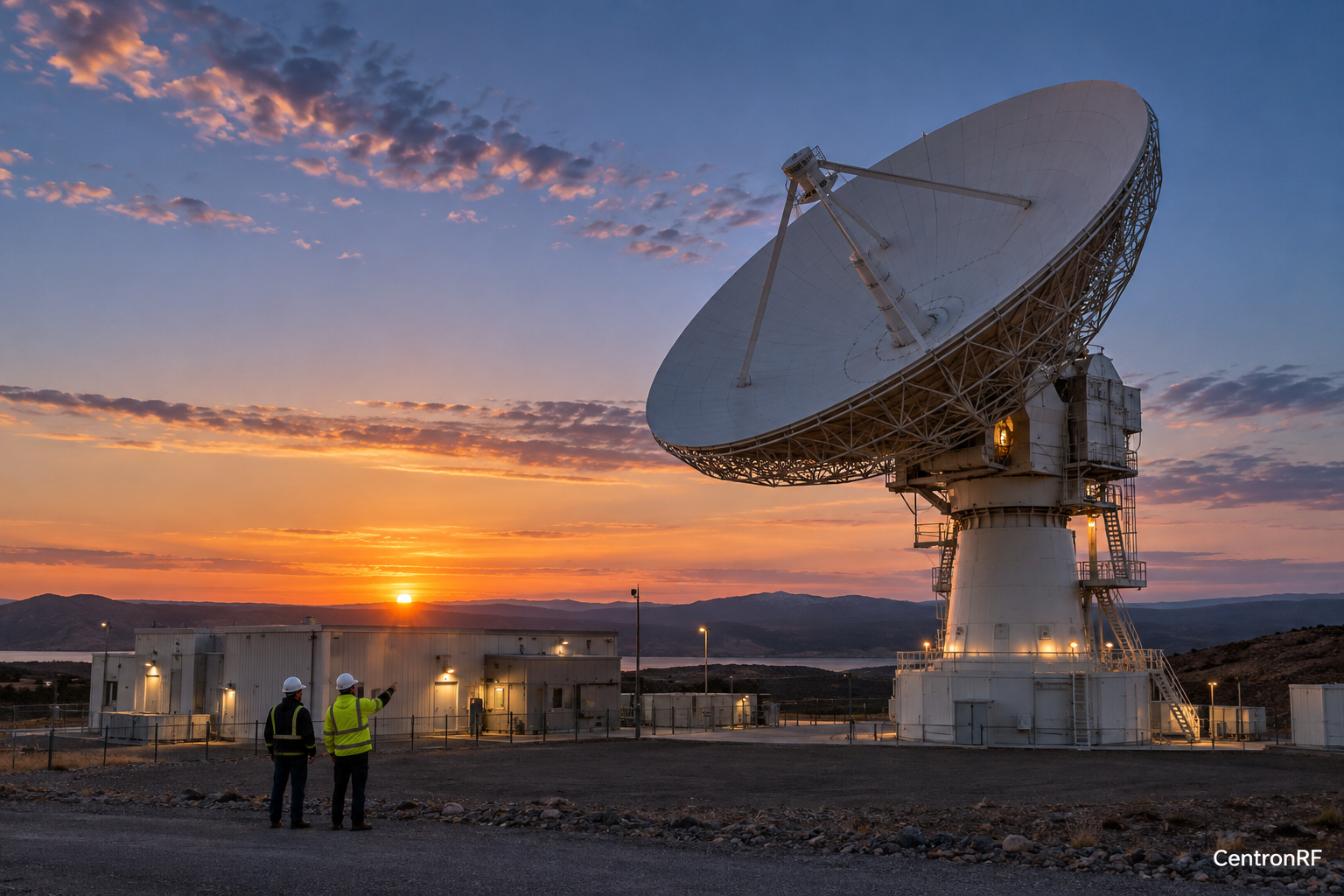
Specify IF and RF accessory requirements separately when buying satellite ground-bench hardware. Each location has its own frequency, power, bias and connection needs.
Why this matters in the industry
A purchase request labeled satellite test kit can conceal several incompatible routes. Clear numerical specifications help suppliers and engineers resolve the intended use.
The technical reasoning
A ground-station frequency plan should separate IF and RF requirements rather than combine them into one broad satellite description. Each interface can have different power, bias, bandwidth and measurement needs. A specification request becomes useful when its limits identify those planes and the configurations to which they apply.
Connecting engineering requirements with adequate evidence
An engineering requirement needs a stated quantity, operating conditions and a decision method. A descriptive label such as broadband, precision or rugged leaves those details unresolved. The evidence needed also depends on context: a laboratory demonstration, production screen, environmental evaluation and system qualification answer different questions. Documentation is useful when it identifies the actual method and conditions, rather than merely repeating a desired capability.
How to structure the investigation
Provide a route table with low and high frequencies, maximum average and peak power, nominal impedance, connector gender and DC behavior. State which items are laboratory accessories and which require additional project evidence. Request clarification for incomplete or conflicting catalog specifications.
Translate the engineering question into measurable parameters and a scope of valid use. Identify which limits are established, which assumptions are made and which questions remain open. Link evidence to the exact configuration and revisions involved. Review exceptions before release and distinguish a requested document or planned test from evidence that has actually been supplied or completed.
Worked example or engineering scenario
A converter bench using 1 GHz IF and 20 GHz RF requires two separately justified route ranges. A single maximum-frequency line does not describe the whole test arrangement.
Evidence to collect
| Record | Purpose |
|---|---|
| Create a route table | Defines the tested state and scope of the comparison. |
| State numerical spans | Makes the stimulus or route condition reproducible. |
| Distinguish ground and flight use | Supports interpretation of variation and possible confounding effects. |
| Request model documentation | Connects the observation with the stated engineering decision. |
Trade-offs and common interpretation errors
Do not promote a successful demonstration into a broad qualification claim. Likewise, paperwork cannot resolve a missing measurement model. A useful conclusion states what the evidence supports, what decision it informs and what additional observation would be needed to extend that conclusion to another configuration or environment.
What the result can support
Use interface-specific requirements and flag unsupported assumptions before approving a ground-test method.
The satellite application label is not itself an RF component specification.
Further technical reading
Related industry knowledge
- Satellite Ground-Test Baselines: Keep a Known Route Available
- Spacecraft Simulator RF Paths: Keeping Level Settings Reproducible
Numerical scenarios are illustrative assumptions, not reported measurements of a supplied product or installation.