

Category: RF Research & Education
Practical RF experiments, measurement methods and component selection for university and research laboratories.
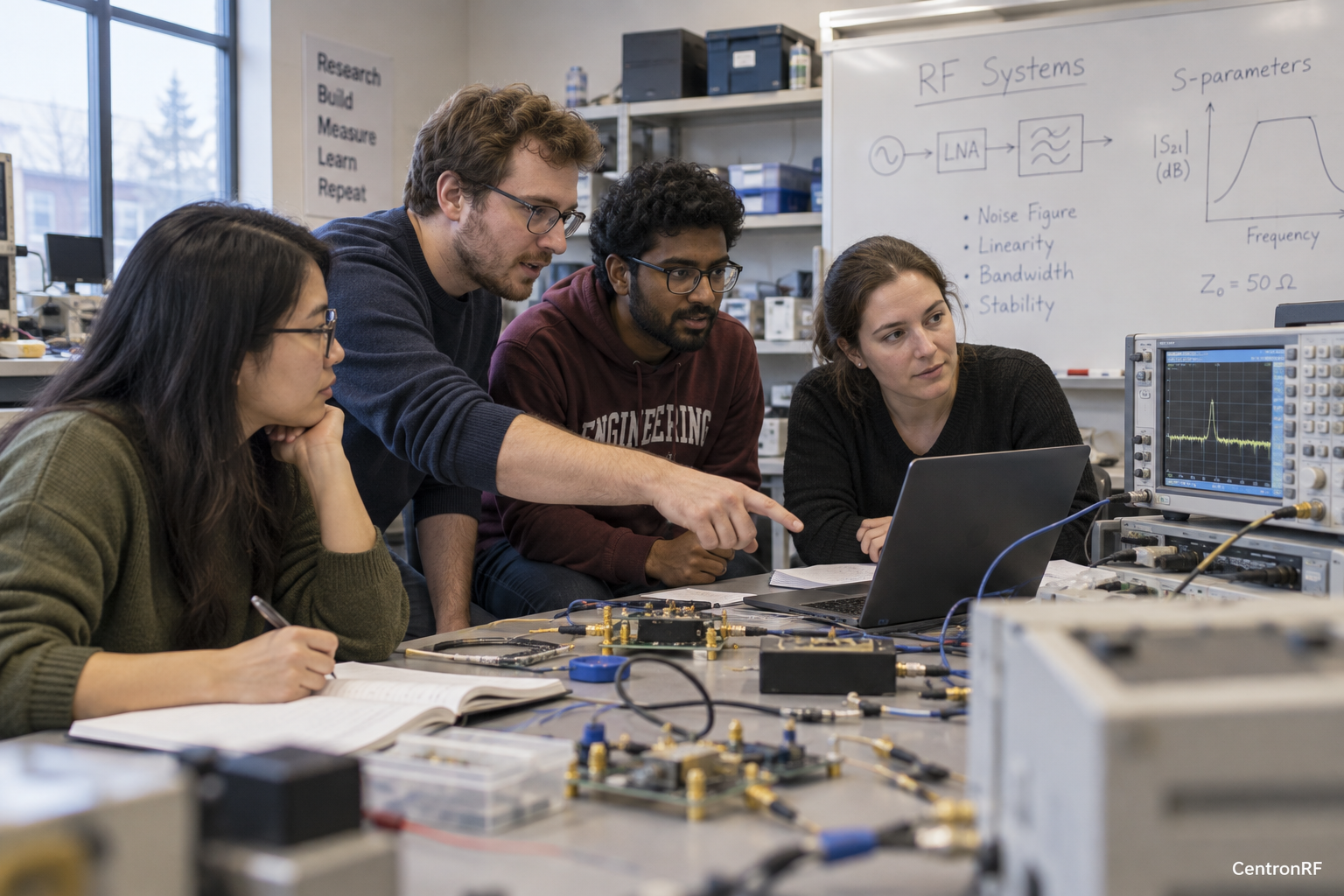
Why RF Experiments Need Setup Drawings
An RF setup drawing identifies signal routes, component order and reference…
How to Build a Simple RF Attenuation Experiment
An attenuation experiment measures signal reduction through a known component using…
What Is Measurement Uncertainty in an RF Research Lab?
Measurement uncertainty describes the quantified doubt associated with a stated measurement…
How to Explain RF Calibration Versus Verification
Calibration establishes a measurement relationship under specified conditions, while verification checks…
Teaching Receiver Sensitivity as a Statistical Threshold
A sensitivity demonstration varies a known stimulus and observes a defined…
Energy Absorption and Reflection in an RF Teaching Experiment
A dummy load provides a defined termination for suitable conducted RF…
How to Demonstrate RF Cable Loss to Students
Cable-loss demonstrations compare a defined RF route with a suitable reference…
Understanding Decibels Through an RF Loss Experiment
An RF attenuator lets students compare a logarithmic loss value with…
What Is a Reference Plane in an RF Laboratory Experiment?
A reference plane defines the interface at which an RF stimulus…
Designing an RF Teaching Laboratory Around Learning Objectives
A university RF lab should choose components from its planned experiments,…