


Calibration corrects defined systematic measurement errors; verification checks whether the calibrated setup performs as expected using suitable independent checks.
How it works in practice
Use standards compatible with the connectors and method. Follow the calibration kit definitions rather than generic assumptions. A successful completion message does not prove that every subsequent connection remains valid. Verify important measurements and recalibrate when the path or conditions change significantly.
Example and interpretation
A characterized verification device can reveal a calibration problem that the standards used during calibration do not expose independently.
Checks before use
- Select the correct kit
- Calibrate the intended planes
- Check an independent device
- Recheck after setup changes
Important limit
Do not call an uncalibrated sweep a precision acceptance measurement.
Related Centron RF product
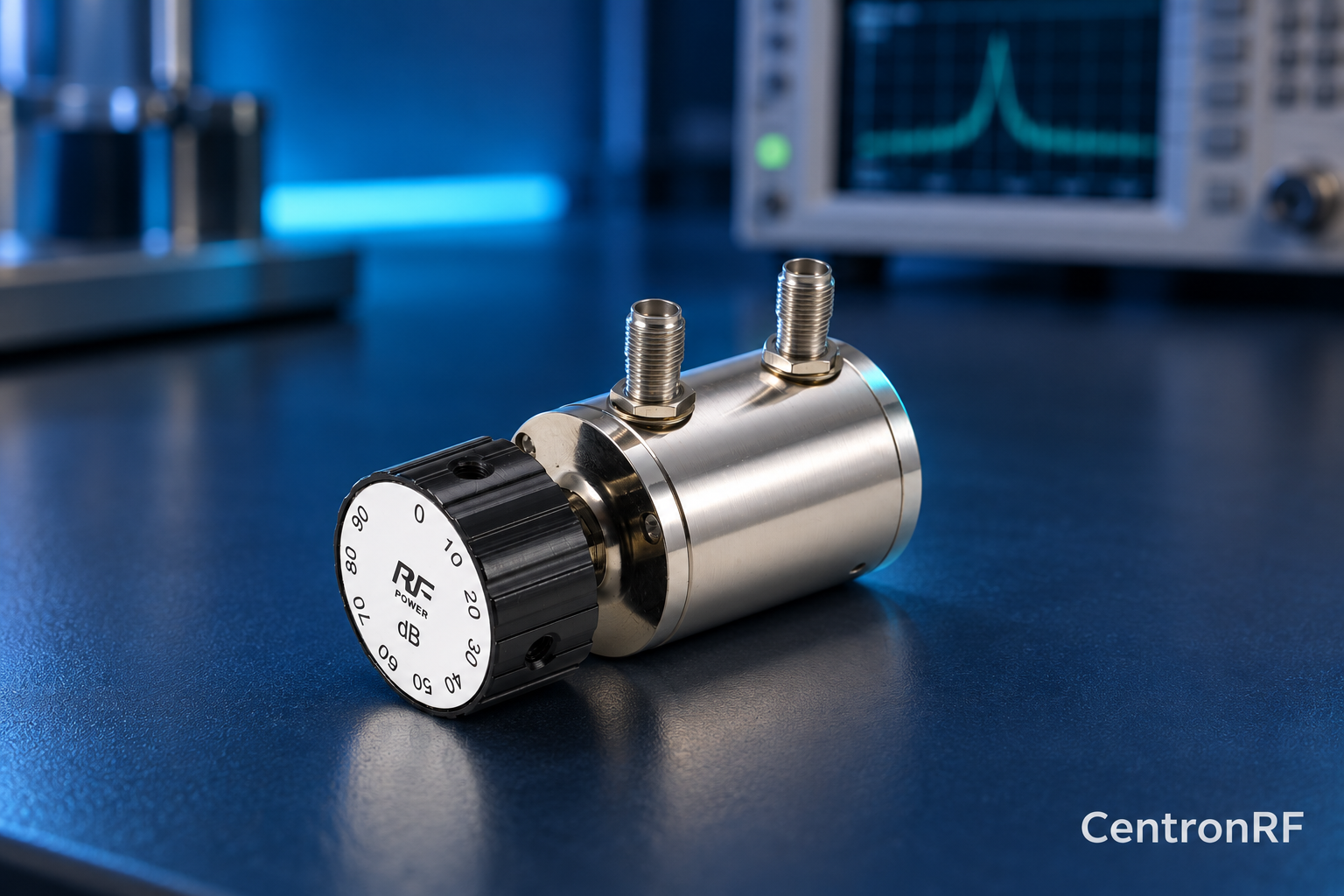
SMA rotary attenuator with 1 dB steps. The linked fine-step unit lists 0–10 dB in 1 dB increments. It can be considered for controlled level changes within its ratings. Dial resolution does not establish traceable accuracy; calibrate the assembled path as required.
Further reading
Keysight: Fundamentals of RF and Microwave Power Measurements. This background reference explains general principles; the selected Centron RF model’s datasheet governs its own ratings.
Related guides
Educational guide. Numerical examples use the stated assumptions and are not test results for a supplied unit.