


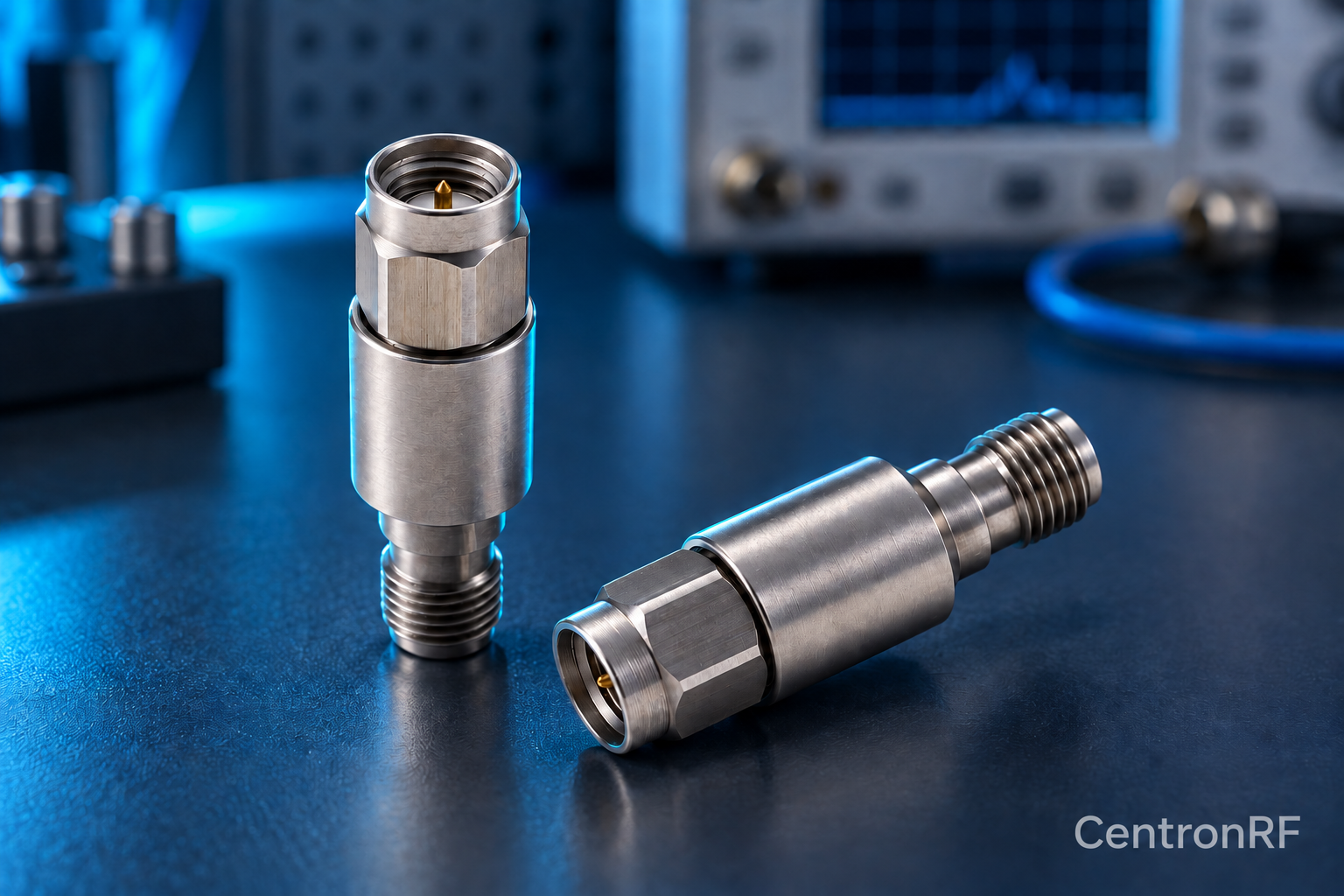
Wear can alter contact geometry, electrical connection and mechanical alignment. This can change RF reflection and measurement repeatability.
How it works in practice
Track heavily used interfaces and inspect after unexpected measurement shifts. A connector may still pass a DC continuity test while behaving poorly at high frequency. Use the manufacturer's mating-life and inspection guidance. Replace or service worn parts before they damage a more expensive port.
Example and interpretation
An adapter used for repeated production connections can become the unstable part of an otherwise consistent fixture.
Checks before use
- Record high-use interfaces
- Inspect mating surfaces
- Measure RF stability
- Replace suspect wear items
Important limit
Do not assume continuity proves connector health.
Related Centron RF product
N-type fixed attenuator for a compatible RF path. Use a product page to check both connector interfaces, nominal impedance and model-specific band and power requirements. The connector family alone cannot establish a component’s total RF capability.
Further reading
Rohde & Schwarz: Impedance, VSWR and Return Loss. This background reference explains general principles; the selected Centron RF model’s datasheet governs its own ratings.
Related guides
Educational guide. Numerical examples use the stated assumptions and are not test results for a supplied unit.