


Derating reduces allowable power as temperature or other operating stress increases. Use the resistor's own curve and reference temperature.
How it works in practice
A curve may refer to ambient, case or mounting-surface temperature, which are different quantities. Check the stated test arrangement and maximum element temperature. The installed circuit can have a worse thermal path than the rating setup. Do not invent a universal derating percentage.
Example and interpretation
A case-temperature derating curve cannot be applied directly using room temperature while ignoring a hot heatsink.
Checks before use
- Identify the temperature reference
- Read the exact curve
- Measure the relevant temperature
- Set an operating margin
Important limit
The same room temperature does not imply the same resistor element temperature.
Related Centron RF product
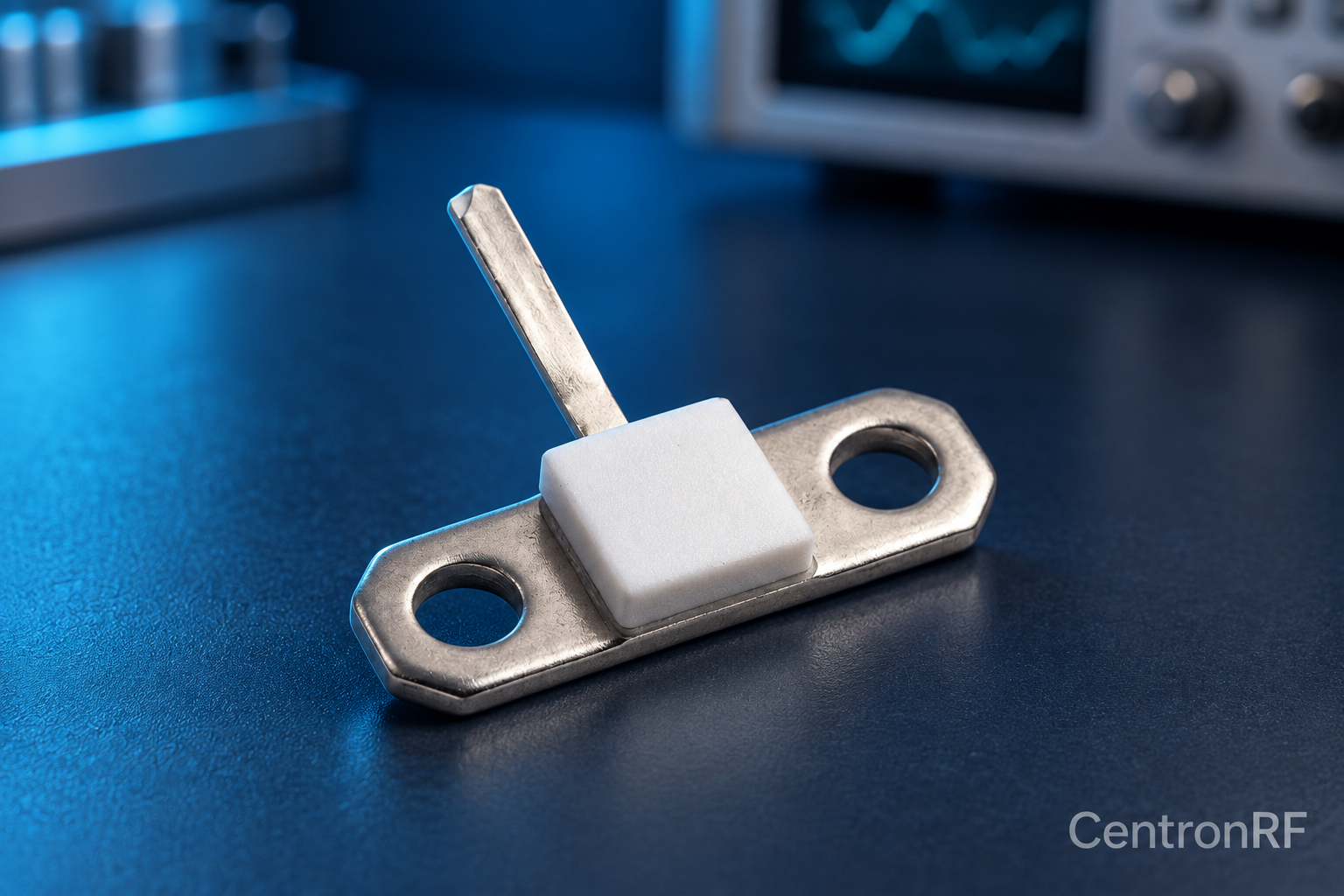
50-ohm 10 W thick-film RF resistor. The linked resistor is listed as 50 ohms, 10 W and 4 GHz. Request the recommended mounting, heatsink, derating, tolerance and pulse conditions; those determine whether it is suitable for the intended circuit.
Further reading
Vishay: Resistor Technical FAQ. This background reference explains general principles; the selected Centron RF model’s datasheet governs its own ratings.
Related guides
Educational guide. Numerical examples use the stated assumptions and are not test results for a supplied unit.