


Verify normal system operation and, where appropriate, measure the installed RF path's loss and match. RF checks assess signal performance, not full surge qualification.
How it works in practice
Record before-and-after conditions, including cable route and adapters. Use suitable low-power calibrated measurements with equipment safely isolated from external bias or transmitters. Investigate unexpected loss before attributing it to the protector; connector damage and water ingress can contribute.
Example and interpretation
An additional 1 dB loss beyond the expected path budget warrants checking connections and model suitability.
Checks before use
- Record baseline conditions
- Check normal bias operation
- Measure loss and match
- Inspect unexpected changes
Important limit
A successful RF sweep does not certify lightning survivability.
Related Centron RF product
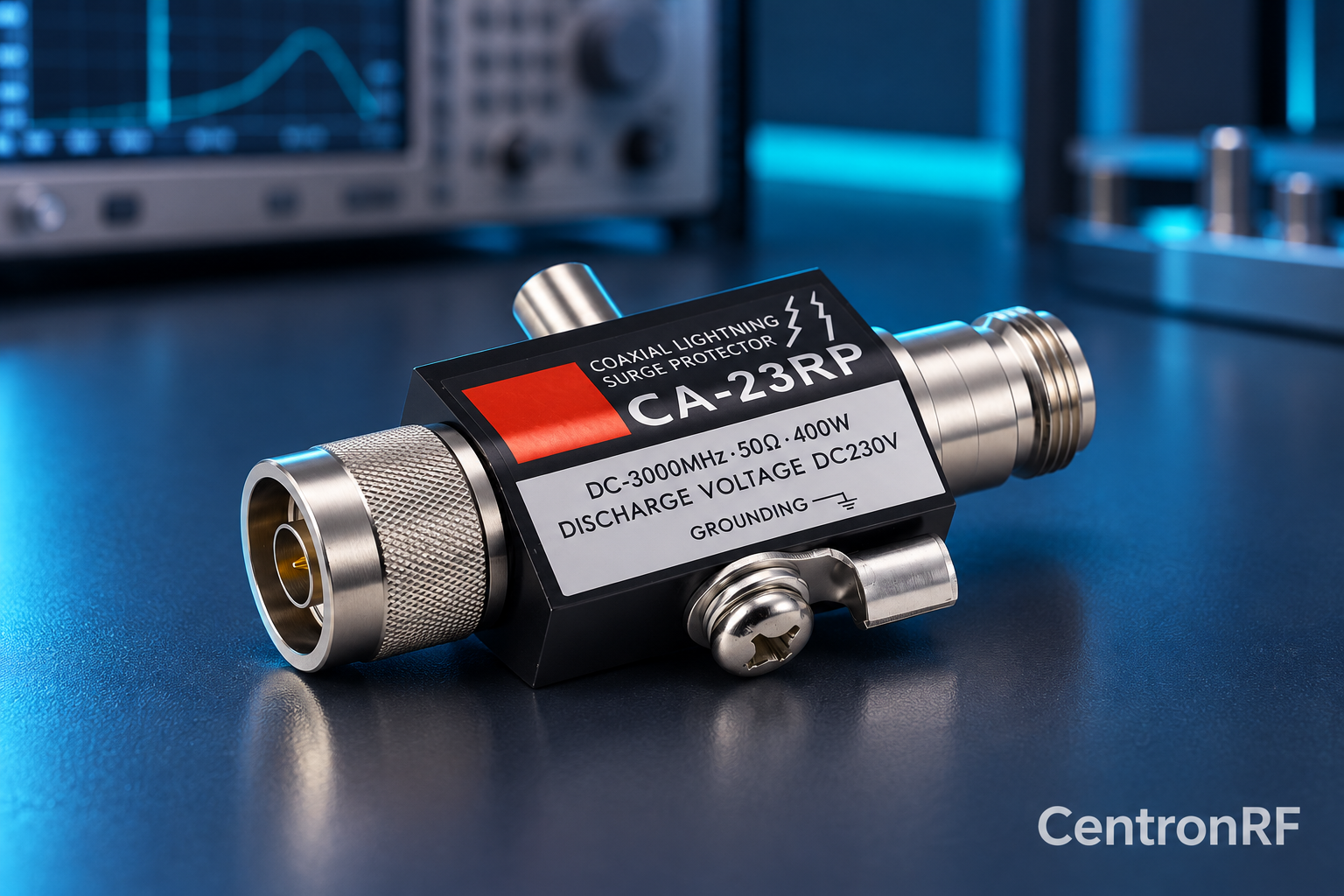
CA-23RP N-type coaxial surge protector. The linked CA-23RP product is listed for 50-ohm coaxial service up to 3 GHz. Obtain the current impulse, grounding, DC-pass and environmental specifications. Resolve inconsistent matching figures in the listing against the current datasheet.
Further reading
PolyPhaser: Example Coaxial Protector Installation Guide. This background reference explains general principles; the selected Centron RF model’s datasheet governs its own ratings.
Related guides
- Where Should a Coaxial Surge Protector Be Installed?
- Why Grounding Matters for Coaxial Surge Protection
Educational guide. Numerical examples use the stated assumptions and are not test results for a supplied unit.